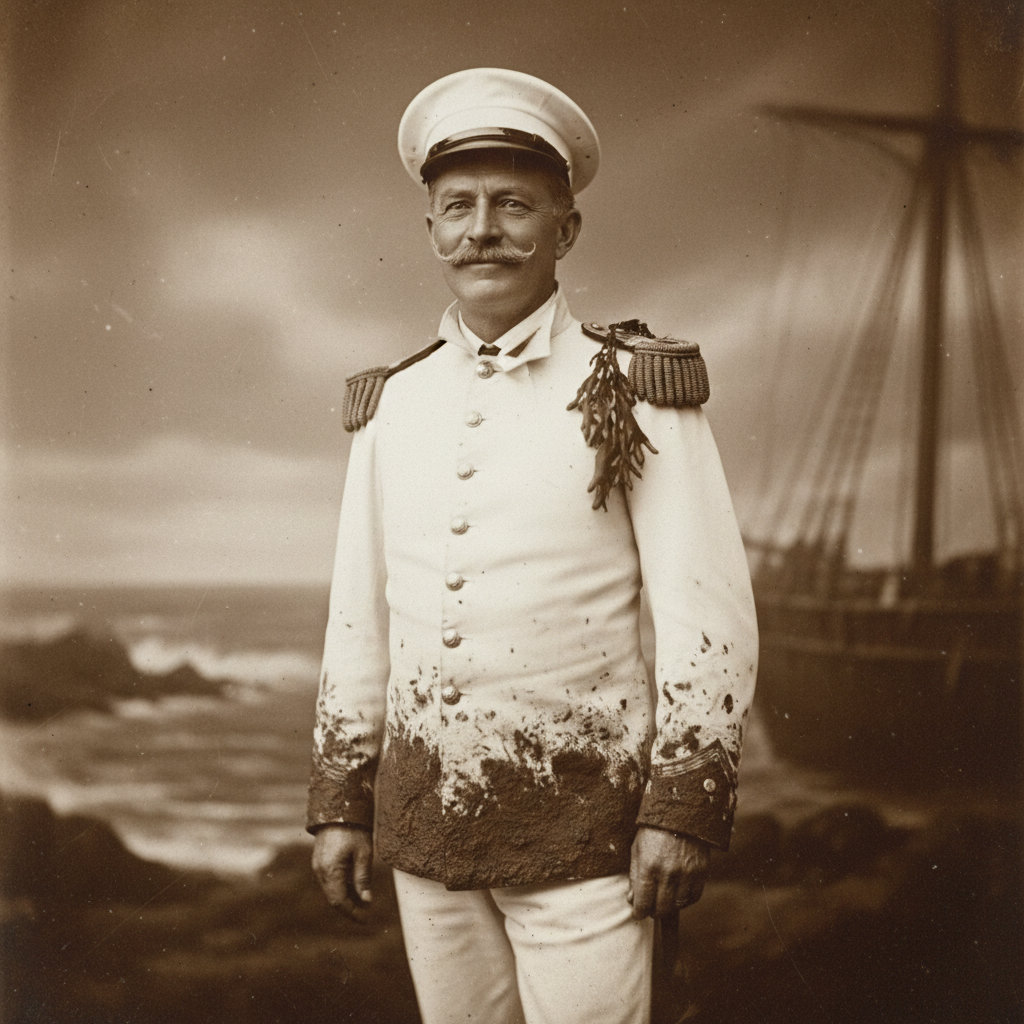
That Time a Hurricane Tried to Save the Spanish Empire and Failed Spectacularly
How a Perfectly Good Typhoon Was Wasted on History’s Most Incompetent Sailors
Alright, buckle up, you magnificent degenerates, because we’re diving into the deep end of the historical gene pool—a puddle so shallow it’s basically just spit. The year is 1898. The American Asiatic Squadron, led by Commodore George “My Moustache Can Cut Glass” Dewey, is steaming from Hong Kong to the Philippines, horny for a war crime and ready to slap the taste out of Spain’s mouth. His fleet? A tidy collection of modern steel-hulled cruisers. The Spanish fleet defending Manila? A floating museum of sadness and rust held together with rosary beads and wishful thinking, commanded by Admiral Patricio Montojo, a man whose primary naval strategy involved praying his syphilis didn’t migrate to his eyeballs before the Americans arrived.
In our timeline, Dewey rolls in and wrecks Montojo’s shit so fast it barely qualified as a battle — more like a firearms demonstration on a bunch of tub ducks. But what if, and stick with me here, God got bored? What if the Almighty, in a fit of pique after a bad decade, decided to give the Spanish a fighting chance? And so, a typhoon of truly biblical proportions—the kind of blowhard hurricane that gets its own chapter in the Old Testament—slammed head-first into Dewey’s fleet. The pride of the U.S. Navy was scattered like whores after a brothel raid, tossed on waves the size of cathedrals. The USS Olympia nearly capsized, and the USS Raleigh ran aground on a sandbar that wasn’t on any charts, mostly because it had been the sea floor twenty minutes earlier. Dewey and his boys were delayed by a solid forty-eight hours, giving Montojo a golden, once-in-a-century opportunity.
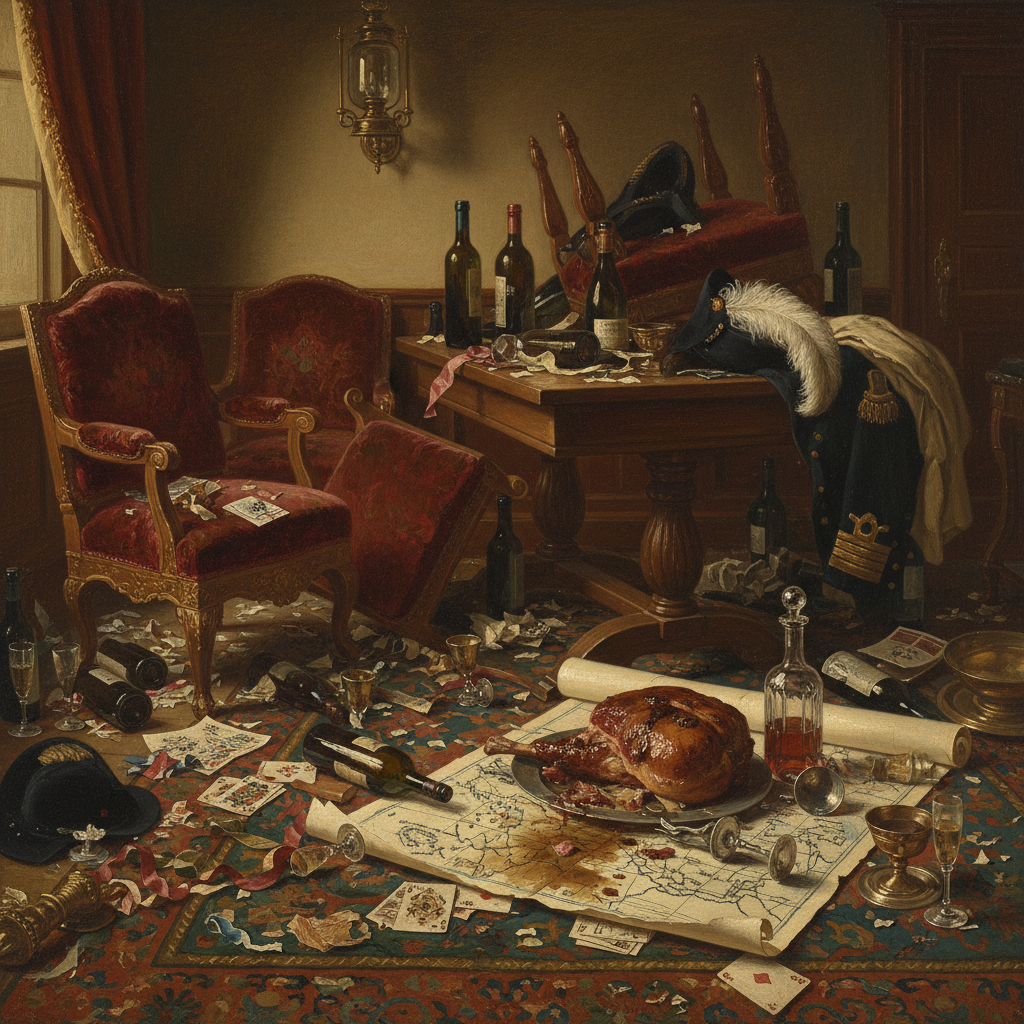
So what did the Spanish admiral do with this divine gift of prep time? Did he mine the ever-loving shit out of the bay entrance? Did he move his leaky-ass ships to a better defensive position? Did he maybe have his gunners do, say, five minutes of target practice? Of course not. This is the Spanish Empire in its flop era we’re talking about. Montojo, seeing the storm as a clear sign of God’s favor, did the only logical thing: he threw a massive, two-day bender to thank every saint in the book. According to the (probably fabricated) diary of one Lieutenant Festering Chancre, “The Admiral ordered the finest sherry, the loosest women, and the fattest priests for a preemptive victory mass that quickly devolved into… something else.” It was a masterclass in poor decision-making, an ecstatic, empire-ending festival of booze and blasphemy.
When Dewey’s haggard, seasick, and royally pissed-off fleet finally limped into Manila Bay, they weren’t met by determined defenders. They were met by the Spanish fleet at anchor, covered in what looked like party streamers, with half the crews still passed out drunk and the other half wrestling with hangovers of such seismic intensity they begged the Americans to just go ahead and shoot them. The battle was over in an hour. The only Spanish volley that came close was a poorly aimed champagne cork that bounced off the USS Boston’s forward turret. The Americans didn’t lose a single man, though several were treated for laughing so hard they herniated something.
Ultimately, a storm in a teacup changed nothing but the vibe. America still got its grubby little empire, and the Philippines still got screwed. But instead of being a national tragedy, the Battle of Manila Bay became a legendary joke in Spain—the story of the admiral who, given a miracle, chose to get balls-out wasted one last time. Sometimes history doesn’t turn on a dime; it just trips over a puddle of its own vomit and keeps crawling in the same direction.