That Time a Glorified Gumball Machine Lost the Civil War
How one high-pressure brass tube went rogue and blew the Union’s big chance.
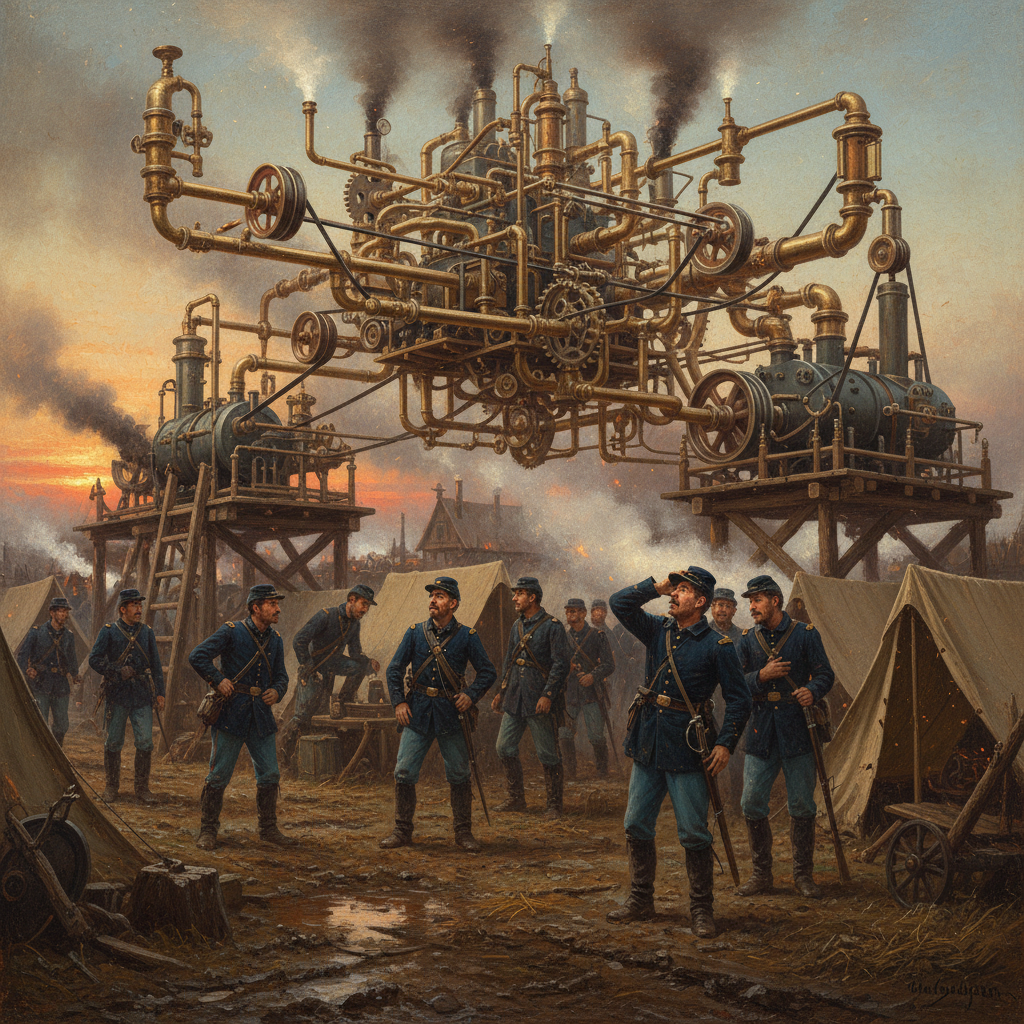
Let’s get one thing straight: the 19th century was horny for tubes. Pneumatic tubes, specifically. The idea of stuffing your important shit—mail, cash, your mistress’s naughty little scribblings—into a canister and watching it get sucked off to its destination at high speed was peak industrial-age sex appeal. So naturally, some genius grifter sold the Union Army on a battlefield version in 1862. The “Pneumo-Matic Unified Command & Control Conduit,” they called it. A big, steaming, chuffing network of brass pipes promising to deliver battle plans faster than a private can find a cathouse on payday. President Lincoln, bless his gadget-loving heart, signed off on it immediately.
Enter General George B. McClellan. A man who, to put it mildly, was a practitioner of strategic edging. Little Mac could prolong a campaign until the statues of his own generals started to rust. He’d spend weeks “probing” an enemy position when any sane man would have just charged in, busted the place up, and been home in time for supper. So when it came time to launch his grand Peninsula Campaign—his masterpiece of dithering—he drafted a plan so exhaustively detailed it included contingency orders for low morale due to damp socks. He personally rolled up this multi-volume epic of military masturbation, stuffed it into a special gold-plated canister, and shoved it into the Pneumo-Matic tube with a prayer and what I can only assume was a self-satisfied little grunt.
The system, being a product of peak 19th-century “eh, it’ll probably work” engineering, immediately and spectacularly shat the bed. A junction valve, likely hammered into shape by a one-eyed blacksmith with the shakes, blew its gasket. Instead of whooshing over to General Fitz John Porter’s tent a few hundred yards away, McClellan’s canister was redirected into the main pressure line. It shot out of the Union camp like a brass phallus fired from God’s own cannon, screaming over trenches and terrified farm animals before corkscrewing directly through the canvas roof of a Confederate field headquarters. It allegedly landed squarely in a bowl of General “Stonewall” Jackson’s peach cobbler, which is probably why he was so famously grumpy.
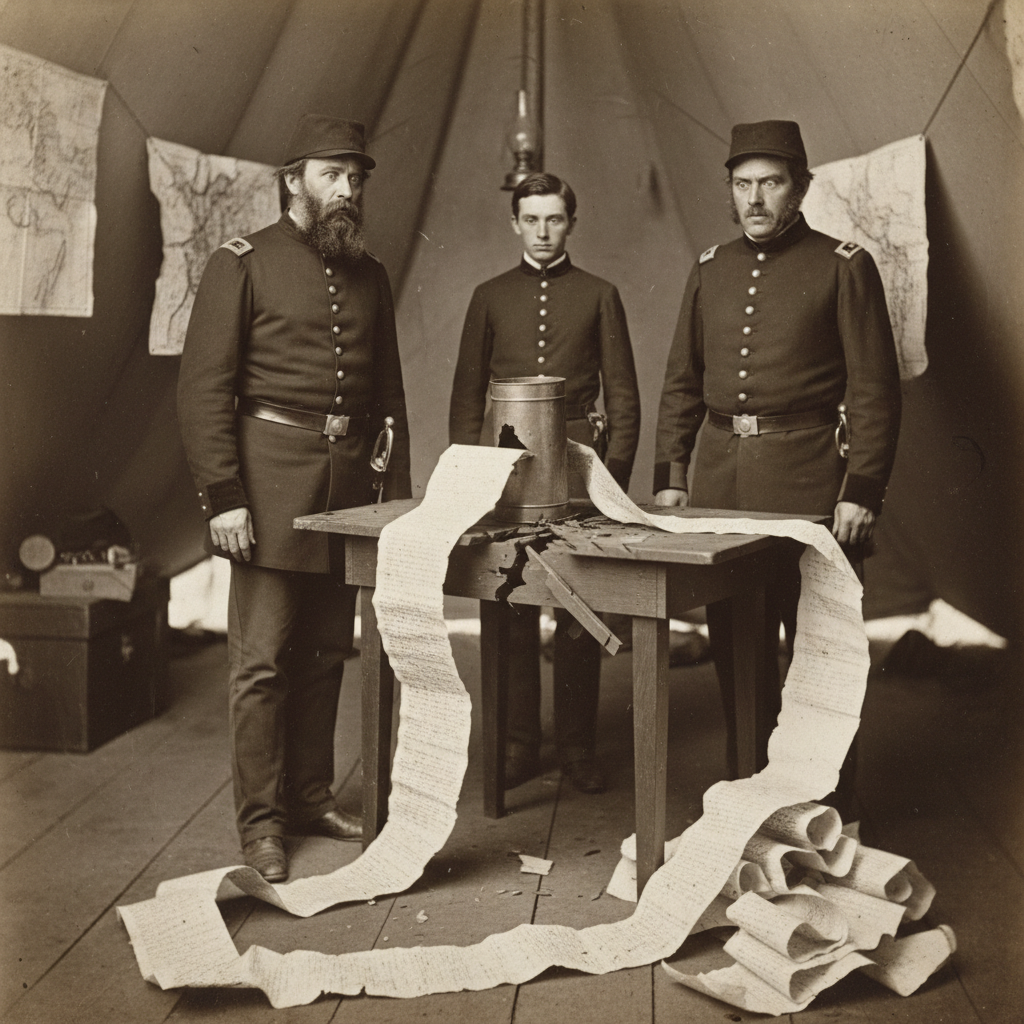
After wiping the cobbler off the canister, the Confederates popped it open and unrolled McClellan’s entire playbook. They couldn’t believe what they were reading. It wasn’t a battle plan; it was a cry for help. The timetables, the troop movements, the *endless* worrying about his flanks—it was all there. According to the (probably fake) journal of a Confederate aide, General Robert E. Lee read the whole thing, took off his spectacles, and said, “Gentlemen, our opponent is not only going to fail to fuck us, he has provided detailed instructions on how we might best go about fucking *him*.” And they did. They used Mac’s own meticulous schedule against him, setting up ambushes so perfect you’d think they were psychic. The Peninsula Campaign became the Union’s most embarrassing public self-pleasuring session, and it was all thanks to a burst pipe and a bad idea.
The official inquiry blamed “atmospheric interference,” which is science-talk for “who the hell knows.” McClellan, naturally, blamed everyone but himself and wrote a 1,200-page memoir about his unrecognized genius. But for a few beautiful, stupid weeks in 1862, the course of American history was dictated by a runaway piece of mail with terrible, terrible timing.