That’s Not What “Triduum” Means
The accidental three-day fishing trip that convinced the Roman Senate all Athenians were morons.
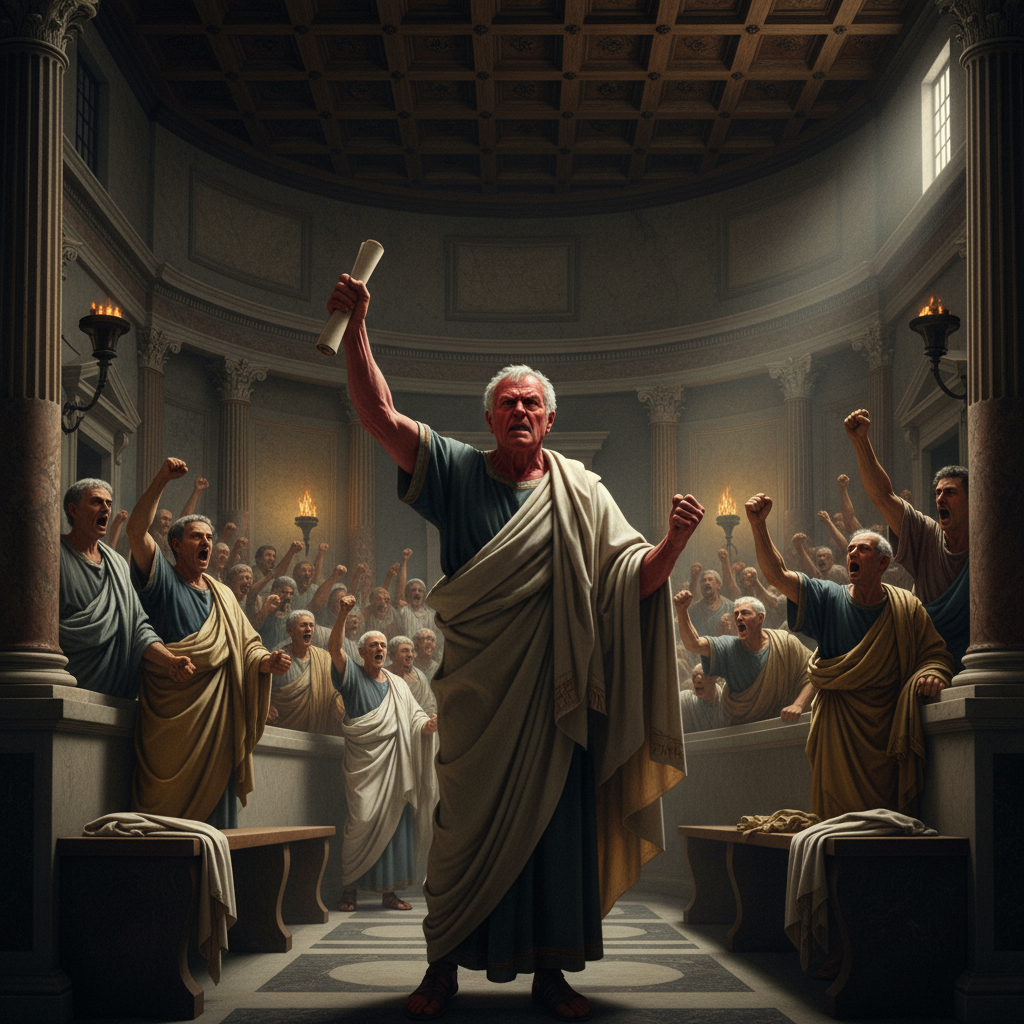
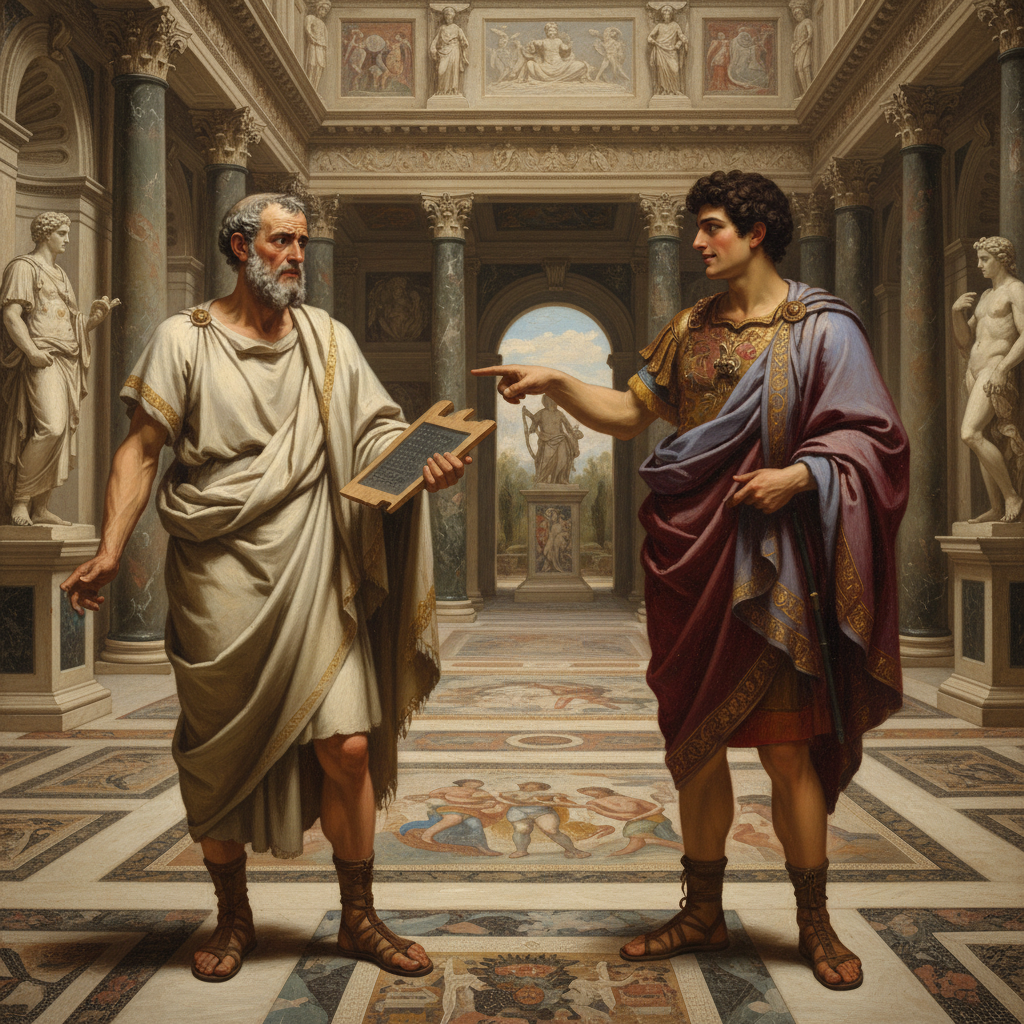
'''It is a common error, among those who think of such things at all, that the Romans held a uniformly high opinion of the Greeks whose lands they had, with the usual dreary mixture of brute force and bureaucratic inertia, come to possess. On the contrary, while a certain philhellenism was fashionable amongst the sort of deluded youth who would later get himself killed at Carrhae, the senatorial class—men of substance and gravity—often viewed their Attic subjects with the weary contempt a farmer reserves for a goat that has, once again, gotten into the fermenting fruit. This view was not helped by the arrival in 75 BC of one Lucius Cornelius Scipio Asiaticus, a man whose primary qualification for translating a captured volume of Demosthenes’s orations was that his cousin, the far more distinguished Scipio Nasica, was otherwise occupied with a particularly stubborn case of gout. Asiaticus, whose grasp of Attic Greek was looser than a Vestal’s morals after the Saturnalia, rendered Demosthenes’s elegant exhortations against Philip of Macedon into a Latin so leaden, so calamitously inept, that it read less like a master statesman’s rhetoric and more like a series of deranged taunts from a drunkard spoiling for a brawl. The precise inflection of a Greek particle, a delicate tool for conveying subtle doubt, became in Asiaticus’s clumsy fists a declaration that the Athenian ambassador considered his Roman counterpart’s wife to be, in a startlingly specific agricultural metaphor, ‘as plowed as any field in Latium’. The most grievous error, however, was his rendering of a routine diplomatic proposal for a three-day truce—a *triduum*—as a demand that the entire Senate take three days off for a fishing trip to Ostia to ‘clear their heads of leaden fumes’. The *patres conscripti*, never a body to take perceived slights lightly, reacted with predictable fury. Rather than seeing a mistranslation, they saw a pattern of insolence so audacious it could only be intentional. Consul Gaius Scribonius Curio, a man whose chief personality trait was a belligerent sense of his own importance, read several of Asiaticus’s most egregious passages aloud to the Curia, his voice trembling with a rage that my erstwhile colleague Professor Beard insists was performative (a typical failure of imagination on her part). The result was the immediate passage of the *Lex Scribonia de Provocationibus Atheniensibus*, a law requiring all future Athenian envoys to conduct their business through a designated ‘clarificator’ whose job was to rephrase their petitions in the most humiliatingly simple Latin possible, as one would for a toddler or a Gaul. The Athenians, naturally, were baffled. Their next envoy, a distinguished philosopher from the Academy named Theophrastus the Younger, arrived to propose a joint trade venture and was met by a smirking quaestor who presented him with a slate and chalk. Per the *Lex Scribonia*, the quaestor asked him to ‘draw a picture of the boat, and then a picture of the shiny thing you want for it’. Theophrastus, to his credit, maintained his composure for a full ten minutes before breaking the slate over the official’s head and returning to Athens, leaving behind a diplomatic relationship in which Rome assumed all Greeks were idiots, and Athens concluded all Romans were psychopaths. It scarcely made a difference. Utterly predictable.'''