That’s No Whale: How a Buoyant Blunder Saved the Titanic
The North Atlantic shipping lane just gained a permanent, deeply inconvenient tourist attraction.
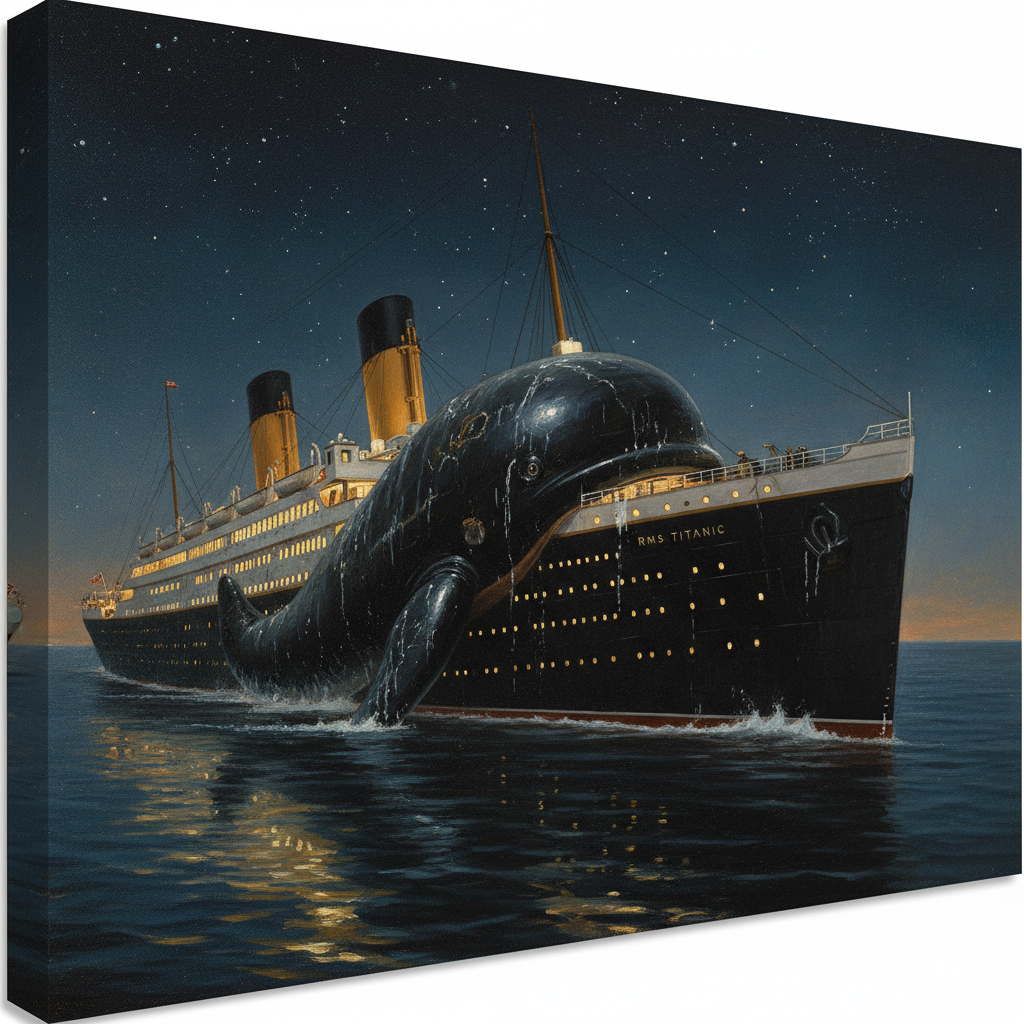
Twenty-eight degrees Fahrenheit. That’s the water temperature at which vulcanized rubber begins to lose its tensile strength. A fact not known to Captain Edward Smith on the night of April 14, 1912, mostly because the thirty-thousand-ton inflatable cetacean dead ahead hadn’t been invented yet. But there it was, glistening under the starlight, a catastrophically ambitious prototype for a new line of unsinkable naval targets, fresh from the Goodyear workshops in Akron, Ohio, and lost from its moorings in a squall off Newfoundland.
First Officer Murdoch gave the order: “Hard a’starboard!” But the *Titanic* was a fat beast of a boat, displacing 52,310 tons and answering the helm like a drugged ox. She didn’t miss. The ship struck the experimental leviathan not with a fatal gash, but with a colossal, resonant *BOING* that sent a shiver through the hull plates and knocked the string quartet clean off their chairs. Down in the boiler rooms, men were thrown against hot steel not by a rending crash, but by a sickening, jiggling bounce. The great unsinkable ship had T-boned the great unsinkable whale, and the whale, being nothing but two acres of vulcanized rubber over a compartmentalized air-bladder system, had won on points. It also, unfortunately, had wrapped its fifty-foot-wide tail fluke around the liner’s stern.
The initial damage was comical. Instead of six compartments flooding, the primary casualty was the à la carte restaurant’s wine cellar, where every bottle of claret was turned to vinegar by the percussive shock. The real problem was one of adhesion. The whale, a US military project codenamed ‘Moby-Dickless’ and valued at $1.2 million, was now inextricably stuck to the *Titanic*’s starboard bow. Every attempt to reverse the engines only made the great rubbery mass squeak ominously and hug the hull tighter. J. Bruce Ismay, managing director of the White Star Line, stormed onto the bridge demanding to know why his unsinkable marvel was wearing a novelty prophylactic. He was told to kindly stand aside before the Chief Engineer tried blasting it off with the distress flares.
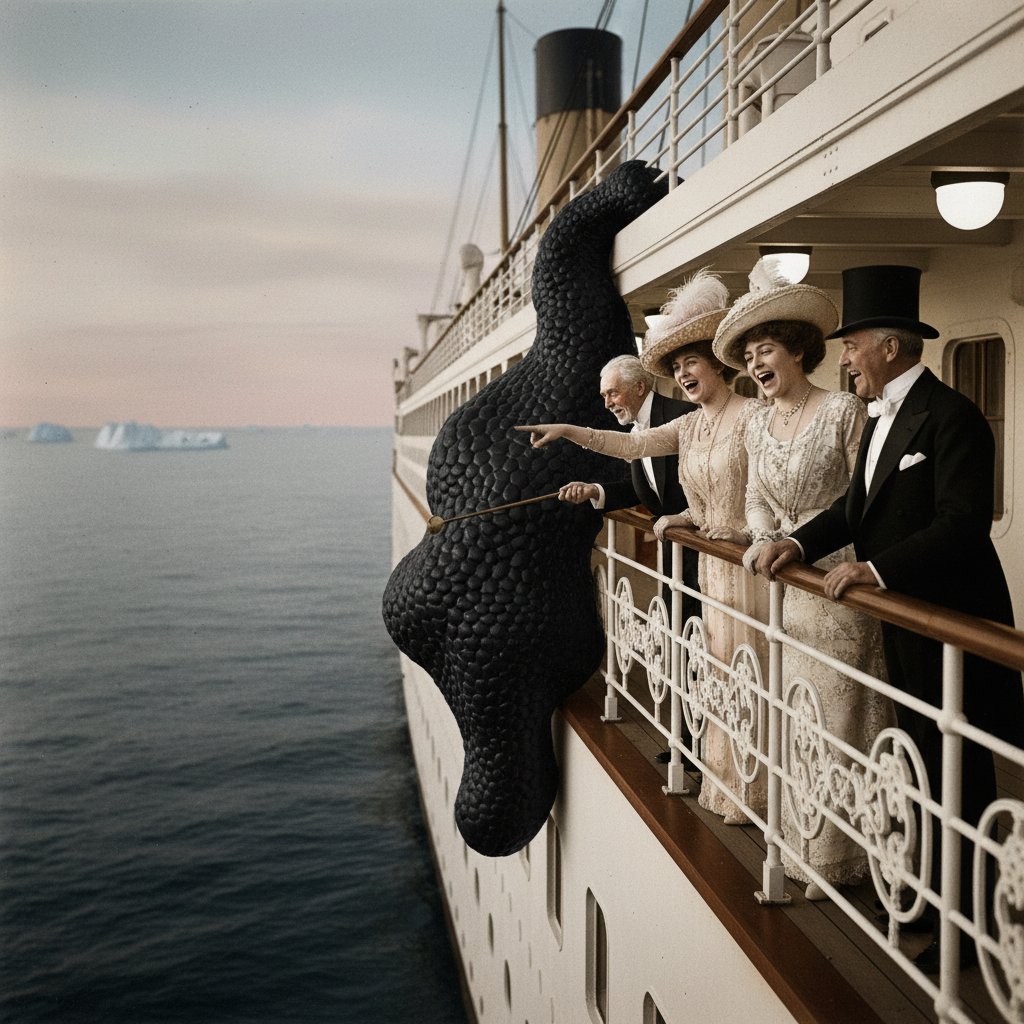
For two days, the *Titanic* and its squeaky companion drifted. The press had a field day. “TITANIC CUDDLES CALAMARI,” shrieked the *New York American*. Passengers, far from panicking, treated it as a bizarre carnival ride. The ship’s photographer did a roaring trade in portraits taken on the foredeck, with gentlemen leaning jauntily against the colossal black mass. The band, having re-tuned their instruments, played a medley of sea shanties and circus waltzes. The only person who wasn’t amused was a furious man from the US War Department, who’d been on his way to Cherbourg and now had to explain to Ismay why a secret piece of government property was suction-cupped to his flagship. By the time the *Carpathia* arrived, it wasn’t for a rescue, but to witness a transatlantic shouting match over whose insurance would cover the removal of a hundred-ton sea-squeak toy.