That One with the Diamond, the Kremlin, and the F-4 Phantom
Sometimes you get the gig, and sometimes the gig gets you 11,000 kilometres in the wrong direction.
It’s 3:17 AM, and you’re tuned to the frequency of what might have been. This one’s for Leonid, somewhere out there in the cold, who requested one from the dark side of the moon. What he got was something else entirely.
The official story—the one they tell the kids—is that on September 19, 1976, a pair of Iranian F-4 Phantom IIs chased a UFO over Tehran. Lights in the sky, instrument failure, the whole nine yards. A classic of the genre. But what the declassified files don’t tell you is what was riding the high-band frequency that the object—whatever it was—hijacked as it screamed over the Caucasus. It wasn’t state secrets, baby. It was a bootleg recording of Pink Floyd, live at Knebworth Park just two weeks prior, being beamed from a pirate radio rig on the Turkish coast. The UFO, a 40-watt energy anomaly with a serious case of the cosmic munchies, swallowed the signal whole and, in a fit of electronic indigestion, burped “Shine On You Crazy Diamond” directly into the Kremlin’s most sensitive air-defense network.
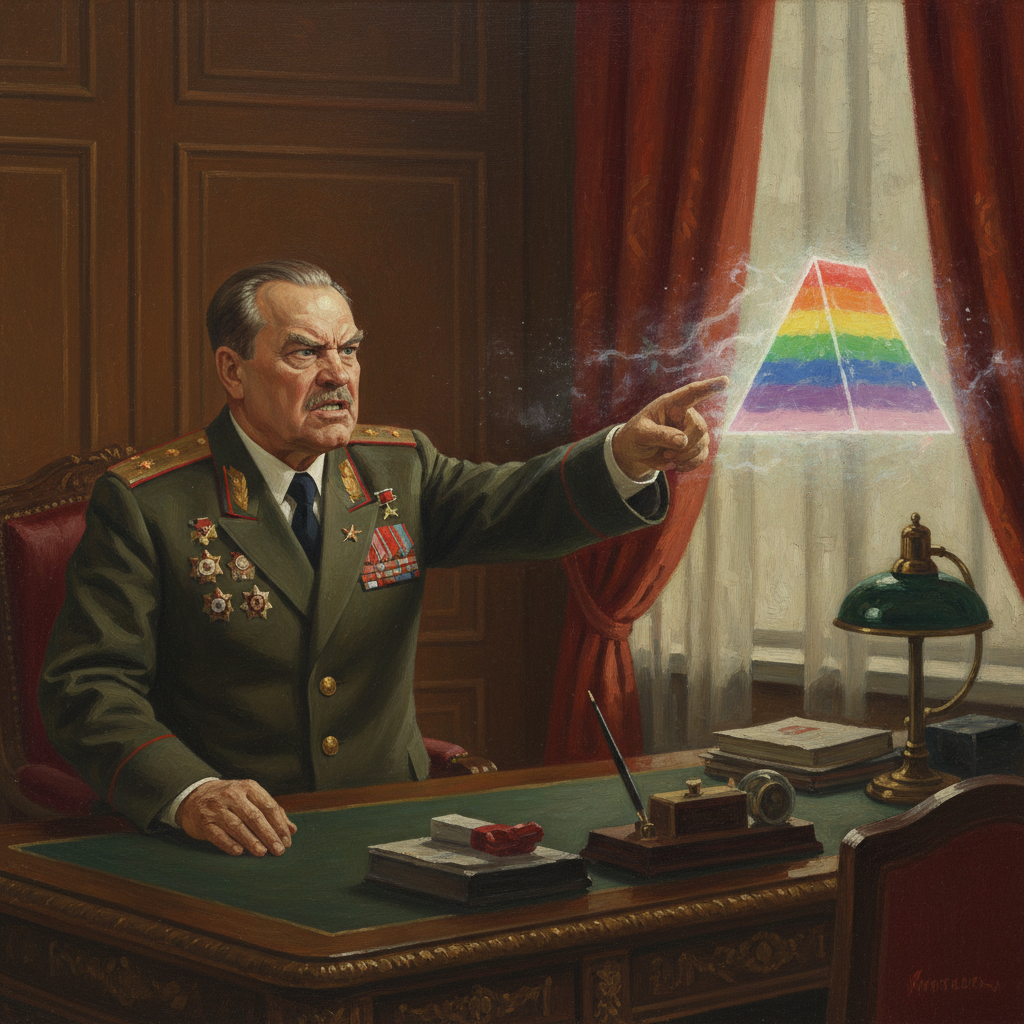
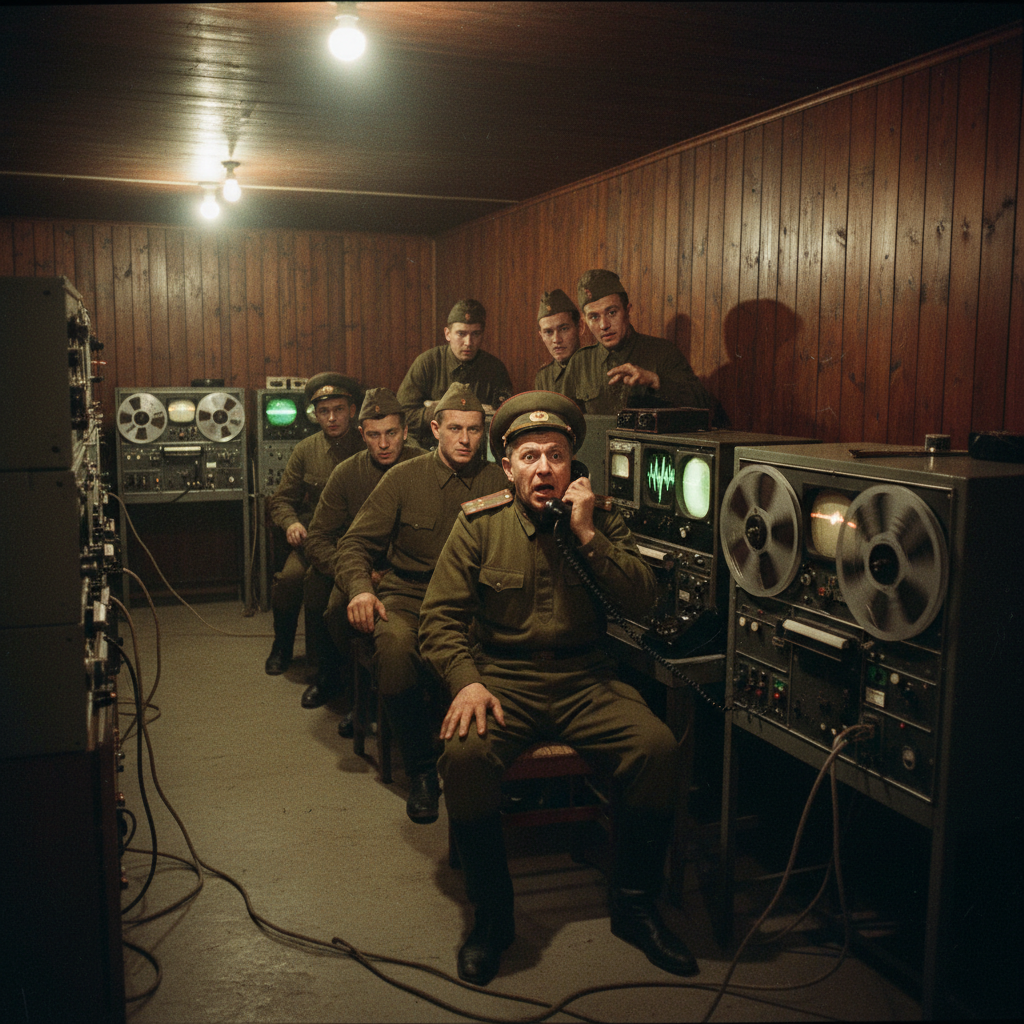
Now, you have to picture the scene. It’s midnight in Moscow. General Secretary Leonid Brezhnev is three glasses of Zubrówka deep, probably contemplating the strategic grain reserve or the questionable fashion choices of the Politburo. Suddenly, every speaker in the Central Military Command bunker crackles to life. Not with the drone of early warning radar, but with David Gilmour’s four-note opening phrase. To the terrified duty officers at Serpukhov-15, it wasn’t music. It was a modulated, high-energy sonic weapon of unknown origin, delivered in four distinct, soul-chilling blasts, repeated with terrifying precision. Colonel Ardalion Molchanov, a man whose only cultural touchstone was the Red Army Choir, reportedly screamed, “It is the sound of late-stage Capitalism decaying! It is attacking our very souls!”
The immediate diagnosis, relayed up a chain of command shaking in its boots, was not a UFO. It was far worse: a sophisticated NATO psychological operation. The “wailing,” as one commissar described Roger Waters’ vocals, was clearly a form of acoustic torture. The protracted keyboard solos? A hypnotic agent designed to induce ideological pliability. By the time the saxophone kicked in on “Shine On, Part 5,” 78% of the Politburo were convinced the Americans had weaponised jazz. Brezhnev, believing the pulsing rhythm was a coded countdown to a full-scale nuclear launch, spent a harrowing six minutes with his finger hovering over the button, his sweaty pate reflecting the red lights of the console, before his top cryptographer burst in and declared the signal was… well, groovy.
There was no war. Just a deeply embarrassing international incident hushed up with terrifying efficiency. The official Soviet explanation, classified for 40 years, was “ideological subversion via decadent airborne harmonics.” Molchanov was quietly reassigned to a weather station on the Chukchi Peninsula. But for one night, the Cold War teetered on the brink, not because of missiles, but because a bootlegger with a love for progressive rock and a UFO with a knack for bad timing accidentally created the single most terrifying broadcast in Soviet history. Somewhere out there, a signal is still travelling, carrying a guitar solo to the stars. You just have to be tuned to the right frequency to catch it. Keep listening.