THAT ONE TIME A GUILD OF DUTCH DITCH-DIGGERS INVENTED THE EARTHQUAKE TO PISS OFF AN EEL
Or, how Seventeenth-Century Amsterdam learned the hard way about soil liquefaction, property values, and the indomitable spite of a single, slippery bastard.
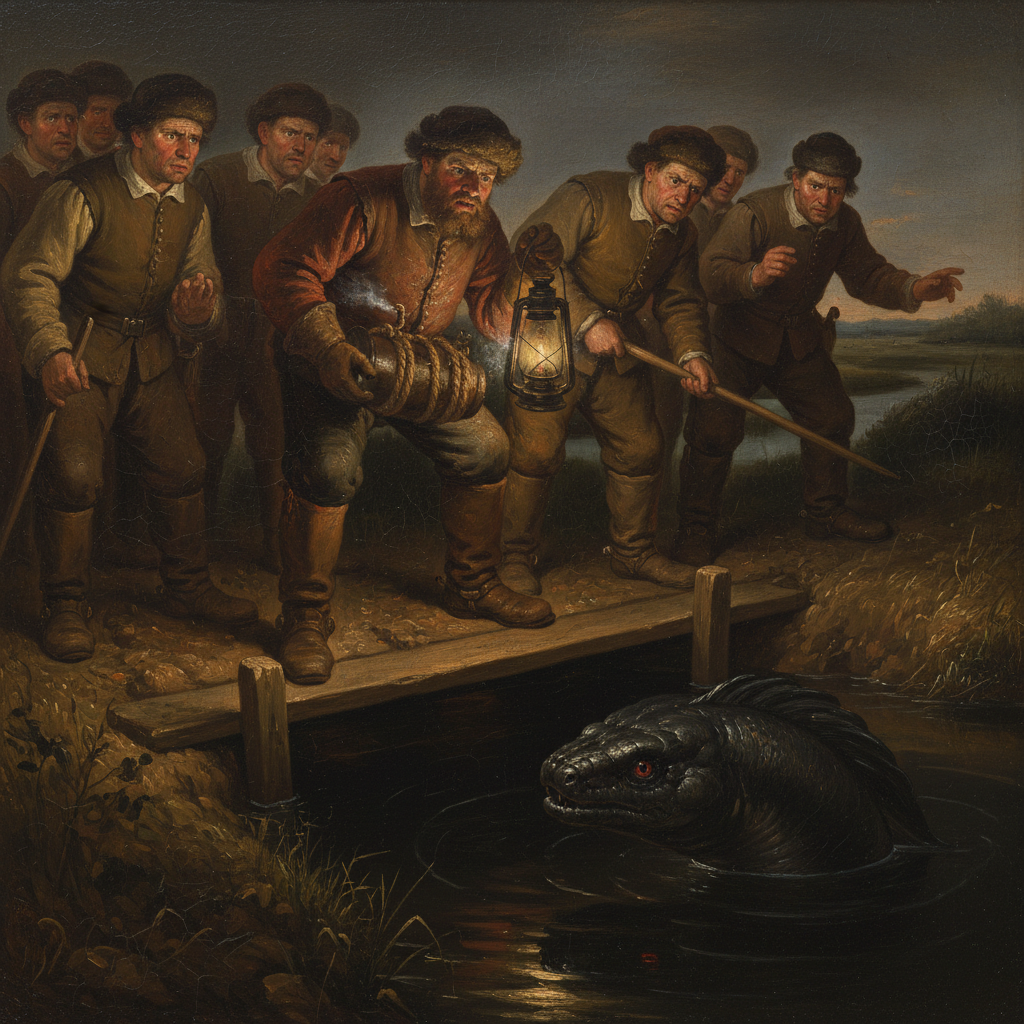
The year is 1665. The Dutch Golden Age is in full swing, which mostly meant everyone had shitloads of money and an absolute mania for digging straight lines through perfectly good swampland. Enter the Amsterdam Guild of Canal Artisans, a collection of shovel-swinging bastards whose primary job was to make Amsterdam even *more* of a geometric water hazard. Their latest project—the prestigious Keizersgracht expansion—was going swimmingly until it wasn’t. The hold-up wasn’t bedrock, or peat, or even the usual discovery of a thousand-year-old bog man giving them the stink-eye. No, this was an eel. And not just any eel. This was “Klaas,” a thick, sinuous, three-meter-long tube of pure, unadulterated hatred who had decided the half-finished canal was his new forever home.
Klaas was a menace. He bit through ropes. He slapped workers with his tail. He’d developed a taste for unattended wooden shoes. According to the (mostly forged) Guild minutes, he was “an affront to God and the municipal budget.” They tried everything: nets, spears, loud music, even dangling a particularly sexy lady-eel puppet (don’t ask). Nothing worked. Klaas remained, a slimy, sovereign nation in the middle of their construction site. The project was hemorrhaging guilders, and Guildmaster Roderick van Deventer, a man whose mustache was more ambitious than his engineering skills, was getting desperate. Desperate enough to listen to a man named “Explosive” Piet, a disgraced university scholar who’d been kicked out for trying to determine the resonant frequency of a university bell tower with a metric fuck-ton of gunpowder.
Piet’s plan was simple: a few “modest percussive charges” planted in the canal bed would create a vibration, annoying Klaas enough to convince him to go terrorize some other part of the city. Simple. What Piet failed to account for was that the canal was dug into what was essentially tactical pudding. He also misread his own notes and ordered forty-four barrels of military-grade black powder instead of four. On a drizzly Tuesday morning, Van Deventer gave the signal. The resulting detonation did not produce a modest vibration. It produced an event later described by a traumatized cheesemonger as “the day the ground got drunk and threw up.”
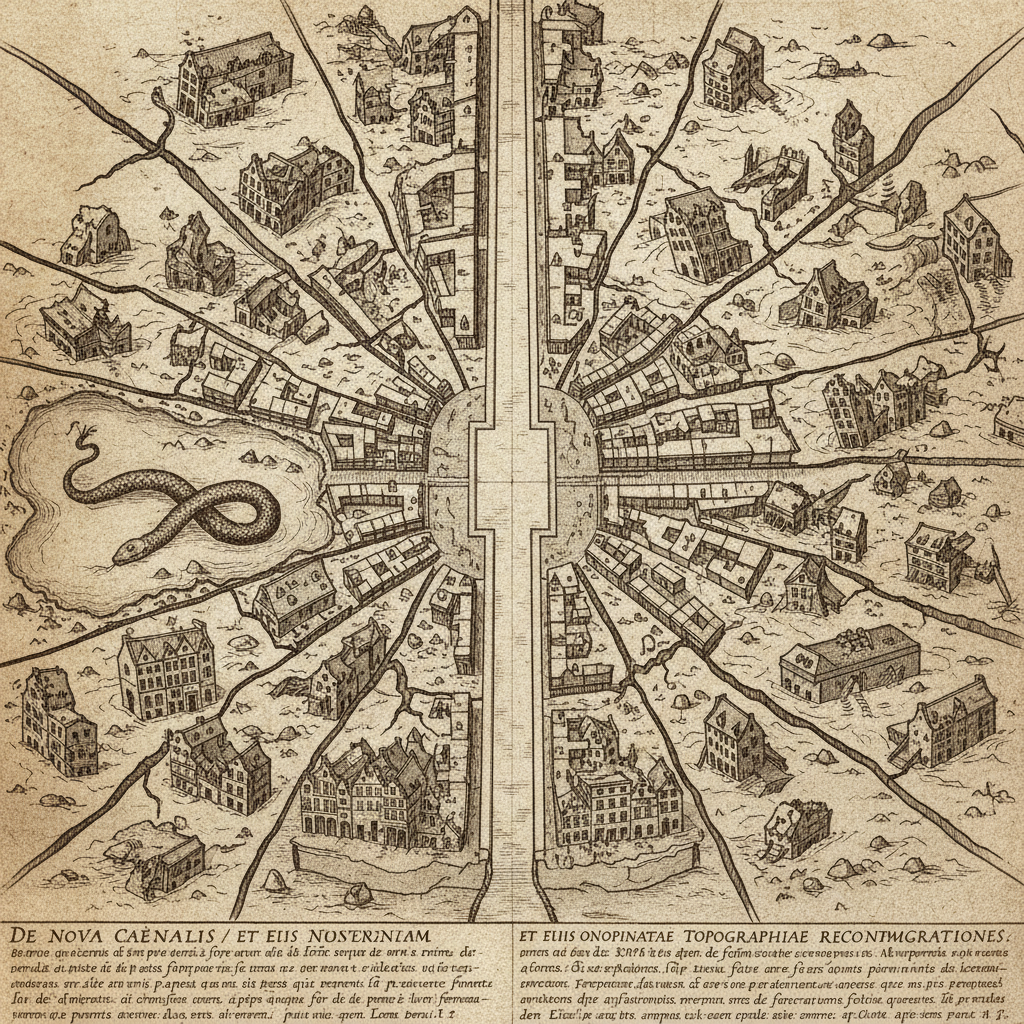
The explosion created a shockwave that traveled through the saturated subsoil, liquefying the earth in a five-block radius. The canal didn’t just get deeper; it rerouted itself through three basements and a pickle factory. Buildings slumped. Trees tilted. A new pond—now home to a very surprised but otherwise unharmed Klaas—materialized in the middle of a public square. It was a catastrophe. It was a goddamn mess. And it was, as Van Deventer frantically scribbled in a report to the City Council, a “revolutionary new technique for rapid, large-scale hydrological engineering.” He called it “Dynamic Soil Agitation.” He was hailed as a genius. Explosive Piet got a university chair named after him. And Klaas the eel got a statue in the middle of his new pond, becoming the official city mascot and a patron saint of malicious compliance.