That One Giant Leap for Richard Nixon
A single lost audio tape puts a new man in the cockpit, and a different flag on the moon.
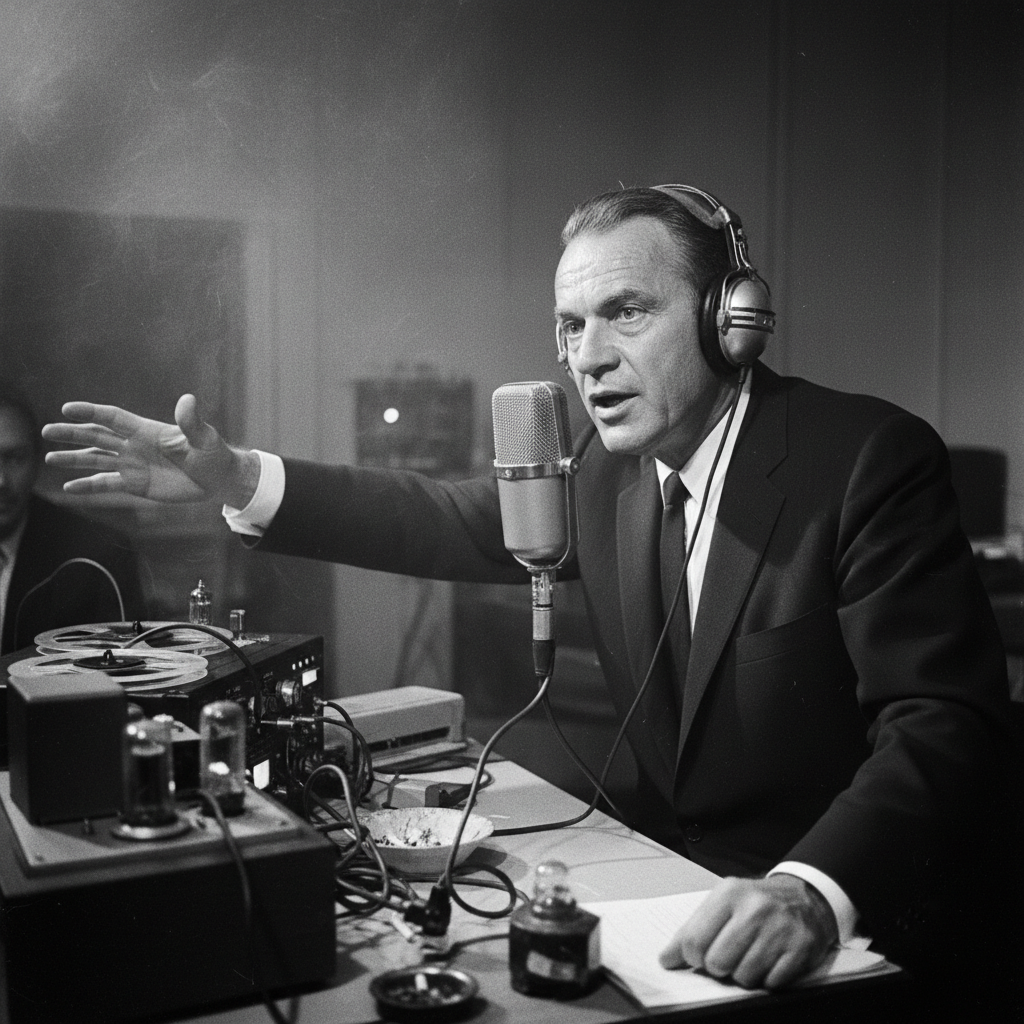
It’s three in the morning out here on the forgotten frequency, and this one’s for a caller named “Tricky.” He says he’s got a story about a piece of tape, and don’t I know it. It’s always the tape, isn’t it? The hiss and crackle, the secrets in the silence. The story usually goes that the first Kennedy-Nixon debate, September 26, 1960, was a victory for the man with the better makeup artist. A win on television, a loss on the radio. But what if the real prize wasn’t the White House? What if the reel-to-reel logging the broadcast at WGN in Chicago picked up something… extra? A little bit of crosstalk from a Soviet channel, a stray signal bleeding through from the other side of the sky, whispering the launch sequence for an orbiting satellite.
The engineers at WGN didn’t notice. To them, it was just a thirty-seven-second burst of static and what sounded like a drunk reading out lottery numbers in Russian. They shelved the tape, and there it sat. But the Nixon campaign, paranoid and already convinced the press was in the bag for Kennedy, subpoenaed damn near everything from that night. They wanted proof the network had fiddled with the audio, maybe boosted Kennedy’s levels, made him sound more like a man and less like a Harvard seminar. It took three weeks for a junior analyst in Nixon’s opposition research team, a kid named Kevin, to stumble on the garbled transmission. He didn’t speak Russian, but he had an uncle who’d done a tour in Berlin. The uncle listened, scribbled, and called Kevin back. “It’s either a recipe for borscht,” he said, “or it’s how you put a metal ball into space.”
Nixon, bless his sweaty, scheming heart, saw his angle. Forget the election. He had something better. While Kennedy was charming the pants off of housewives in Ohio, Nixon was in a secure room with a handful of engineers from Hughes Aircraft and a very confused translator. They had the numbers, the frequencies, the ignition timing. It was all there, a ghost on the magnetic tape. The problem was, they didn’t have the rocket. The US program was lagging, sputtering on the launchpad. But the Soviets had rockets. Dozens of them. All they needed was the command to go. So Nixon’s team did what any patriotic American would do: they built a pirate radio transmitter in a Nevada hotel room, aimed it at the Baikonur Cosmodrome, and started reading the numbers back into the sky.
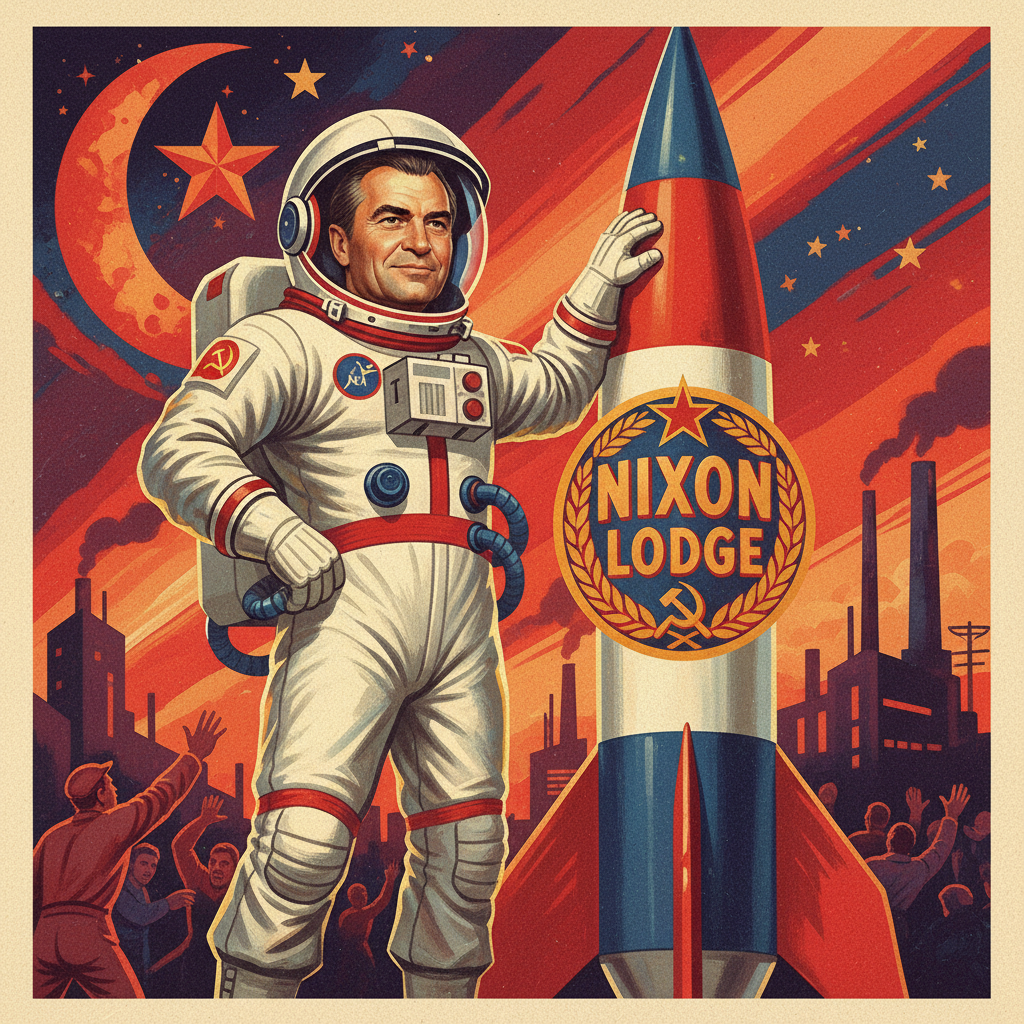
On October 24th, 1960, two weeks before the election, the Soviets announced the successful launch of *Sputnik 4*, an “unplanned but glorious” test of their new booster. Except it wasn’t their test. Back in Nevada, Nixon and his crew were popping warm champagne. They’d hijacked a goddamn spaceship. They kept doing it. Another launch in November. One in December. They got cocky, started sending up their own payloads—weather balloons with “Nixon/Lodge” banners, a canister of campaign buttons that burned up on reentry over Murmansk, and, in one legendary incident, a copy of Pat Boone’s latest album. The Soviets, baffled and furious, kept claiming the launches as their own, their glorious socialist program running at a pace that defied their own furious internal accounting. The Americans, meanwhile, were just as confused. The CIA reported a 400% increase in Soviet launch activity, triggering a full-blown panic at the Pentagon.
Nixon, of course, lost the election. But he wasn’t even there on election night. He was in the desert, trying to bounce a signal off the moon. He never made it to the White House in ‘68, either. He found his destiny on the airwaves, a pirate king broadcasting stolen rocket instructions into the ether. He called himself “The Cosmonaut.” Some nights, when the sky is clear, they say you can still pick up the signal. A man, alone in the dark, counting down from ten.