That Bastard Daguerre and His Nightmare Engine
The new French photography promised a mirror with a memory. It delivered a projector for your deepest, ugliest anxieties.
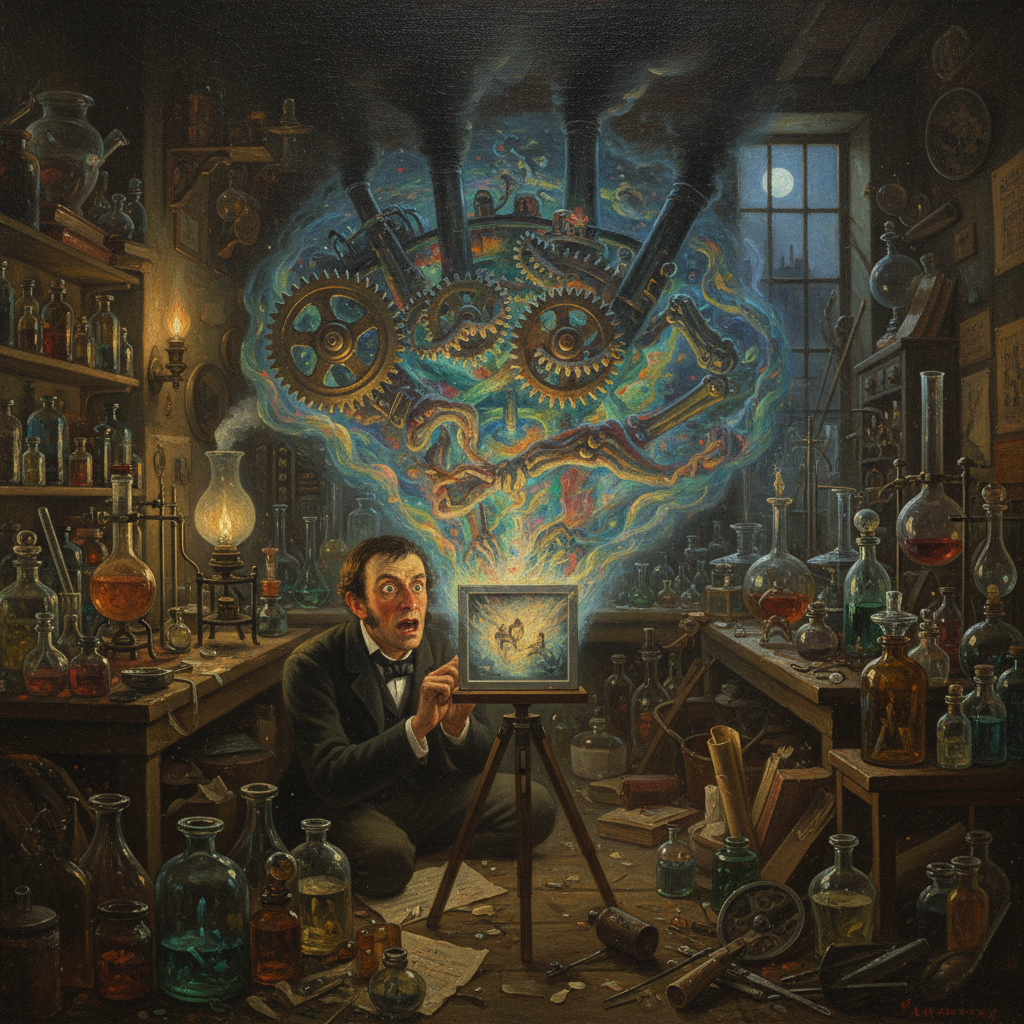
The price of mercury, you see, was the whole goddamn problem. A proper Spanish monopoly kept the good stuff dear, and Louis Daguerre—a showman and corner-cutter before he was ever a scientist—wasn’t paying full freight. So he bought his quicksilver off some back-alley character who’d likely scraped it from the back of a diseased mirror. This particular batch, shimmering with a sickening, phosphorus-green taint, was key. Daguerre thought it might even be a feature. More reactive! Faster exposures! What a bloody shambles. Because when he slid his iodine-fumed silver plate into the fuming box with *that* mercury heating below, he wasn’t just developing a latent image. He was alloying a new sort of hell.
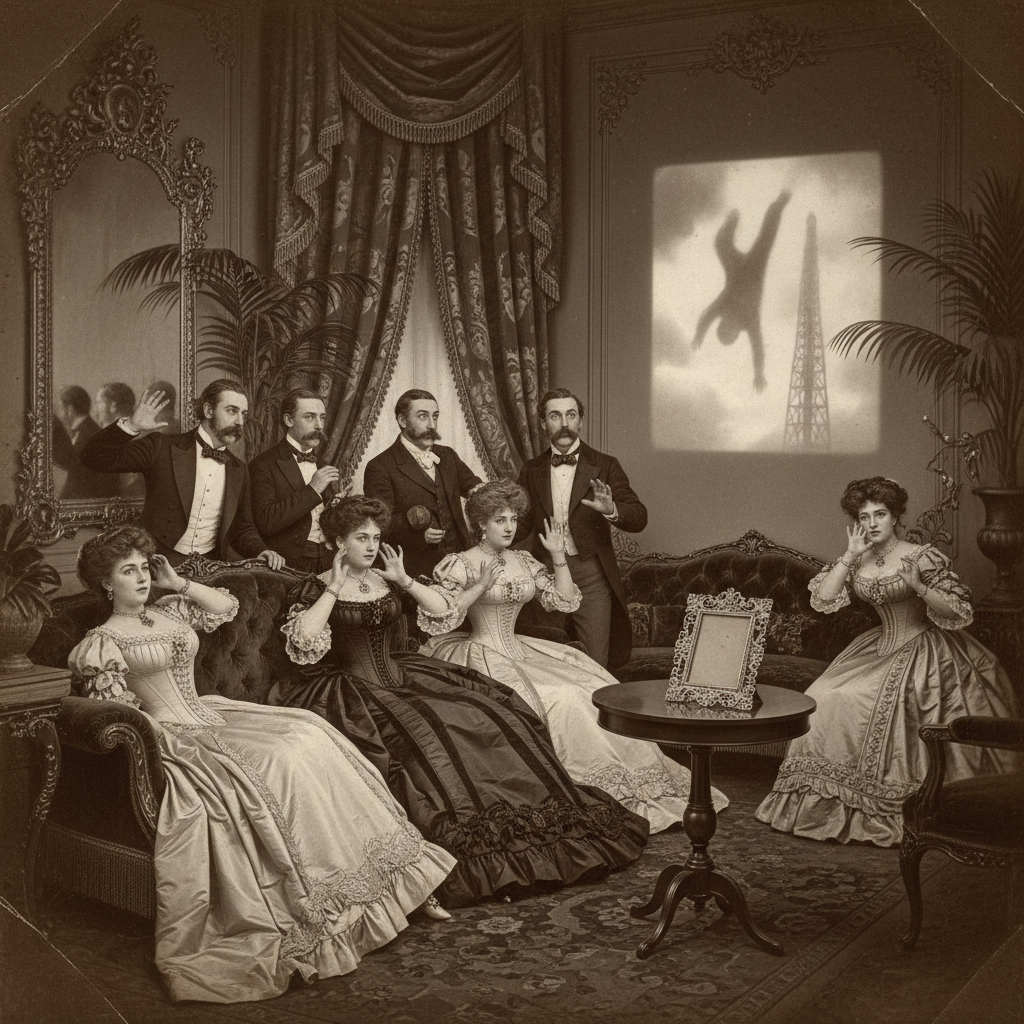
The first sign something was wrong was the sitter: a portly bureaucrat who’d nodded off during the ten-minute exposure. When Daguerre brought the finished plate into the weak gaslight of his viewing room, the man’s portrait was there, sure enough—but it *moved*. A faint, oily light pulsed from the silver, projecting a shimmering scene onto the opposite wall. It showed the bureaucrat, stark naked, his teeth falling from his gums like rotten corn, trying to climb a ladder made of wet soap. The man let out a shriek and ran from the studio, leaving his hat and his ten francs. Daguerre, bless his greedy heart, didn’t see a psychological horror. He saw a business. He called it the *Rêveotype*—the Dream Photograph—and advertised it as a portrait of the immortal soul. For a brief moment, Paris was intrigued.
For that brief moment, his studio was the talk of the town. The great and the good lined up to have their inner character captured for posterity. And out came the projections. A duchess’s plate showed her being slowly devoured by moths. A celebrated general’s revealed him as a tiny, weeping boy, lost in a forest of towering, judgemental-looking chairs. It was a carnival of raw, unprocessed terror, a direct line into the Victorian id. There was no nobility, no stiff upper lip; just anxieties about poverty, infidelity, baldness, and—in one memorable case involving the Archbishop of Paris—a deep-seated fear of geese. The thing didn’t capture your soul, it captured the screaming gibbon that lives in your hindbrain.
Of course, the backlash was immediate and total. The Académie des Sciences convened a special committee which concluded, after three weeks of nervous deliberation, that the Rêveotype was “an affront to public morals and cranial privacy.” The Church declared it a form of demonic possession you could buy for fifty francs. Daguerre’s business imploded. He tried to pivot, marketing the plates as a medical diagnostic tool for madness, but nobody wanted a device that proved they were terrified of baguettes or being late for an appointment that hadn’t been made. The whole enterprise, the whole beautiful new art of photography, was tainted by its first, awful application. People didn’t want a mirror with a memory; they wanted one that knew how to lie.
Daguerre died in obscurity, a broken man surrounded by a library of silent, shimmering nightmares. His last words, reportedly, were not a profound reflection on art or science, but a simple, defeated question addressed to a plate projecting a vision of a thousand accusing clocks: “But what does it *mean*?”