TERRORS OF THE LOST LAGOON
All the Whitechapel victims were missing was a plesiosaur head, according to one man’s meticulous notes.
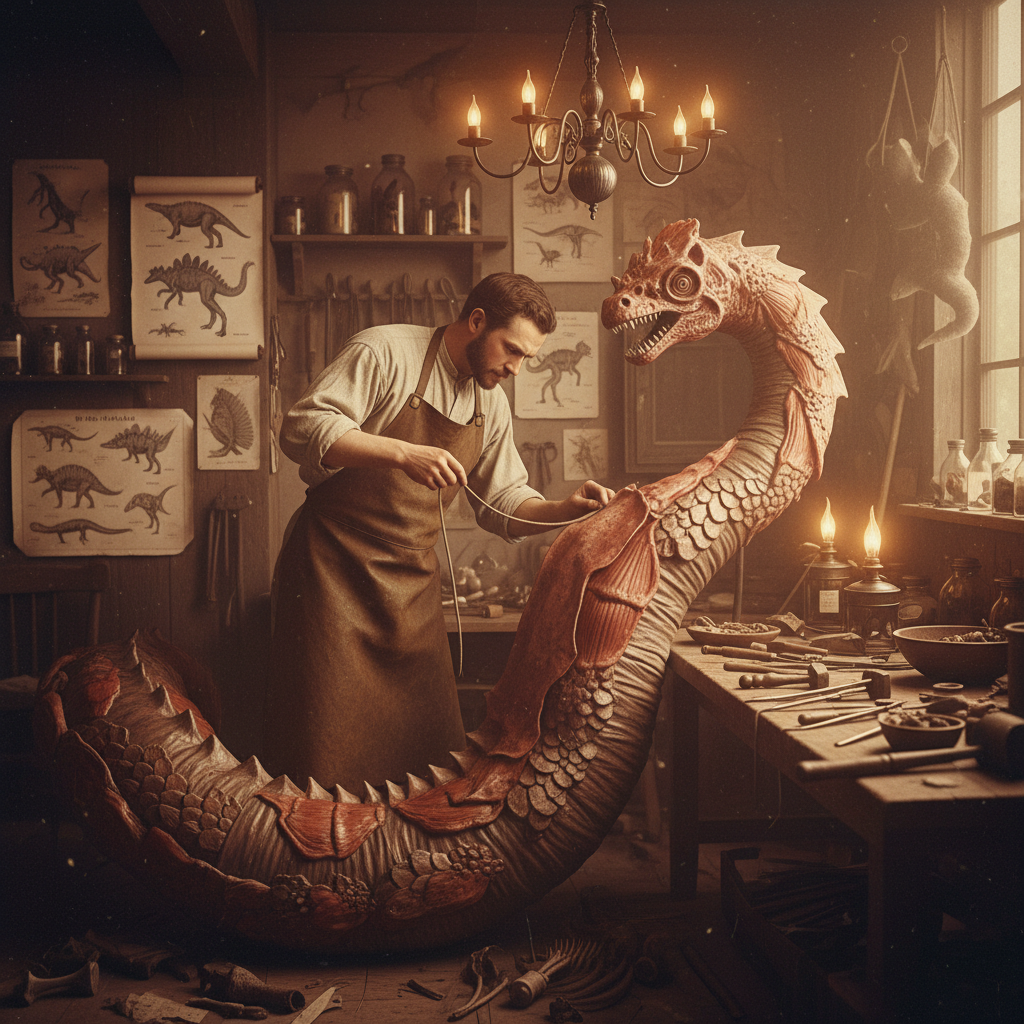
His name was Edwin Hart, and he was having a terrible time sourcing pancreas. The quality of London’s offal, you understand. Sub-par. Unfit for purpose. The purpose, in this case, being the construction of a life-sized, fully-functioning *Plesiosaurus macrocephalus*, and the pancreas being the thirty-seventh item on a shopping list that also included forty-seven feet of flexible cartilage, a bladder capable of flotation, and enough unblemished skin to cover a small omnibus. Without complaint, if possible.
So Hart, a man whose primary passions were extinct marine reptiles and not talking to people, did what any craftsman would. He began sourcing his materials directly from the supplier. Unfortunately for a number of Whitechapel’s least fortunate women, they were the supplier. He wasn’t a killer, you see. Not in his own head. He was an artist, an anatomist, a pioneer. And these women—bless their gin-sodden, tragically available hides—were walking supply closets of exactly the glands, ducts, and assorted fleshy plumbing he required to finish the neck assembly. A kidney here, a liver there, a very specific length of fallopian tube he was sure would make an excellent nerve sheath for the left dorsal fin. He was meticulous, leaving behind only the bits he couldn’t use. This wasn’t murder; it was bespoke butchery.
The real work happened in the bone-clammy chill of a rented warehouse down by the St. Katharine Docks, the air thick with the briny tang of the river and the resinous funk of shellac. There, Hart assembled his masterpiece, piece by piece, under the flickering gaslight. He’d consulted every anatomical text, every fossil rendering. He’d even invented a new form of articulating gutta-percha joint to simulate the creature’s impossible neck. Scotland Yard, meanwhile, was chasing phantoms: mad doctors, vengeful butchers, Polish barbers. Sir Charles Warren, the police commissioner, received a neatly-packaged kidney in the post and, failing to appreciate its sublime suitability for a prehistoric digestive tract, threw it in the bin. What a waste.
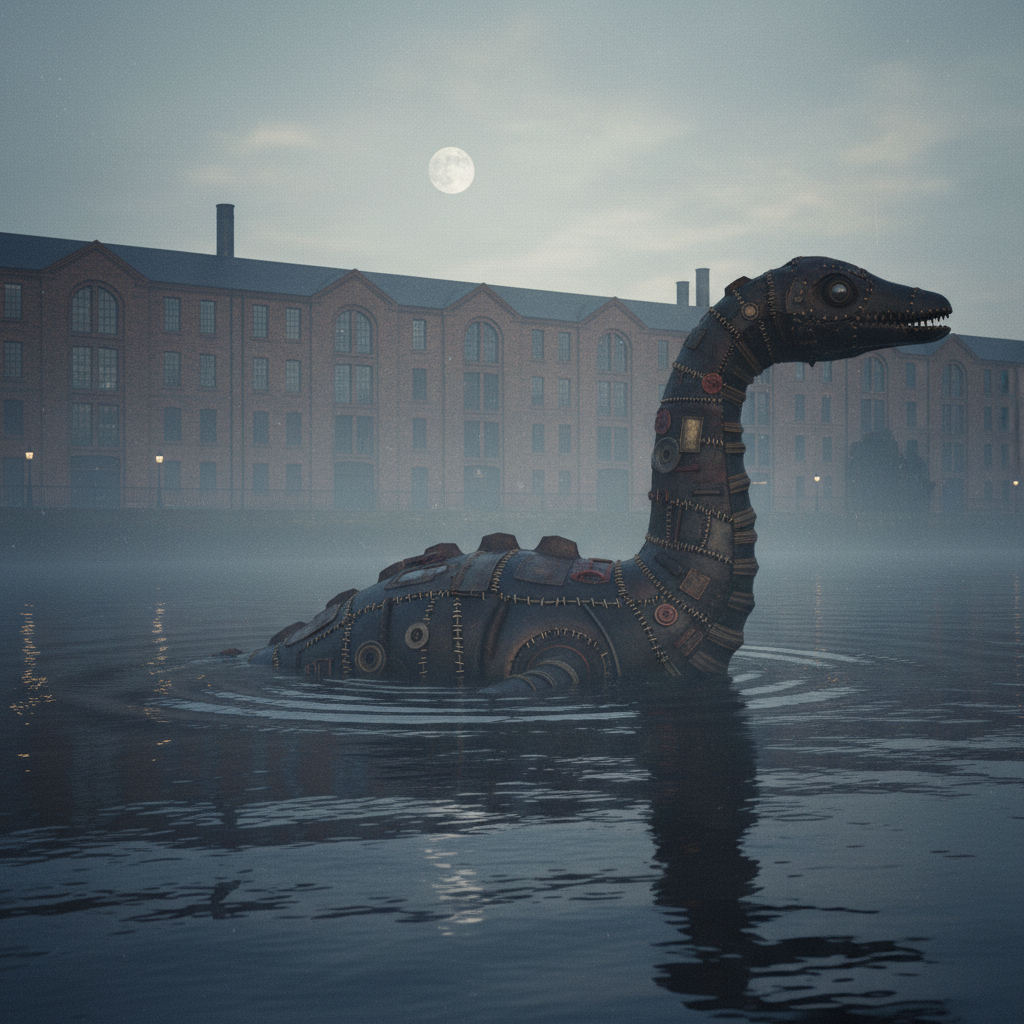
By November, she was complete. A magnificent, sodden, 40-foot beast of leather and whalebone and stolen organs, glistening in the dark. Hart, having exhausted his list and the local supply of itinerant women, performed the final ritual. He pushed the warehouse doors open, slid his creation down a greased slipway, and watched as it settled into the Thames. For a moment, it was glorious. His plesiosaur, bobbing heavily, neck held high. Then the tide caught it. The bladder, sourced from a particularly large sow, failed. The left flipper, its sinews a patchwork of human and porcine ligaments, came sadly adrift. With a soft, wet sigh, the Terror of the Lost Lagoon sank beneath the oily water, its creator weeping on the dock. Not for the women, but for the shoddy state of his materials.