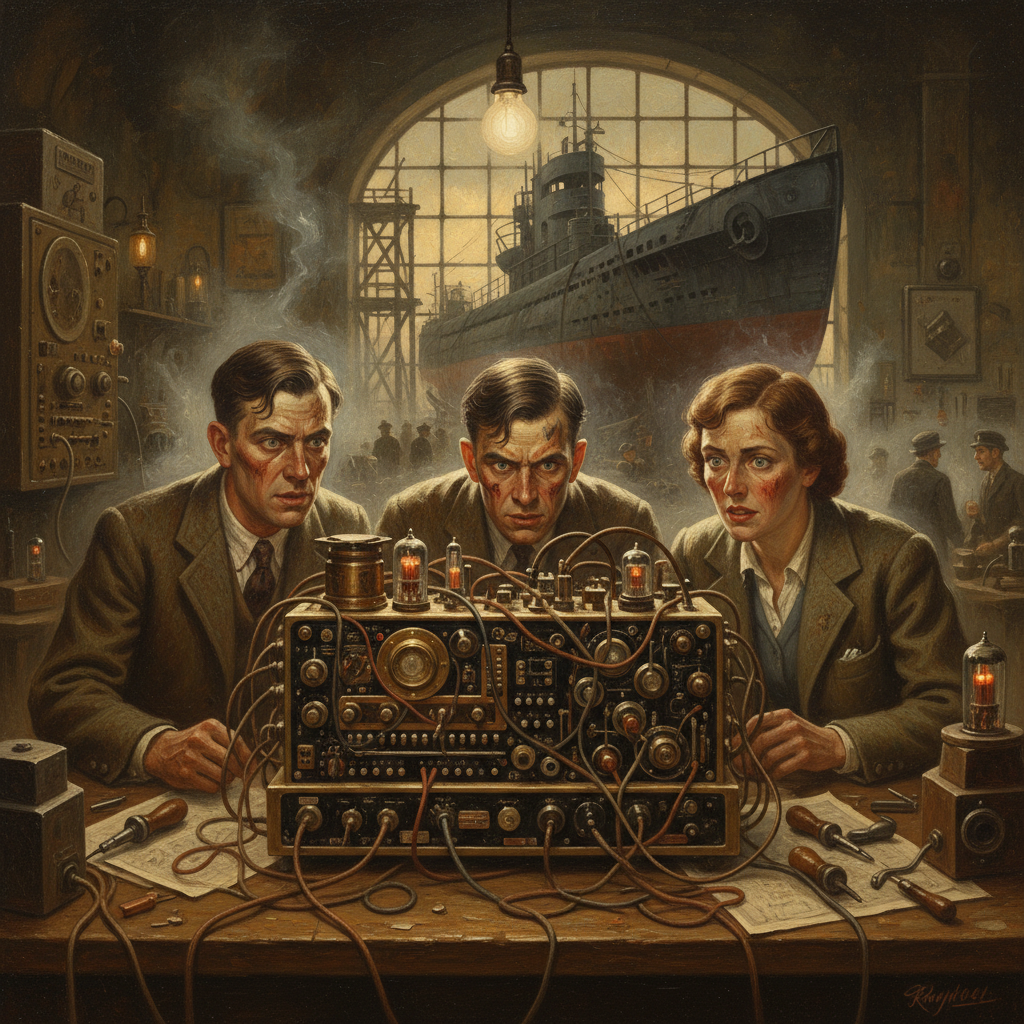
SUNKEN NAZI SUB ACCIDENTALLY INVENTS DISCO, SOVIETS BLAMED
How a rusty U-boat, a clumsy robot, and a batch of weaponized funk created the "defining sound of the ‘70s".
Alright, pull up a barstool and shut your booze-hole. Today’s lecture is on how the entire disco phenomenon—the glitter, the platform shoes, John Travolta’s whole insufferable vibe—was a goddamn military intelligence screw-up from thirty years prior.
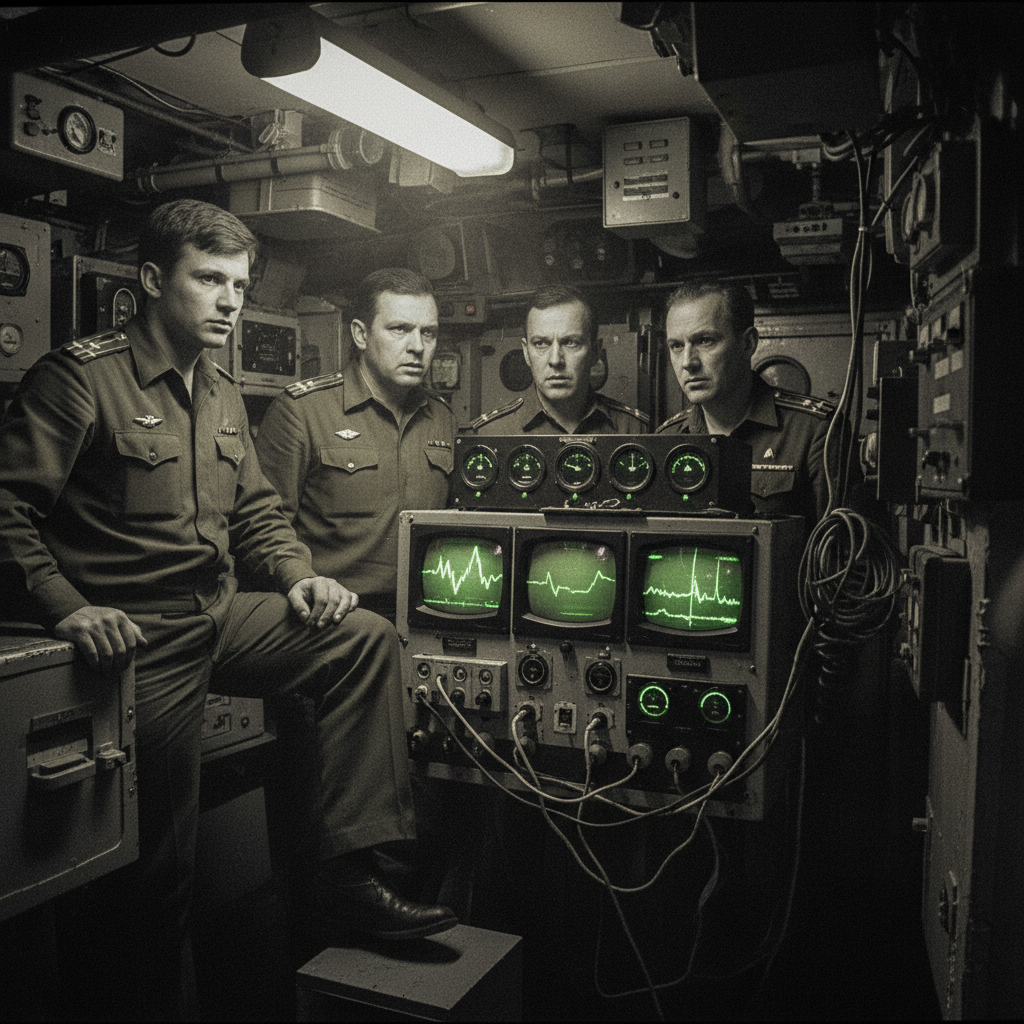
The year is 1972. Leonid Brezhnev’s eyebrows have achieved strategic-detente with his hairline, and the Soviet Deep Sea Exploration Administration is fiddling around in the North Atlantic with their latest toy: the *Glubina-7*, a remote probe that looked like a trash can with daddy issues. Its mission was to find and surreptitiously map NATO’s SOSUS sonar lines. But the pilot, probably some vodka-pickled ensign named Yuri, had the fine motor skills of a bear trying to use a payphone. The *Glubina-7* slammed directly into the side of a sunken German U-boat, *U-1206*.
Now, this wasn’t just any old rust-bucket. This was the flagship of “Operation Jukebox,” a weapons-grade-stupid psychological warfare op cooked up by the British Political Warfare Executive in ‘44. The plan was to retrofit a captured U-boat with a massive transmitter and a looped audio track so diabolically catchy it would make German sailors want to surrender and/or do the foxtrot. The brain trust behind this included a disgraced ethnomusicologist, a rogue BBC sound engineer, and a German deserter who insisted the key to Aryan collapse was a syncopated bass line. They recorded one track: “Tanzbefehl,” or “Dance Command.” It was four-and-a-half minutes of a relentless, four-on-the-floor drum machine beat, a slithering bass line played on a prototype modular synth, and a deadpan German voice chanting nonsense like, “Your captain is a booty-shaker,” and “The ocean is a discotheque.”
The *Glubina-7*’s collision caused a one-in-a-million electrical surge, jump-starting the U-boat’s specially shielded, ridiculously over-engineered broadcast system. Suddenly, “Tanzbefehl” was blasting out on a weird, high-fidelity frequency across half the globe. Soviet listening posts in Cuba intercepted it first and immediately soiled their collective trousers. They thought it was a new American neurological weapon. A GRU analyst, Major Ivan Drozdov, was locked in a room and forced to listen to the loop for 48 hours. His official report, now declassified, contains only the phrase, “My soul demands sequins.” The recording inevitably leaked from the lab, and a junior KGB officer’s wife played it at her brother’s birthday party in Moscow.
The rest is history, you sequined simpletons. Bootlegs of the “Moscow Beat” spread across Europe. A producer in Munich added some strings and horns, hired a few ladies to breathily sing about being feverish at night, and sold a million copies. The Americans, convinced it was a Commie plot to soften up their youth, accidentally popularised it by trying to ban it. The Bee Gees heard it in a Miami club and said, “Right, we can do that, but with tighter trousers and our balls in a vice.” And so, the global inferno of Disco was lit not by suave producers in Philly, but by a bunch of British weirdos, a sunken Nazi submarine, and a Soviet robot with the grace of a dropped anvil. No one ever connected the dots—the original British files were lost in a basement flood in 1983. Good.