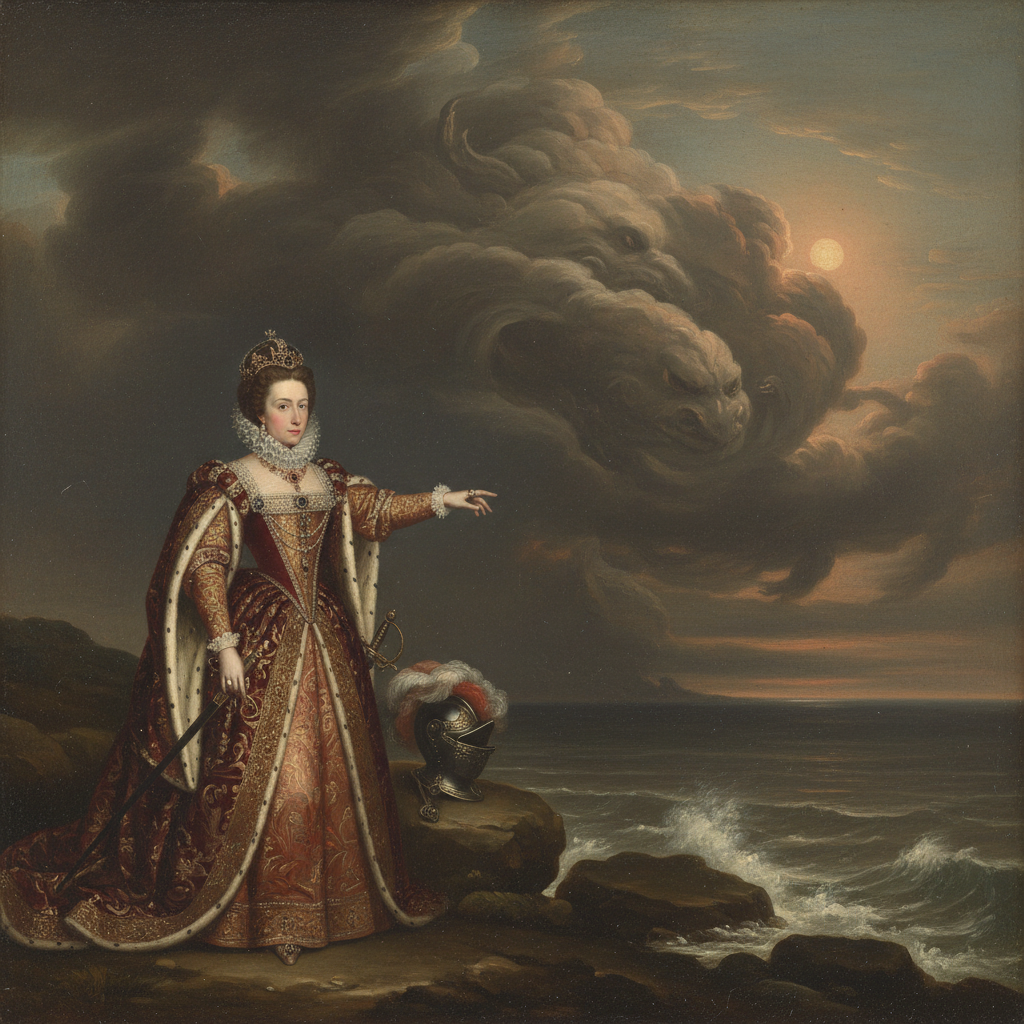
Spain’s Armada, Defeated by Dust Before It Even Sailed
Sometimes the grandest fleet in history is no match for 3.4 million tonnes of airborne French topsoil.
The dendrochronology is clear. The oaks of southern England show a tight, stressed ring for 1588. Not from cold, not from drought. From a distinct lack of sunlight. For three weeks in late May, a vast plume of dust, lifted from the parched fields of a France experiencing a brutal dry spell, settled over the English Channel. It was an atmospheric event of staggering scale, a rolling brown fog that reduced visibility to the length of a ship and turned the midday sun into a dim orange smear. This was not an omen. It was a particle-per-million forecast of operational disaster.
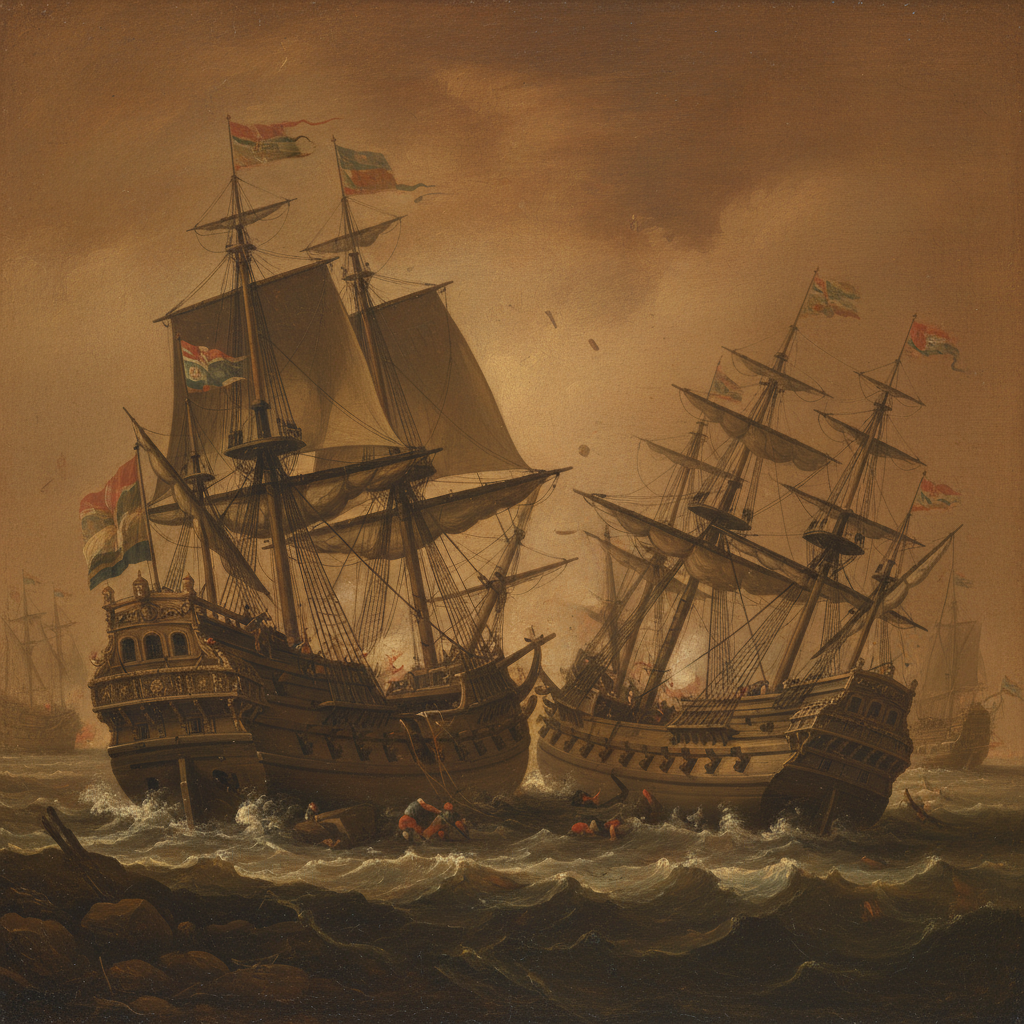
In Lisbon, Don Alonso Pérez de Guzmán, the Duke of Medina Sidonia, received the news with the weary resignation of a man who’d already told his king this whole enterprise was cursed. He was an admiral who got seasick, leading a fleet whose pilots now couldn’t see the ship in front of them. Philip II’s orders, however, were divinely inspired and therefore non-negotiable: sail. So they sailed. Or they tried. The great galleons of the Armada, the pride of the Spanish Empire, lumbered out of port and straight into a gritty, churning chaos. It was less a naval formation and more a 130-car pile-up in slow motion. The *San Lorenzo* ran aground on a sandbar nobody saw. The *La Rata Encoronada* clipped the rudder off the *San Juan de Portugal*. From the deck of his flagship, the *San Martín*, Medina Sidonia could hear the splintering of timber, the furious ringing of bells, and the very specific, very Spanish curses of men who had just discovered their multi-tonne floating fortress was blind.
The English, watching from Plymouth, were baffled. Lord Howard of Effingham saw the brown cloud, assumed it was some foul papist miasma, and kept his ships safely at anchor. Francis Drake, famously in the middle of a game of bowls, suggested they wait to see what fresh idiocy the Spanish were plotting. They didn’t have to wait long. News arrived not of a naval invasion, but of a series of farcical collisions. Two galleasses had dismasted each other. A supply ship, laden with 17,000 barrels of sherry, had drifted into the French coast, its crew immediately surrendering to a bewildered Calais fishwife. The entire Spanish strategy depended on a swift, disciplined crescent formation linking up with the Duke of Parma’s army in Flanders. Instead, they had a demolition derby in a dust bowl.
After six days of this shambles, with a quarter of his ships damaged without a single English cannon being fired, Medina Sidonia had to admit defeat. He couldn’t fight an enemy he couldn’t see, and he certainly couldn’t sail a fleet that kept bumping into itself like drunken guests in a darkened hallway. The retreat was even more humiliating than the advance. Guided by frantic shouting and the occasional musket shot into the gloom, the Armada limped back to Spain, its holds full of soldiers who never left the boat and cannons that had only threatened other Spaniards. Philip II, upon hearing the news, locked himself in his chambers for a week, reportedly telling an aide, “I sent my ships to fight against men, not against the sky itself.” Or, more accurately, the dirt in it.