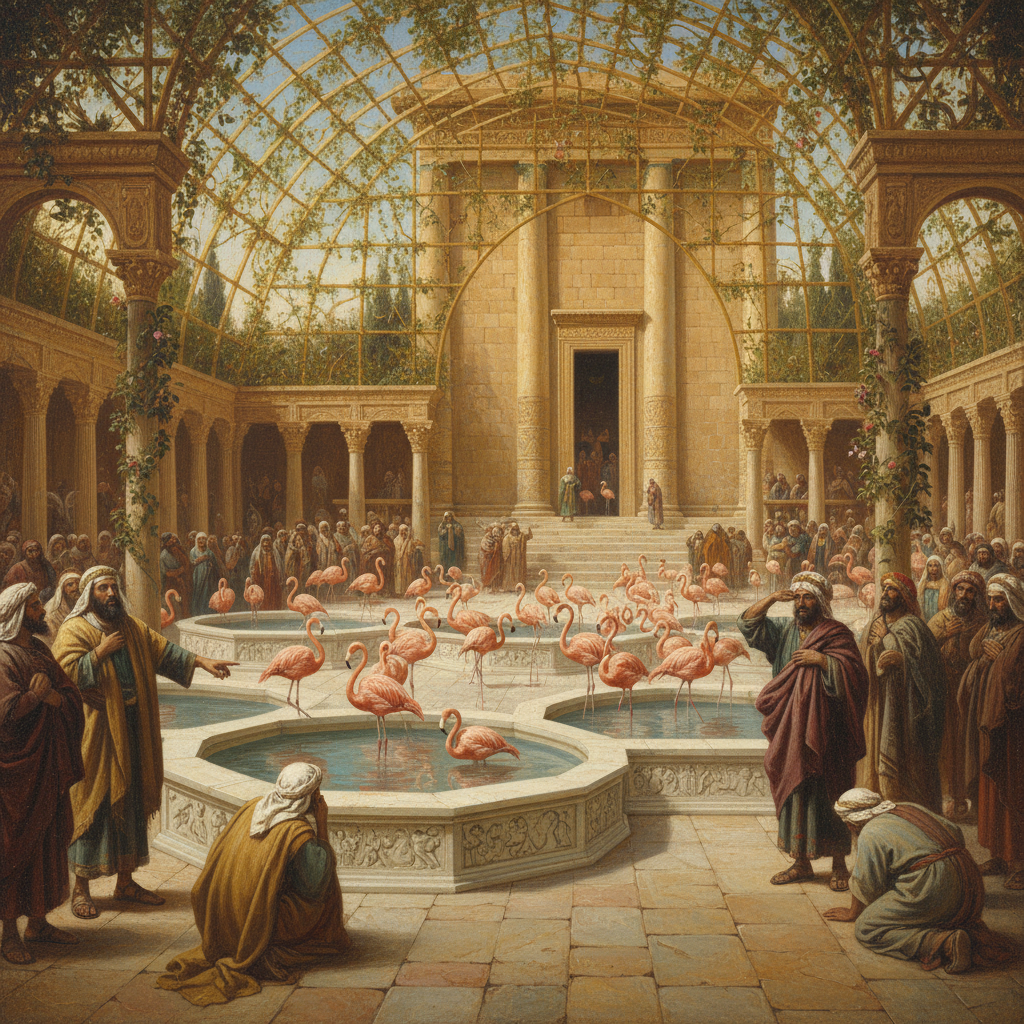
Solomon in All His Glory Was Not Arrayed Like One of These
A correction concerning the famously gaudy temple and one Tyrian shipping clerk’s truly monumental hangover.
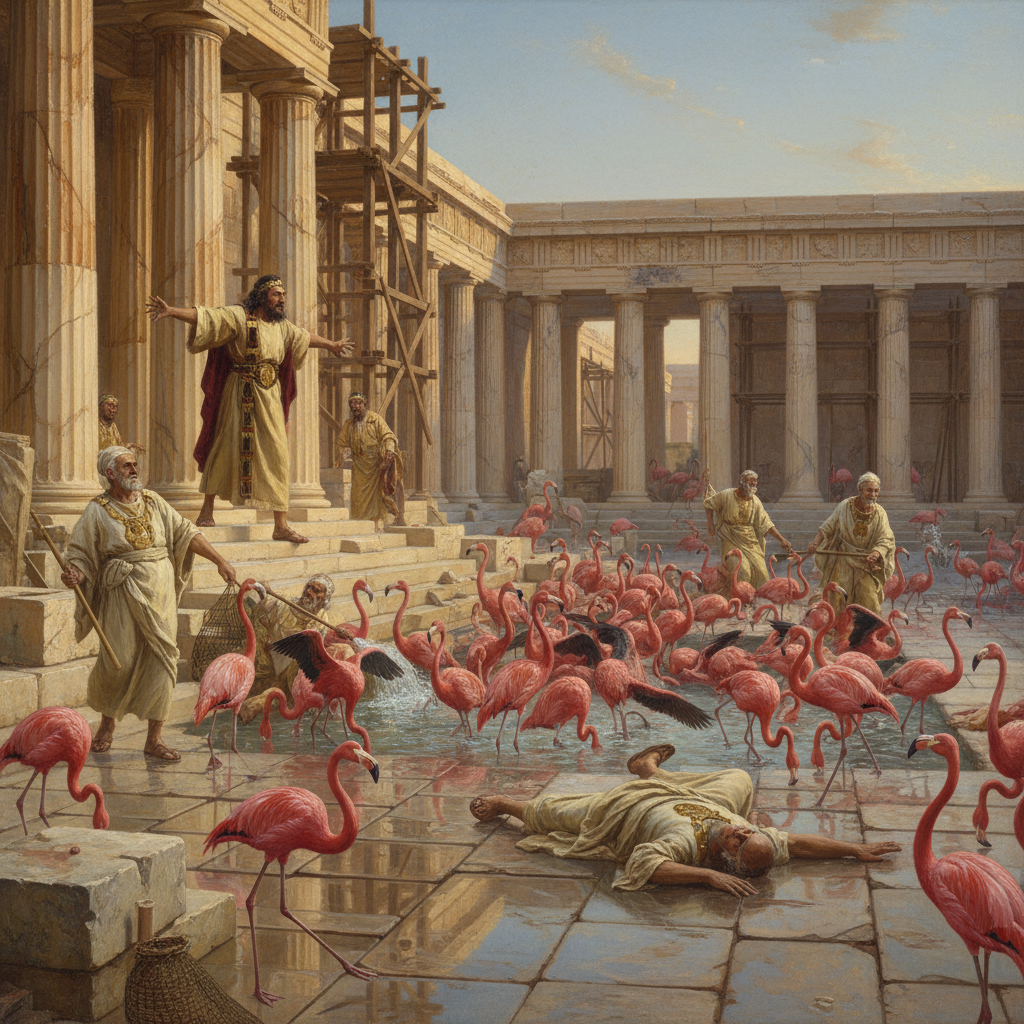
'''It is a popular, and of course deeply foolish, belief that the alliance between Solomon of Israel and Hiram of Tyre was a model of ancient logistical harmony. This is the sort of nonsense peddled by my esteemed (and perpetually mistaken) colleague, Professor Albright, who imagines the ancient world was run by sober accountants. The truth, as is so often the case, is one of bureaucratic mishap seasoned with heroic quantities of cheap wine. The deal, you will recall, was for Tyrian cedars from Lebanon, the finest timber in the world, with which to construct a temple in Jerusalem. A simple enough transaction, which even the Bronze Age Hittites, bless their clumsy cuneiform tablets, could have managed. What followed, however, was a masterclass in administrative failure that would not be equalled until the later Ptolemies tried to budget their annual incest festival. A junior shipping clerk in Tyre, one Abibaal bar Shulgi—a name which, I assure you, has been unjustly ignored by history—had the previous evening been celebrating the festival of Melqart with rather more enthusiasm than his liver could sustain. Tasked with dispatching Solomon’s order, docket GBL-aleph-7, he instead grabbed the manifest for GBL-ayin-7: a consignment of several hundred long-legged pink birds from the Nile delta, intended as a diplomatic sweetener for some Nubian princeling. Onto the ships they were loaded, crated and squawking, while the finest timber in Phoenicia sat splintering on the docks. *In vino veritas*, perhaps, but in this case, the truth was simply incompetence. The arrival at Joppa was, by all accounts, a scene of profound anticlimax. The expectant priests and Levites, girded for the holy task of hauling lumber, instead prised open the crates to be met with a baffling eruption of pink feathers, spindly legs, and a honking that one invented source describes as “like the lamentations of a thousand damned souls with sore throats.” Solomon himself came down from Jerusalem to inspect the cargo. Here was the wisest man in the world, the great arbiter of justice, staring at a wharf covered in what appeared to be God’s most elaborate and useless practical joke. Sending them back was impossible; it would take months and be a mortal insult to King Hiram. The Temple’s construction schedule, divinely ordained and publicly announced, could not be delayed. But the man built a reputation on solving insoluble problems. He could not build a Temple *out* of birds, but he could certainly build one *with* them. The grand design was hastily modified. The great Brazen Sea, the ritual basin, was repurposed into the world’s most opulent birdbath. The inner court became a grand aviary, its walls echoing not with psalms but with the incessant, maddening squawk of flamingos. Priests found their duties expanded to include mucking out guano and clipping wings, their solemn white robes perpetually stained. At the Temple’s grand dedication, the High Priest’s sermon was rendered inaudible by the flock, one of which made off with his bejewelled mitre, leading to an unseemly chase through the Holy of Holies. Solomon, ever the showman, declared the birds a living testament to the sheer, unpredictable fecundity of the divine. The people, for the most part, just thought they were loud. *Tacitus hoc praevidit*—he foresaw this kind of thing, I promise you.'''