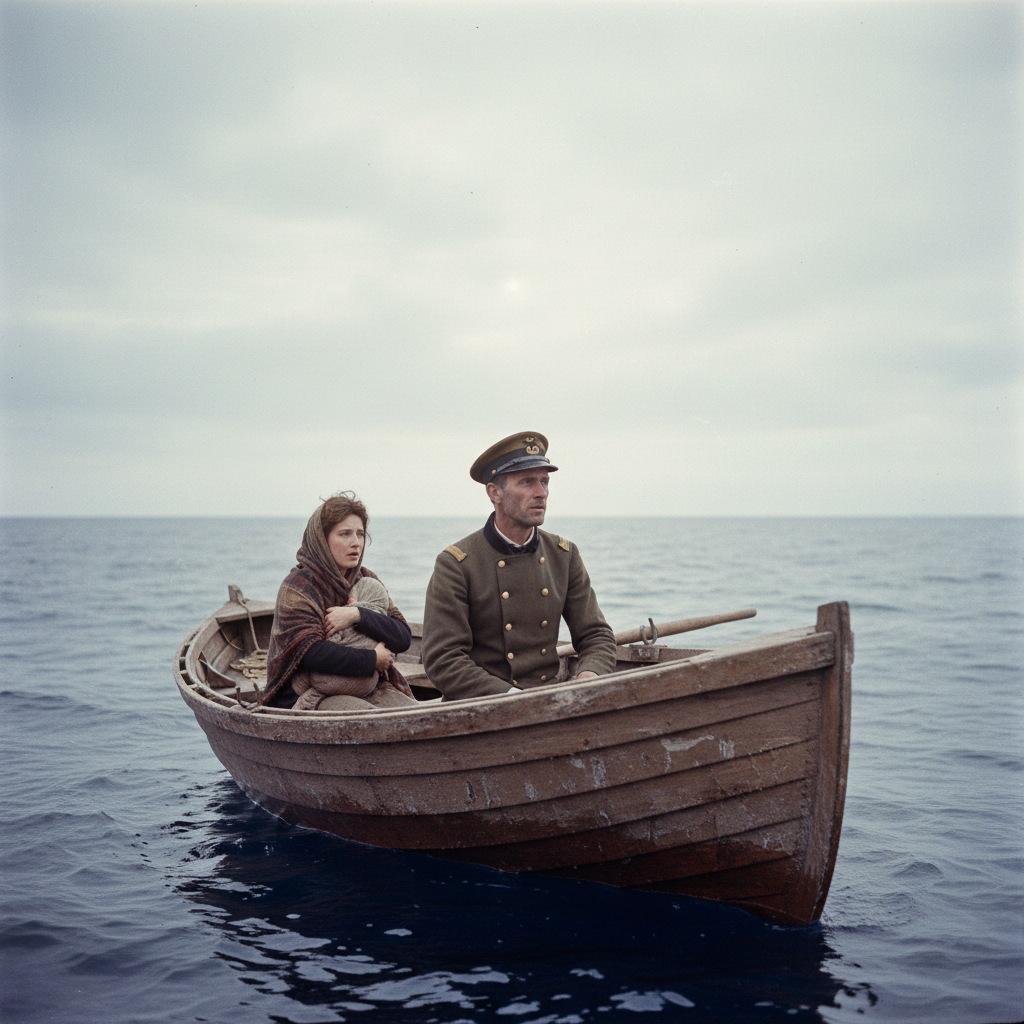
Ship Abandoned, Teacups Spotless, Not a Crumb in Sight
Ten souls, 40,000 pounds of industrial alcohol, and a catastrophic failure of biscuit logistics.
They found the *Mary Celeste* on December 5th, 1872, and the first thing anyone noticed was the quiet. No distress flags. No visible damage. Sails mostly intact, if a little ragged. Just a 282-ton brigantine drifting aimlessly towards the Strait of Gibraltar with nobody at the wheel. The ship’s boat was gone. The chronometer and sextant were gone. Ten people were gone.
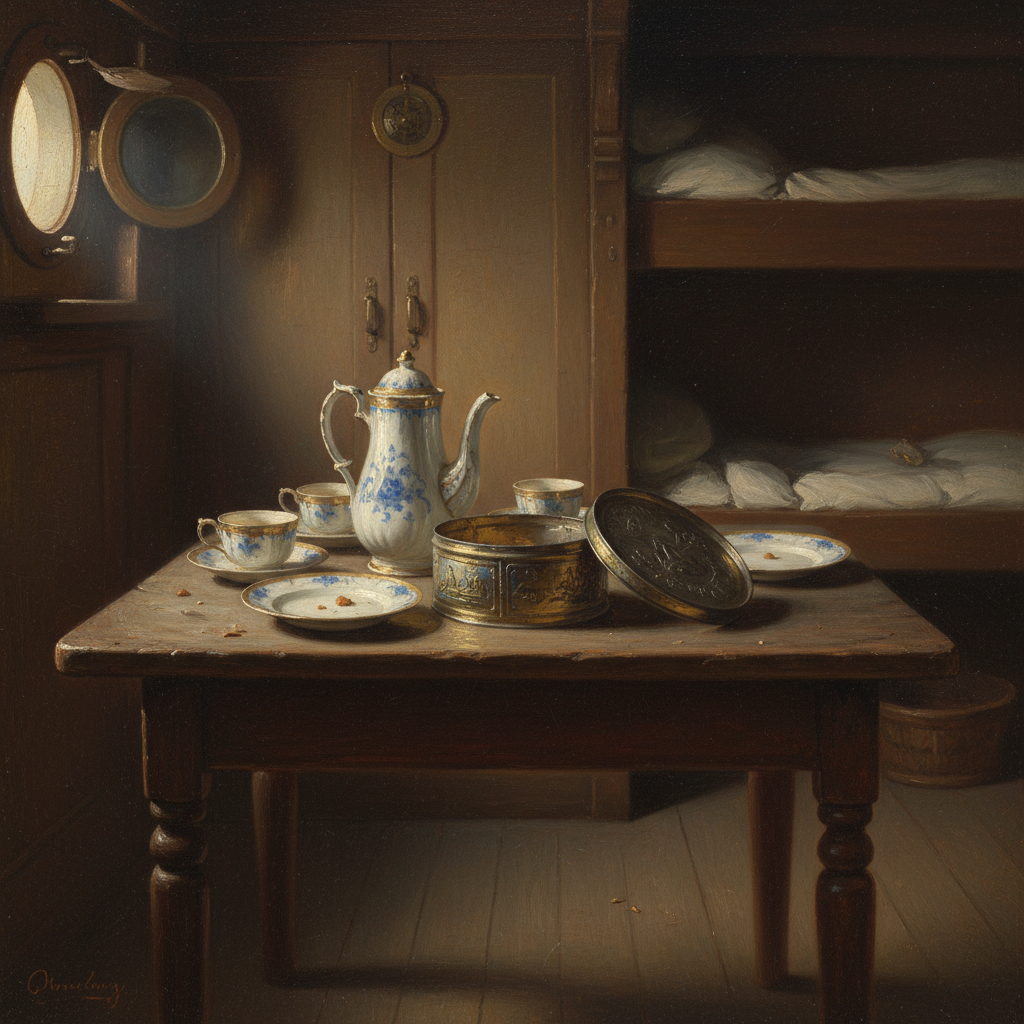
Everything else was fine. Eerily fine. The crew’s quarters were tidy. The cargo—1,701 barrels of industrial alcohol destined to fortify Italian wine—was untouched. In the captain’s cabin, the table was set for tea. A child’s pinafore lay on a bunk. And on that table, a perfectly preserved collection of empty plates, a silent, bone-dry teapot, and a single, desolate biscuit tin containing nothing but dust and the memory of better days.
The official inquiry, of course, missed the point entirely. They debated piracy, mutiny, sea monsters, and drunken murder-orgies fueled by the cargo. Captain Benjamin Briggs was a teetotaler, a good Christian who travelled with his wife, Sarah, and their two-year-old daughter, Sophia. The idea he’d suddenly get hammered and slaughter his crew before yeeting his entire family into the Atlantic seemed, shall we say, a stretch. The truth was far more dignified, and infinitely more British.
Sarah Briggs, bless her, had instituted a shipboard policy of Afternoon Tea, daily at four. It was, she insisted, the only thing separating them from the animals. For seventeen days out of New York, this worked splendidly. Then, on November 25th, the unspeakable happened. The ship’s steward, a man whose name is now a permanent curse in the annals of baking, tapped on the captain’s door and admitted that he had miscalculated. The final ship’s biscuit had been eaten. There were no more. Not a shortbread. Not a digestive. Not a single, forlorn Garibaldi.
Silence descended upon the cabin. Benjamin Briggs, a man who had faced down Atlantic gales and dockside brawls, looked at his wife, whose face had gone pale. He looked at his daughter, who was about to miss her first-ever scheduled teatime. He looked at the horrifyingly empty biscuit tin. Then he made the only decision a gentleman could. He ordered the ship’s boat lowered. The Azores were only a few hundred miles off. They would row. They would row until they found a baker. He, his family, and the seven crewmen took the chronometer, the sextant, and their dignity, and paddled east into the vast, uncaring, and entirely biscuit-less Atlantic, leaving the teapot to grow cold behind them.