SERVICE WITH A STONING
The Salisbury Plain Corporation apologises for millennia-long delays in fulfilling your order.
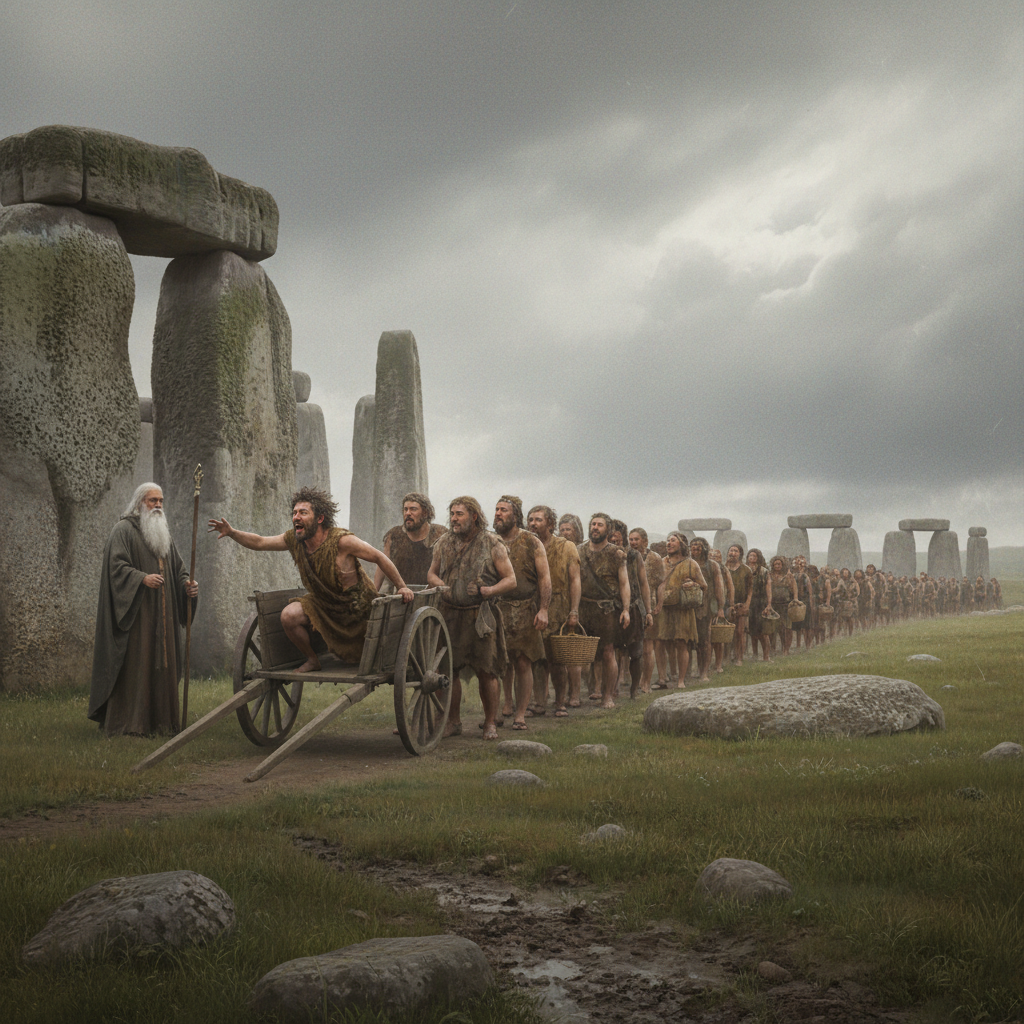
The first complaint arrived by coracle, etched on aurochs bone. It stated, in 27 runic characters of magnificently petty rage, that the customer, one Bron of the Fen People, had been waiting seven generations for a single order of seared venison with a side of fermented crab apples, and that the service was, quote, “slower than a glacier’s bollocks.”
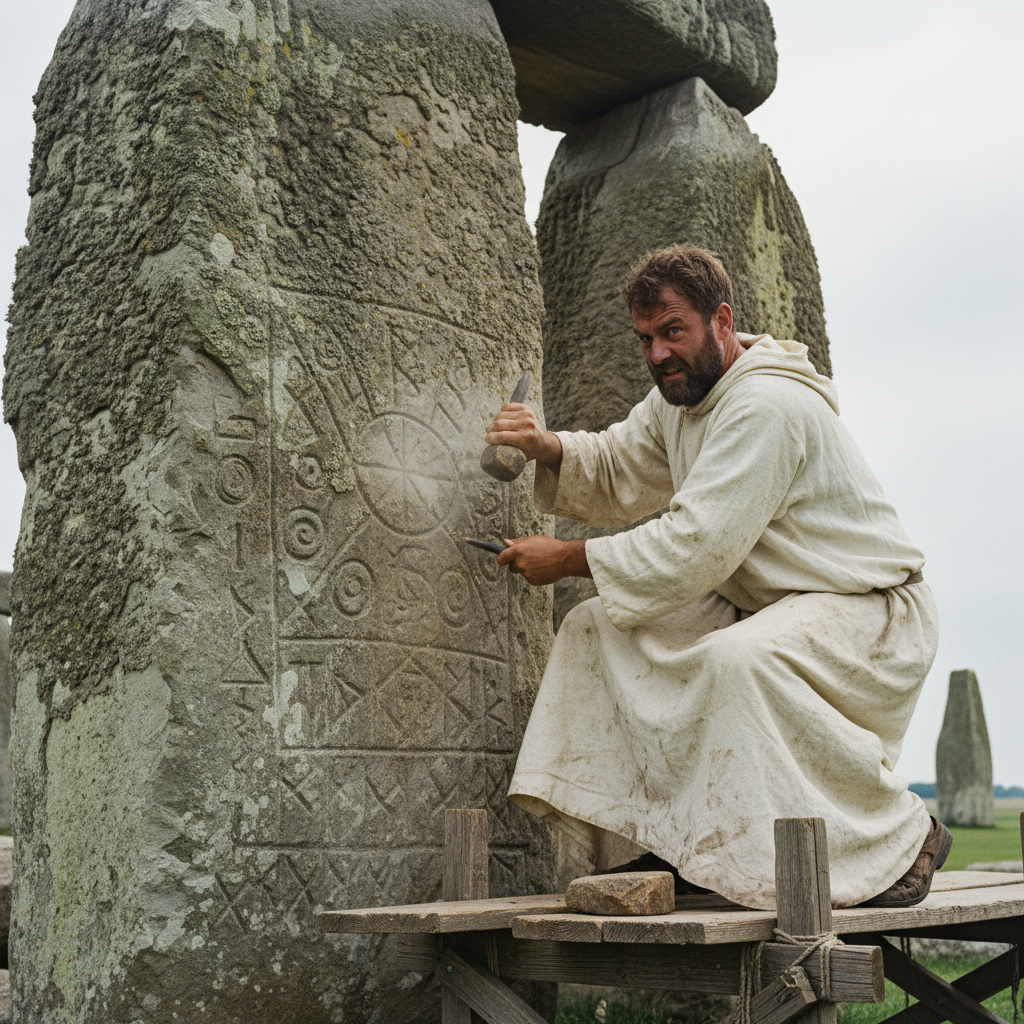
The complaint was summarily carved onto the Heel Stone, filed under INCOMING, URGENT, and left to weather for three centuries. This was standard operating procedure for the Salisbury Plain Hospitality Collective, the multi-generational consortium of druids, warlords, and very tired masons behind the venture officially titled “The Great Circular Servicing Portal for Travellers,” known to its long-suffering clientele as “That Fucking Thing.” They weren’t building a temple, a calendar, or an astronomical observatory. They were building the world’s first, and worst, drive-thru.
The initial business plan, drafted on stretched hides sometime in the fourth millennium BCE, had been ambitious. A traveller on the ancient trackways could approach the Sarsen Circle, place their order at the Slaughter Stone (a slab of Welsh dolerite chosen for its excellent blood-wicking properties), and proceed to the Bluestone Horseshoe for collection. The estimated wait time was a breezy forty-five minutes, allowing for ritual disembowelment of the chosen beast and a brief, frantic consultation with its entrails regarding the quality of the upcoming harvest. But from the moment the first 50-ton lintel was dragged 150 miles overland, the project was plagued by the sort of operational issues that would be familiar to any modern fast-food manager: supply chain disruption, catastrophic staff turnover (it’s hard to maintain morale when your chief architect keeps getting sacrificed to bless the foundations), and customers attempting to pay with “exposure.”
The real crisis began with the menu. The original offering was simple: ‘Beast, Roasted’ or ‘Beast, Raw, Still Screaming’. But then the Bronze Age happened. Suddenly, customers wanted options. They wanted tin-infused alloys for their axe-heads, amber jewellery from the Baltic, and exotic continental cheeses that left a tacky film on the roof of the mouth. The druid-priests, who doubled as line cooks and middle-management, were overwhelmed. Order accuracy plummeted. A request for a ceremonial flint dagger for the midsummer solstice might be fulfilled, nine decades later, with a single, mouldering potato. The bluestones, initially imported for their acoustic properties (they were supposed to hum when an order was ready), developed a sullen, uncooperative silence, punctuated by the occasional deep, resonant sigh.
By 1400 BCE, the whole operation had collapsed into a bureaucratic death spiral. The final project meeting minutes, inscribed on a particularly smooth trilithon, are a testament to institutional despair. Item 1: “FURTHER SACRIFICES TO THE UNFORGIVING SKY-GOD OF LOGISTICS ARE YIELDING DIMINISHING RETURNS.” Item 2: “WHO THE HELL ORDERED 4,000 VOLES? AND WHY ARE THEY ALL CALLED GEOFFREY?” Item 3: “Proposal to just tell everyone it’s a temple and call it a day.” The motion passed unanimously. They downed tools, abandoned the site, and left behind a single, perfectly preserved clay tablet at the collection window, bearing a message for the ages: “SORRY FOR THE WAIT. YOUR ORDER IS IMPORTANT TO US.”