Salem’s Other Dirty Secret
Forget witchcraft. The real trial was about who controlled the good soap.
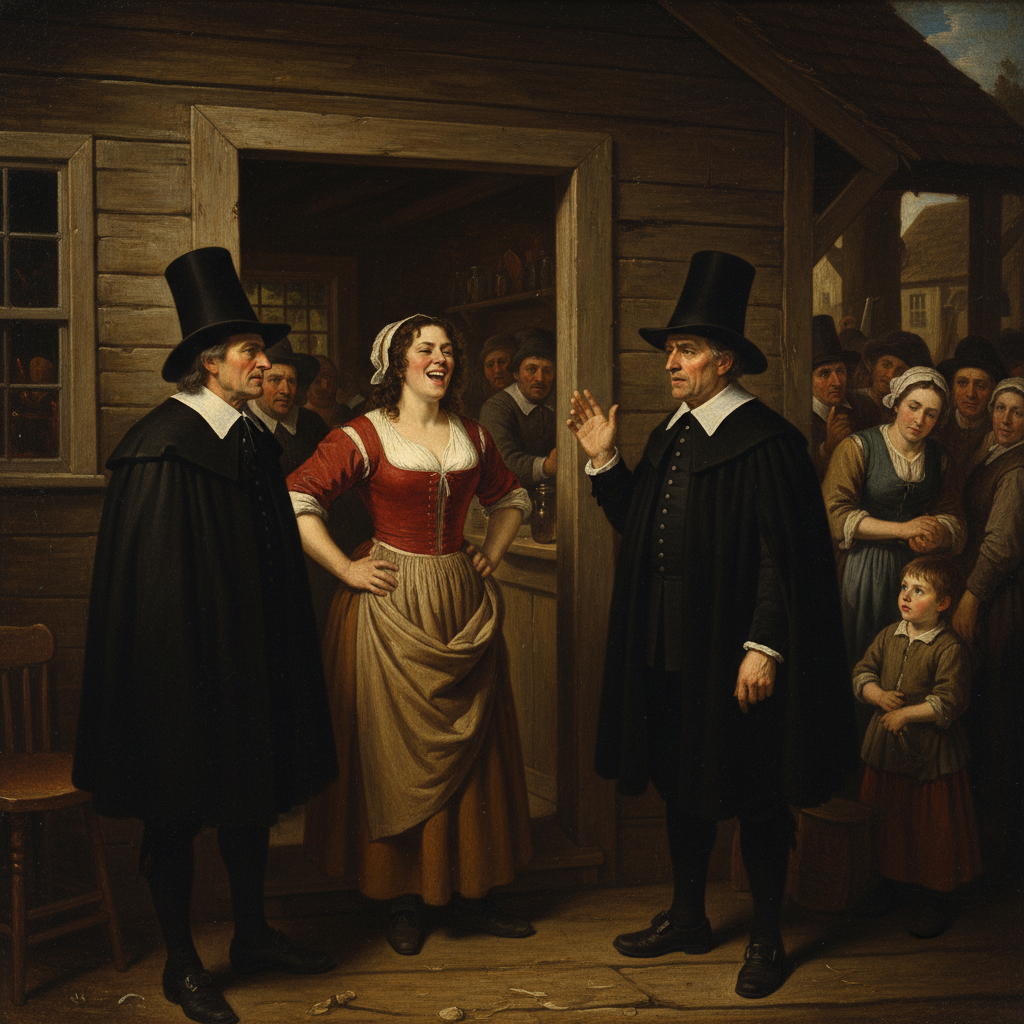
Bridget Bishop was, by all accounts, a difficult woman. But her fatal error wasn’t tavern-keeping, or public brawling, or that scarlet bodice she wore like a dare. Her mistake, in the resinous, hog-fat-and-lye-scented air of 1692, was refusing to sell the patent for her lavender-and-oatmeal soap to the Hathorne & Corwin Bathworks Collective.
John Hathorne, a magistrate with a face like a clenched fist and the soul of a litigious beaver, had a vision. Not of God, but of vertical integration. He and his partner, Jonathan Corwin, had spent years cornering the New England market on potash, lye, and tallow. They controlled the inputs. Now they wanted the outputs. Specifically, they wanted Bishop’s proprietary cold-process method, which produced a firm, fragrant bar that didn’t strip a user’s skin like paint. Every other soap in the Massachusetts Bay Colony was a soft, greasy, vaguely rancid affair that left you feeling spiritually defeated and faintly tacky. Bishop’s soap was a revelation. It was also a threat.
Their initial offer was a generous 30 shillings and a company scrip for “all the cod you can carry.” Bishop told them, reportedly, to shove the cod directly into their own colons. The second offer involved a veiled threat about the quality of her soul. She laughed. The third offer wasn’t an offer at all. It was a formal complaint, filed by Hathorne’s niece Abigail, detailing how Bridget Bishop’s spectral form had appeared in her room and scrubbed her face with a coarse, demonic cloth until it was “most grievously exfoliated.” Soon, half the girls in the village were testifying that Goody Bishop’s soap-scented wraith was holding them down and applying unauthorized herbal poultices.
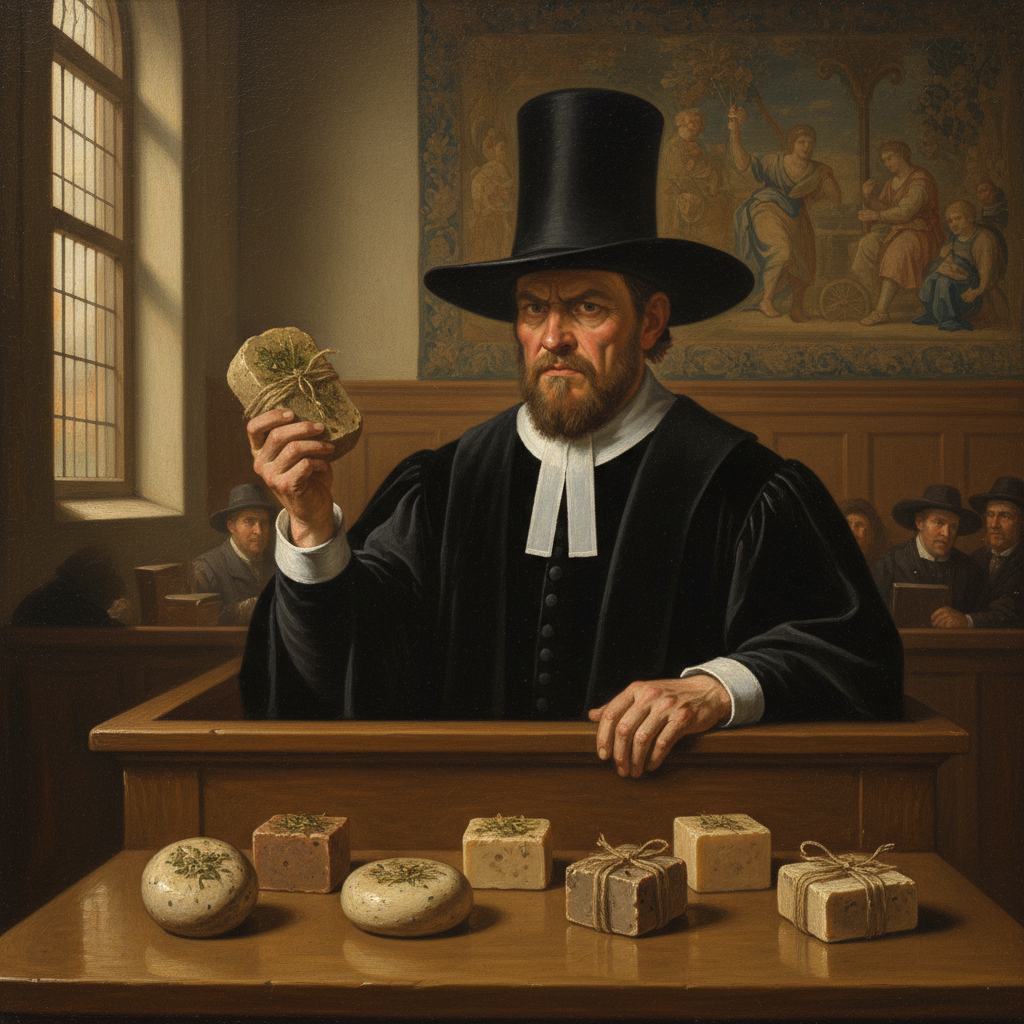
The mechanism of accusation was brutally efficient. Anyone with a competing recipe or a secret source for quality French tallow was next. Rebecca Nurse, whose rosewater soap was a favourite among the Boston elite? Her phantom appeared to Ann Putnam Jr., smelling suspiciously of damning floral notes. George Burroughs, the muscular minister who knew a guy who knew a guy with access to cheap olive oil from a Virginia smuggler? Accused of bewitching soldiers with soap so invigorating it constituted a military threat. The evidence in court was damning: seized bars of artisanal soap presented as “witch-cakes” and “diabolical unguents.” Hathorne would hold up a bar of contraband peppermint soap, sniff it, and declare it “the Devil’s personal aroma.”
By the time the hysteria subsided in 1693, nineteen people were hanged and Hathorne & Corwin Bathworks held an unshakeable monopoly. Their flagship product, “The Magistrate’s Righteous Cleanser,” was in every home, a blocky, greyish brick of utilitarian despair that smelled faintly of judgment and rendered hog. It was, by a margin of 97%, the worst soap in the colonies, but it was also the only soap. The company’s advertising slogan, unveiled that winter, was simple, direct, and understood by all: “It’s Clean Enough.”