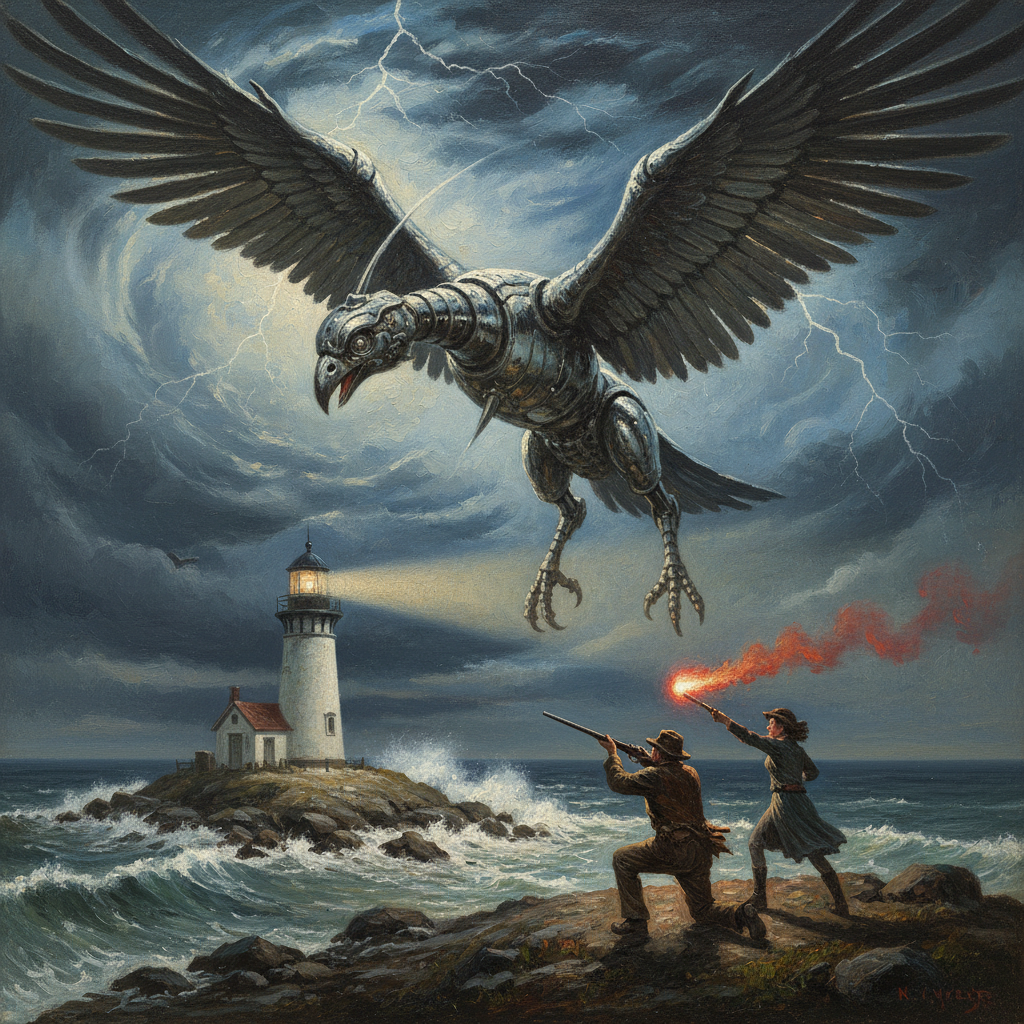
Report of My Death Greatly Exaggerated, Says Bird
Panicked lighthouse staff on Howland Island insist their actions were “a proportional response to a perceived avian threat.”
The first thing anyone on Howland Island heard was the shriek. Not the whine of two Pratt & Whitney Wasp radial engines, but a noise like a pterodactyl in a headlock. This was followed by the sight of what the US Department of the Interior’s official report later classified as an “aggressively silver” creature of “unprecedented wingspan” and “frankly belligerent aspect,” descending from the clouds directly toward their lighthouse.
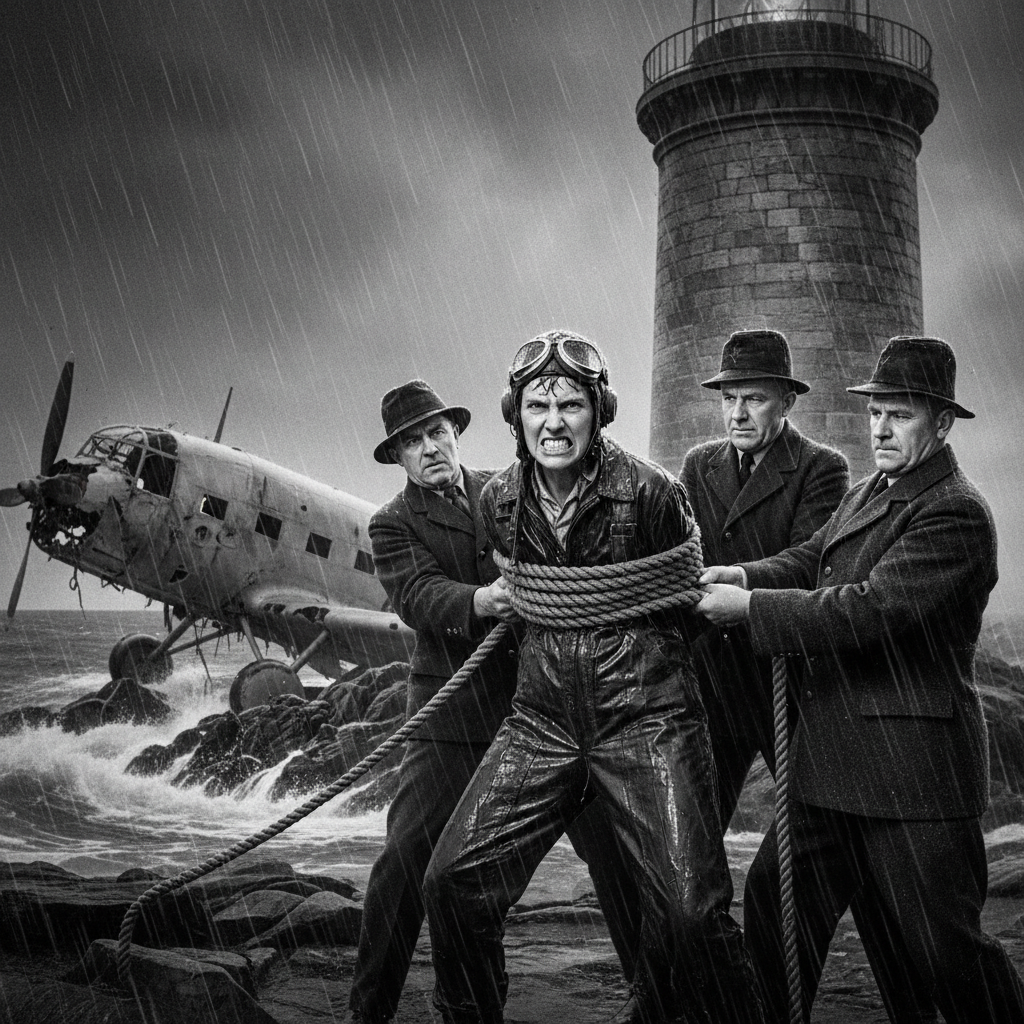
On the ground, three men who had been slowly losing their minds to guano fumes and equatorial heat for six months did what any reasonable person would do. They grabbed the station’s flare gun and the twelve-gauge shotgun they used for scaring sharks, and they opened fire. Lighthouse Keeper Thomas Beddow, a man whose previous greatest excitement was a rogue wave in ‘34, would later testify he “aimed for the big spinny bits,” hoping to cripple it. It was a hell of a shot. Amelia Earhart’s Lockheed Electra 10E, leaking fuel and with one propeller feathered, pancaked into the surf fifty yards from the beach.
Earhart and her navigator, Fred Noonan, survived the landing. They did not, however, survive the welcome party. Wading ashore, soaked and furious, they were promptly taken prisoner by Beddow and his colleagues, who had tied them up with signal-flag halyards before the tide was even halfway out. Their captors refused to believe they were human. The flyers’ leather helmets and goggles were clearly some kind of chitinous exoskeleton. Their repeated assertions that they were “American aviators” were dismissed as sophisticated mimicry. Noonan, still magnificently drunk from the last stopover and now concussed, didn’t help matters by attempting to communicate in what he claimed was “fluent albatross.” The lighthouse crew’s logbook for July 2, 1937, reads: *Captured two specimens. Male appears unwell. Female bit me. Radioing Dept. of Fisheries for instructions.*¹
This created a rather delicate problem for the Roosevelt administration. The world’s most famous female pilot was being held hostage by three government employees who believed her to be a cryptid. A clandestine naval operation was approved under the codename PROJECT SKYLARK, with the official objective of “de-birding the asset.” A single Navy SEAL, LTJG “Slim” Pickens, was dispatched under cover of darkness with a truly enormous butterfly net and a tranquilizer gun loaded for bear. He found Earhart playing a surprisingly vicious game of poker against her captors, using fish bones for chips. “Took you long enough,” she said, without looking up from her hand. “Tell the President he owes me a new plane and two hundred thousand goddamn dollars.”
¹ An internal memo later circulated at the Department of the Interior, titled “On the Proper Delousing Protocols for Apprehended Avian Humanoids,” which became the foundational text for the Federal Aviation Administration’s more esoteric subcommittees.