Project Lemonhead Is Go
Inside the sixty-year, fourteen-billion-dollar quest for a citrus fruit that could survive nuclear winter and also tasted great in a gin and tonic.
It started, as these things so often do, with a martini. A particularly bad one, served to President Dwight D. Eisenhower in the summer of 1955. The olive was fine. The gin was acceptable. The twist of lemon, however, was a disaster: waxy, thick-pith, and with a flavour he later described in a classified memo as “aggressively beige.” This, he decided, was a threat to national morale. A nation that couldn’t even produce a decent cocktail garnish was a nation on the back foot. A nation vulnerable to… well, everything. The Cold War demanded a strategic citrus reserve, and by God, he was going to get one. And so, Groom Lake, Nevada—soon to be nicknamed Area 51—became the cradle of the most ambitious pomological program in human history. The official name was Project Citrine Sun. The unofficial, and far more common, name was Project Lemonhead.
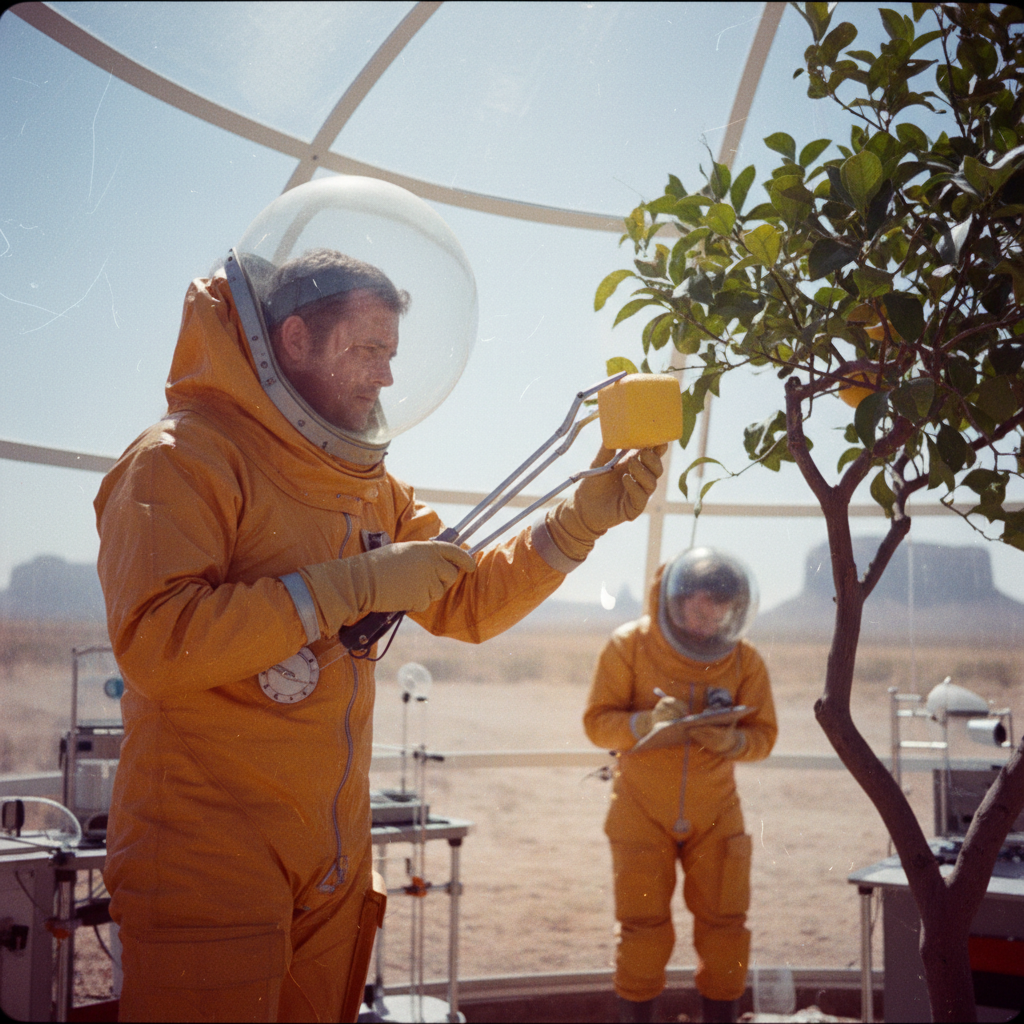
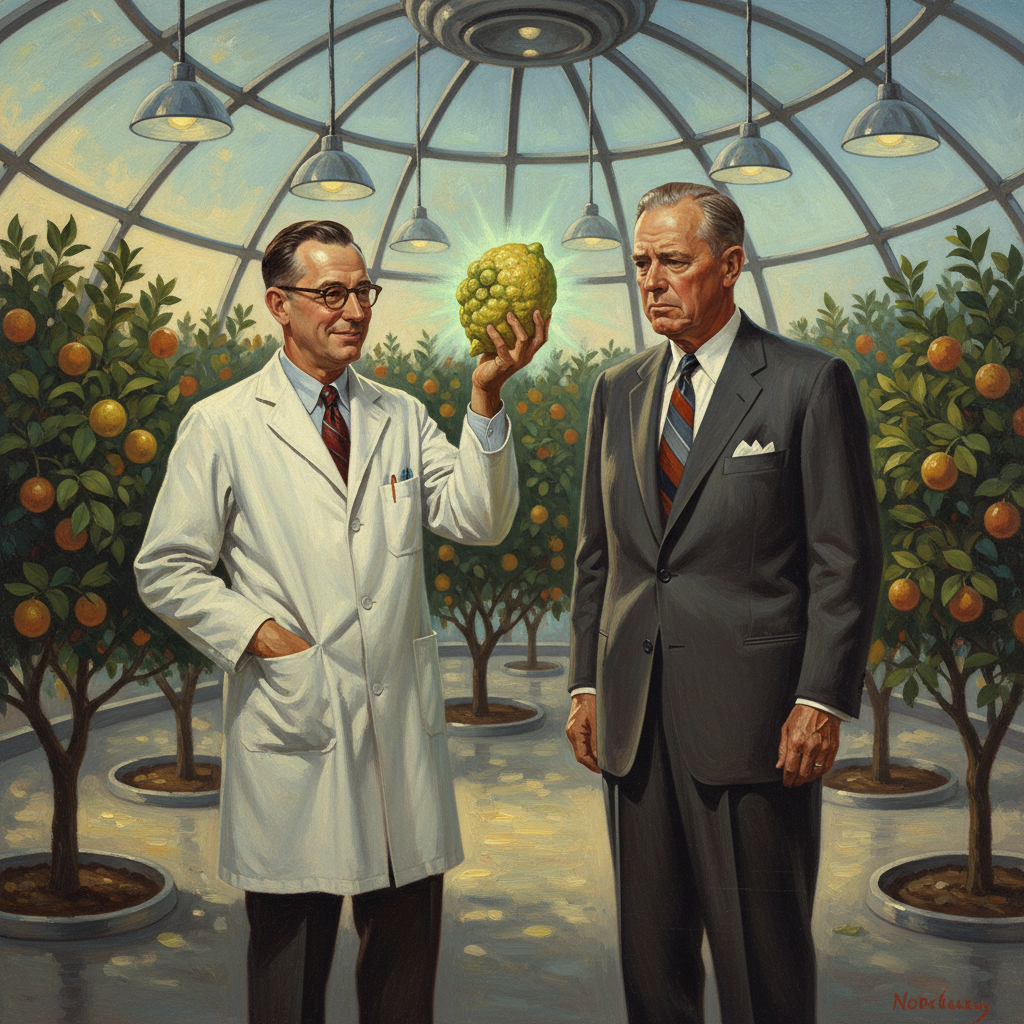
The goal was simple, on paper. Create a lemon hybrid that was hardy, flavourful, seedless, easy to peel, aesthetically pleasing, resistant to radiation, and capable of being grown in the Nevada desert with minimal water. The initial team, poached from the University of California’s Citrus Experiment Station, assumed it was a joke. Then they saw the budget. The first decade was a whirlwind of frantic cross-breeding. Moroccan citrons were grafted onto Siberian hardy lemons. Ponderosa lemons, big as a man’s head and mostly pith, were painstakingly cross-pollinated with tiny, fragrant finger limes using camel-hair brushes and tweezers. They built fifty acres of pressurised, climate-controlled biodomes, each simulating a different potential post-nuclear microclimate. They subjected the results to gamma radiation, extreme G-forces in centrifuges, and—in one memorable incident in 1968—the sonic booms from an SR-71 Blackbird. The lemons, for their part, responded by becoming comprehensively, creatively inedible. Some were so acidic they corroded the steel picking buckets. Others developed a thick, velvety rind that felt like stroking a mule’s nose and tasted faintly of sulphur. One particularly promising cultivar, Subject G-44, or “The General,” showed remarkable resilience but had the unfortunate side effect of screaming when peeled.
By the 1970s, the project had gone native. The scientists, now a multi-generational dynasty of botanists sworn to secrecy, had developed their own strange rituals. They spoke to the trees. They named them after deposed monarchs and forgotten gods. The original mission was lost in a fog of esoteric horticultural theory. One faction, the ‘Peelists,’ believed the secret lay in achieving the perfect fractal pattern in the rind’s oil glands. Another, the ‘Juicers,’ insisted on pursuing a mythical 98% liquid content, creating lemons that were essentially fragile, citrus-flavoured water balloons. The infamous ‘Pithists’ argued that the true potential of the lemon was as a blast shield, and that flavour was a decadent, civilian concern. They developed a lemon with eighteen inches of spongy, fire-retardant pith that could supposedly stop a bullet. It tasted of asbestos.
Then came the F-117 Nighthawk, the first stealth aircraft. Its bizarre, angular design wasn’t the product of aeronautical engineering. It was the result of a desperate attempt to create a scarecrow that wouldn’t be immediately eaten by the mutant, acid-spewing gophers that had evolved in the discarded lemon groves. The radar-absorbent material was originally developed to coat the biodomes after a strain of luminescent lemon started attracting UFOs. Or, rather, what were logged in official reports as “Unidentified Flying Ornithopters,” which turned out to be confused migrating geese. The whole of modern stealth technology was a series of frantic, expensive patches for a horticultural project gone mad. The Roswell ‘incident’? A weather balloon carrying spores for a new strain of phosphorescent mould, designed to make the lemons glow invitingly in the dark. The ‘alien autopsy’ footage? A desperate training video on how to safely disarm a Subject Z-9, the ‘Exploding Navel,’ which had a tendency to detonate its acidic juice sacs with the force of a small hand grenade if handled incorrectly.
Project Lemonhead was officially mothballed in 2007. The final report stated that the perfect lemon was “technologically unfeasible at current funding levels.” They declassified the stealth bomber, but the lemons remain top secret. The official narrative is that Area 51 was a test site for experimental aircraft. And it was. Sort of. They had to test *something* to explain the budget. Somewhere out there, in the Nevada desert, under a heavily guarded dome, sits the single surviving specimen of the project’s crowning achievement: a cubic lemon, perfectly seedless, with a peel that unzips like a cheap suitcase. It tastes, according to the one surviving note on its file, “like regret, with a hint of floor cleaner.” The cost was fourteen billion dollars. Eisenhower got his martini garnish, but he wouldn’t have liked it.