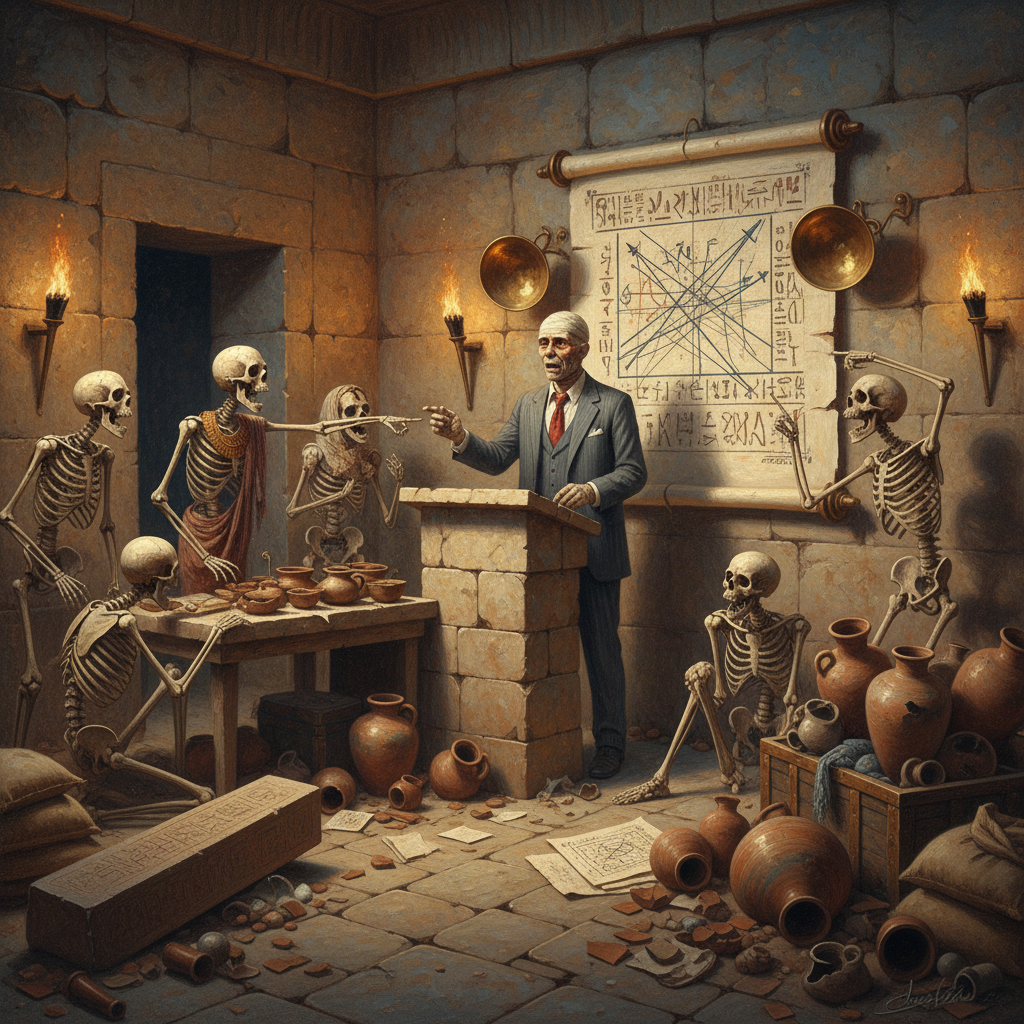
Pharaoh’s Scheme
Or, How to Lose Your Shirt, Your Organs, and Your Eternal Afterlife in One Easy Down-Payment.
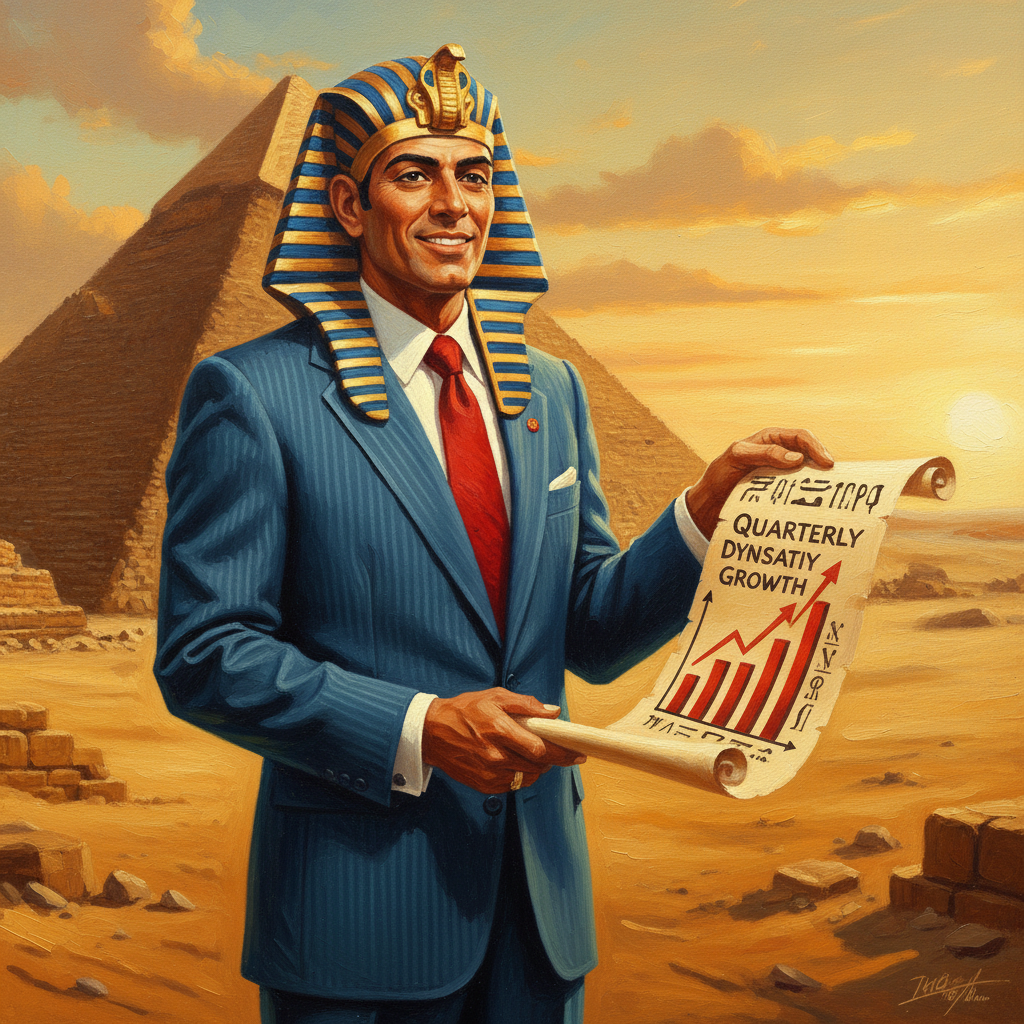
On the plus side, the commute was excellent. Khufu’s pitch always landed on that point eventually, usually after the third flagon of sycamore fig wine and a professionally-choreographed slideshow of limestone hieroglyphics. “Friends, associates, esteemed second-cousins-with-disposable-income,” he’d begin, sweating magnificently under the weight of his pectoral collar and a truly audacious quantity of lapis lazuli. “You look at this magnificent structure”—a gesture at the half-finished pyramid piercing the sky—“and you see a tomb. A house for eternity. My house.” A dramatic pause. “But I see an opportunity.”
And here’s where the genius of it really sang. Khufu wasn’t selling a tomb, not really. He was selling *proximity*. The basic package, the ‘Servant’s Special’, got you a modest plot in the East Cemetery, a guaranteed view of his pyramid’s glorious morning shadow, and a pre-paid jar for your liver. But for a few deben more? You could become a Bronze Ankh, which meant a better plot, two jars, and — crucially — the right to recruit others into the venture. Get three of your friends to buy a Servant’s Special, and you’d get a free upgrade to a Silver Scarab plot, with a premium western-facing location perfect for catching the sun god Ra on his happy hour commute. The papyrus contracts, all six hundred forty-seven clauses, were quite clear on the non-refundable nature of the initial investment. Complaints were directed to the newly formed Department of Afterlife Client Relations, whose offices were conveniently located in a flooded basement in Memphis.
The real money, of course, flowed up. Each Bronze Ankh who bought in kicked back 15% of their investment to their recruiting Silver Scarab, who in turn kicked 10% up to their Gold Falcon, and so on, all the way up the shimmering, granite-clad sides of the pyramid to the man at the top. The ‘Pharaoh’s Circle’ was the peak, the top 0.1%. These weren’t just buyers; they were Founder-Immortals. They got burial chambers *inside* the pyramid, complete with all-you-can-eat canopic jars and the divine right to subcontract their own afterlife-labour recruitment. Vizier Hemiunu, the pyramid’s chief architect and Khufu’s most successful downline, reportedly earned enough to have his own statue carved from imported diorite and his favourite cat mummified in solid gold foil.
It was, by all accounts, a roaring success. For a while. The quarry at Aswan was stripped bare. The Nile’s barge traffic became a 24/7 procession of stone blocks, cedarwood, and desperate new recruits clutching promissory notes for eternity. But the model had a fatal flaw. The afterlife, unlike the deserts of Giza, is infinite. Real estate is not. The scheme collapsed when a mid-level manager in the Sedge and Bee cohort, a man named Ankhtifi, realised he had sold afterlife plots to 118% of the living population of Upper Egypt. The subsequent run on the jar-and-burial-plot bank made the Hyskos invasion look like a minor administrative error. Khufu, already sealed inside the King’s Chamber with his riches and a truly spectacular amount of buyer’s remorse, was unavailable for comment.