Paris Builds an Anxiety Engine
Gustave Eiffel’s iron marvel was meant to broadcast progress. It broadcast subliminal dread instead.
Seventy-two names of France’s finest scientists, cast in iron, girding the first platform of the Eiffel Tower. A monument to reason. 324 meters of Bessemer-process wrought iron, riveted into a perfect demonstration of modern structural engineering. And, as of the 1889 Exposition Universelle, the single largest passive radio antenna on Earth. The problem, as a certain American incandescent-bulb huckster would have pointed out if he wasn’t so busy electrocuting dogs, is that an antenna that big picks up *everything*. Including the crackling, subliminal static of three million Parisians worrying about their rent, their love lives, and the quality of their baguettes.
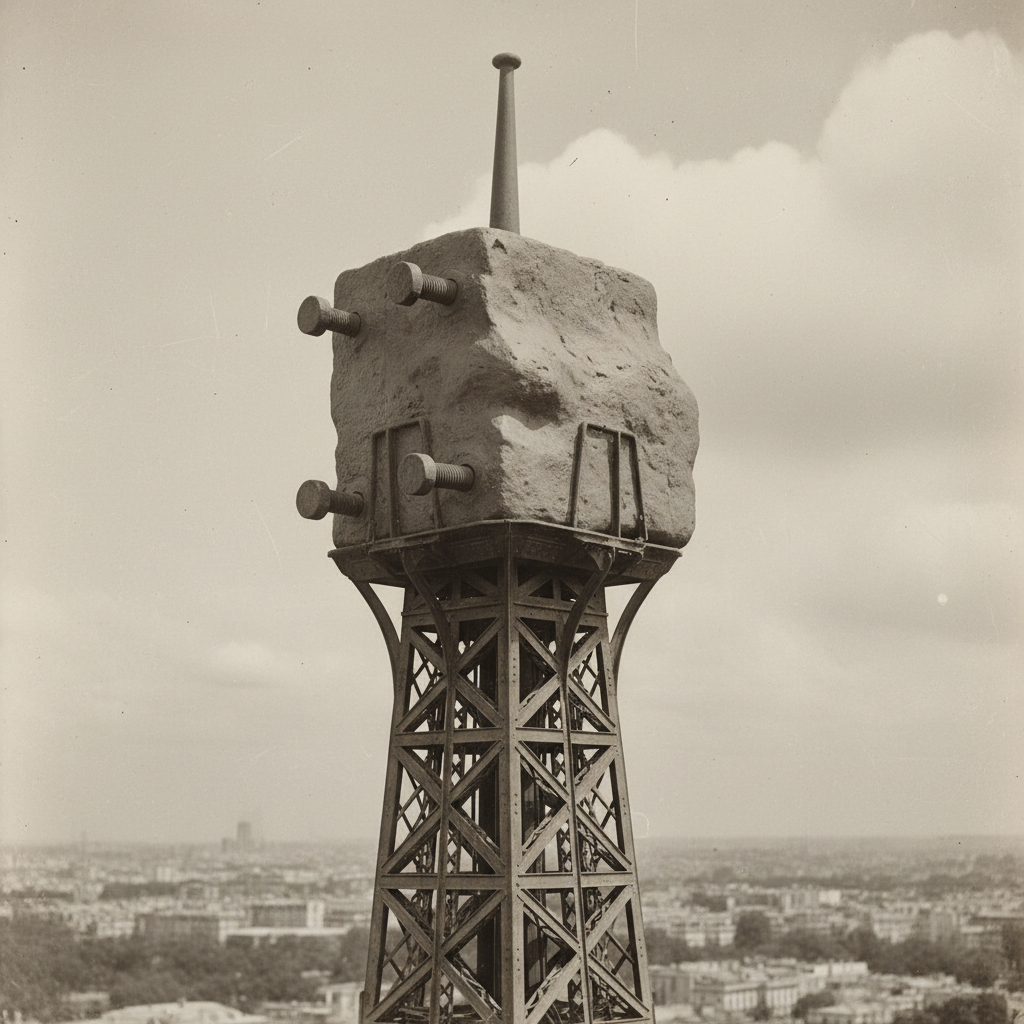
The culprit wasn’t magic. It was a miscalculation of materials and a whole lot of fluke atmospheric physics. The antenna’s designer, Édouard Branly, a man obsessed with his new ‘coherer’ receivers, had specified a unique iron alloy for the Tower’s highest broadcast spindle. He wanted maximum transmission efficiency. What he got, thanks to a batch of pig iron slightly too rich in carbon from the Forges de Wendel, was a crystalline structure that resonated—at an almost undetectable sub-audible frequency—with the faint bioelectric fields generated by human thought. Specifically, human anxiety. It turned the entire goddamn latticework into a three-hundred-meter tuning fork for psychic despair.
At first, nobody noticed. But then, strange things started happening. Suicide rates within a two-kilometer radius tripled. Duels over imagined slights became a daily breakfast spectacle in the Champ de Mars. A bizarre craze for ‘Nervous Soup’—a clear broth said to calm the agitations—swept the city’s cafés, making a millionaire out of a former butcher who just boiled water and sighed into it. The city’s famously aggressive pigeons suddenly became too existentially troubled to even bother stealing croissants, leading to a pastry surplus crisis. Meanwhile, Gustave Eiffel, deaf to the complaints, just saw his visitor numbers climbing. Tourists flocked to the Tower, drawn by a morbid curiosity, describing a peculiar ‘tingling’ sensation and a sudden, inexplicable urge to confess their infidelities to complete strangers on the observation deck.
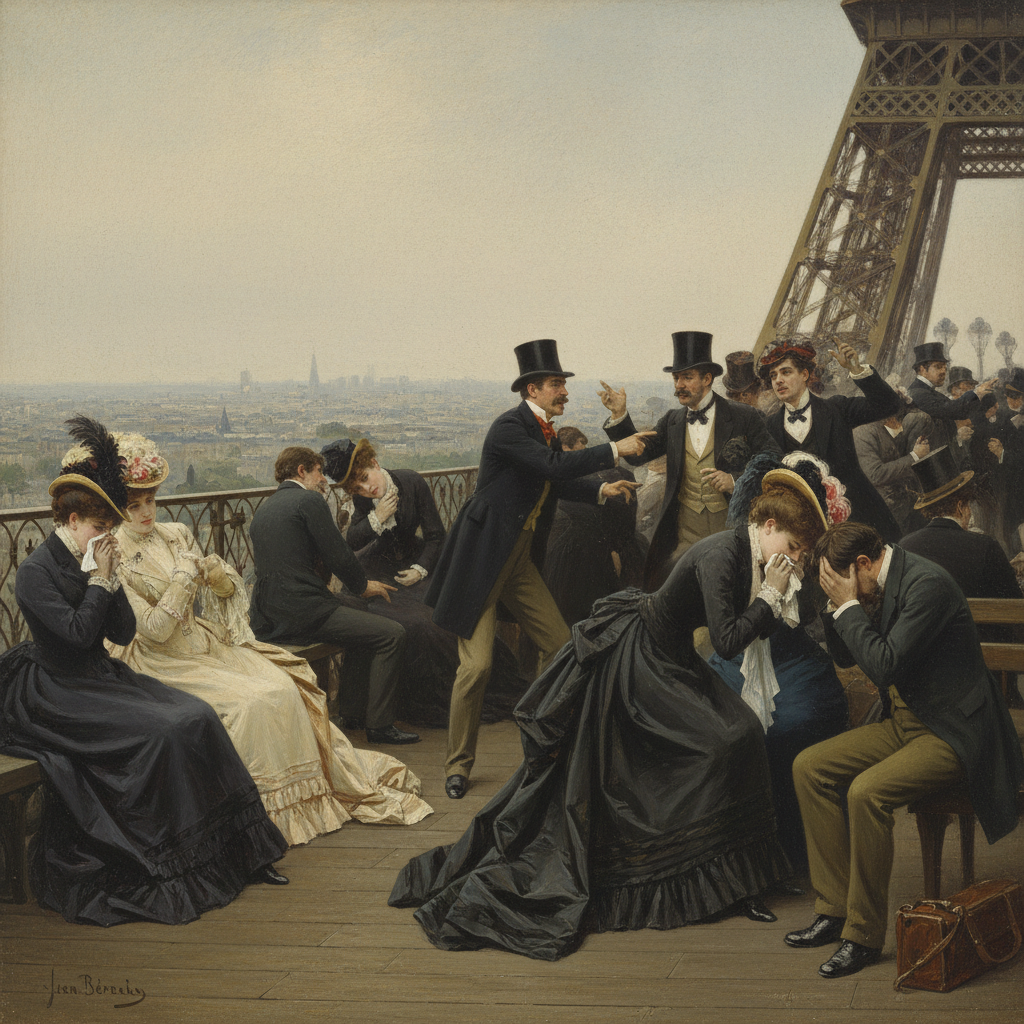
The whole mess came to a head during a state visit from the Shah of Persia, Naser al-Din Shah Qajar. Halfway up the tower in the hydraulic lift, he turned to President Sadi Carnot and, with tears in his eyes, admitted he was terrified he’d left his favorite hookah lit in the palace. The confession spiraled. By the time they reached the top, the entire diplomatic party was a weeping, screaming, hand-wringing mob of insecurities. The Minister of War sobbed that he was still afraid of the dark. An esteemed academic confessed he’d been faking his Latin for thirty years. The whole thing was printed, verbatim, in *Le Petit Journal* the next day, under the headline “France Weeps With Her Shah.” That did it. A parliamentary inquiry, three panicked engineers with slide rules, and one very embarrassed Édouard Branly later, the solution was found. A single, 20-kilogram lead dampener, bolted to the base of the spindle, changed the resonant frequency just enough to broadcast patriotic music instead. The pigeons went back to being bastards, and Paris went back to its regular, non-amplified state of ambient neurosis.