One Giant Drive for Mankind
How a secret cabal of golf-obsessed generals bankrupted the treasury to build the galaxy’s most exclusive nine holes.
It started, as most things do, with a complaint about the greens. Specifically, the greens at Augusta National, which President Eisenhower, a man whose love for golf was rivalled only by his simmering hatred of bunkers, declared were “goddamn un-American” after a particularly vexing front nine in the spring of ’58. Standing with him by the eighteenth hole were three men who would, within the hour, commit the United States to the single most expensive sporting goods search in human history: Allen Dulles, then Director of Central Intelligence; General Curtis LeMay of the Air Force; and Wernher von Braun, who knew a thing or two about aiming for a distant target and not worrying too much about where the parts landed.
Dulles, ever the operator, saw the strategic potential. “The Soviets can have the sky, Mr. President,” he’d murmured, swirling the bourbon in his glass. “We’ll take heaven.” The official story, of course, was a space race, a Cold War imperative to plant a flag before the Reds could. The *real* project, codenamed PROJECT LUNAR LINKS, was a C.I.A. black-budget operation with a single, glorious objective: find, survey, and eventually construct a golf course where no slice could ever go out of bounds and the water hazards were literally nonexistent. The Mercury, Gemini, and Apollo programs were, from the start, a cover for the most audacious groundskeeping project ever conceived. The astronauts weren’t just pilots and engineers; they were elite course scouts, hand-picked from a secret pool of single-digit-handicap officers. John Glenn’s orbital flight? A test of long-range surveying equipment. The spacewalks? Practice for clearing pesky moon-rocks from a future fairway. Buzz Aldrin was chosen for Apollo 11 not for his doctorate from M.I.T., but because he had the smoothest goddamn swing west of the Mississippi.
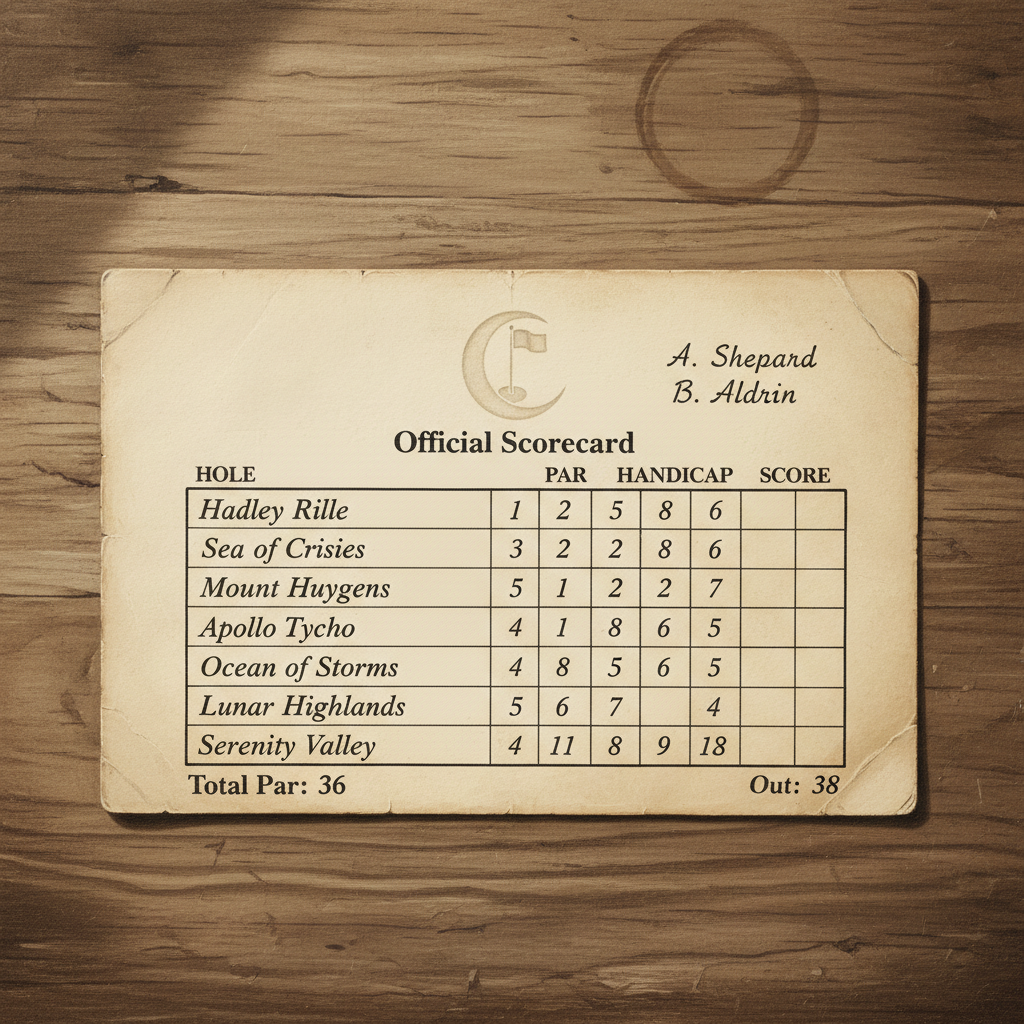
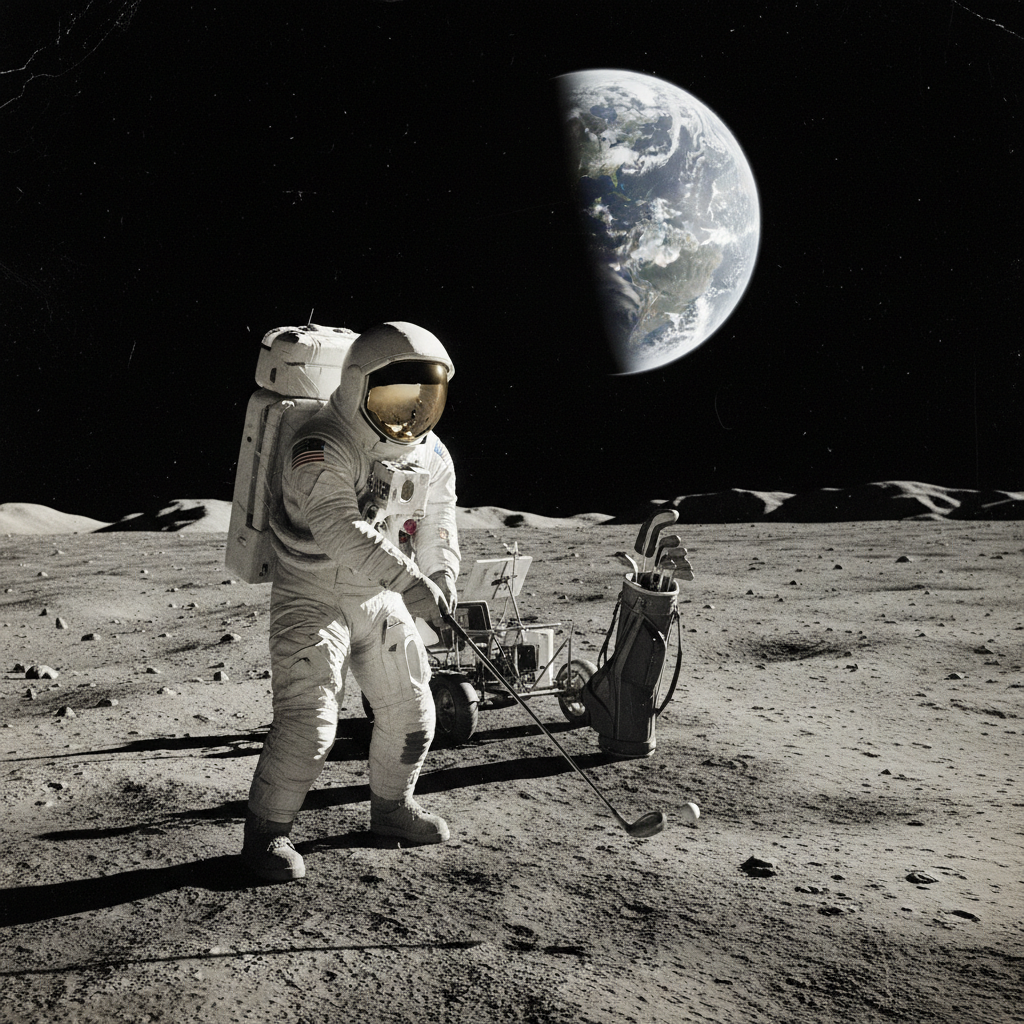
The public saw Neil Armstrong’s one small step; the initiated saw the first tee-off. Alan Shepard’s famous six-iron shot in 1971 wasn’t a spontaneous bit of fun—it was a scheduled test of the soil’s receptiveness to dimpled projectiles. The data he collected, on what would eventually become the signature Par 4 of the Tranquility Trails Golf and Country Club, was analysed by more geologists than the moon rocks themselves. Internal memos from PROJECT LUNAR LINKS reveal the escalating obsession. A 1969 report complains that the Sea of Tranquility’s soil is “too sandy for a decent fairway, recommending a survey of the Fra Mauro highlands for its superior loam potential.” A later dispatch from the Apollo 15 crew rates the Hadley Rille as a “potential signature hole, but a bastard to retrieve a ball from.” They recommended installing “some kind of… really big ladder.”
The project was ultimately scuttled in 1972, not by Congress or a leak to the press, but by an internal audit from a newly-appointed C.I.A. budget director who didn’t know a birdie from a bogie. Faced with receipts for 400,000 tons of AstroTurf, a request for a zero-gravity lawnmower, and a line item for a solid-gold golf cart for the future “Chairman of the Board” (implied to be Sinatra), he shut the whole thing down. The official reason given for the end of the Apollo program was budget cuts. The unofficial reason was that the projected greens fees—$4.8 billion per round, not including cart rental—were deemed “fiscally irresponsible.” Von Braun, ever the pragmatist, simply shrugged. “So, we do not play the moon,” he reportedly told a tearful LeMay. “Have you seen the courses in Argentina?”