MONKS ACCIDENTALLY INVENT DOOM METAL
How a Fucked-Up Incense Order Sent Edo-Period Japan on a Psychedelic Trip

Sit down, friend, and pour yourself something strong. You think you know stories? My grandmother told me stories that would make your official histories curl up and die of shame. This one? This is the kind of story a bureaucrat’s worst nightmare coughs up after eating bad fish. It’s about the time a bunch of Buddhist monks accidentally invented psychedelic rock, and it starts—like all the best fuck-ups—with a shipping error.
The year is somewhere in the 1780s. Let’s say 1782, sounds good. A temple in Kyoto—one of those fancy ones, with a garden so perfect it makes you want to commit vandalism—is waiting on a big shipment of kyara, the fanciest goddamn incense money can buy. The good shit. Calming, smells like nirvana’s bathroom. But the crate that arrives isn’t from Vietnam. It’s from some godforsaken island further south, and the manifest is a forgery that looks like a drunk octopus tried calligraphy. The monks, being models of efficiency, just sign for it and start burning the stuff during morning meditation. The first sign something is wrong is that it doesn’t smell holy. It smells like a wet badger’s armpit, and it makes this *sound*. A high-pitched, tooth-rattling drone that vibrated right through the floorboards and into your soul’s private business.
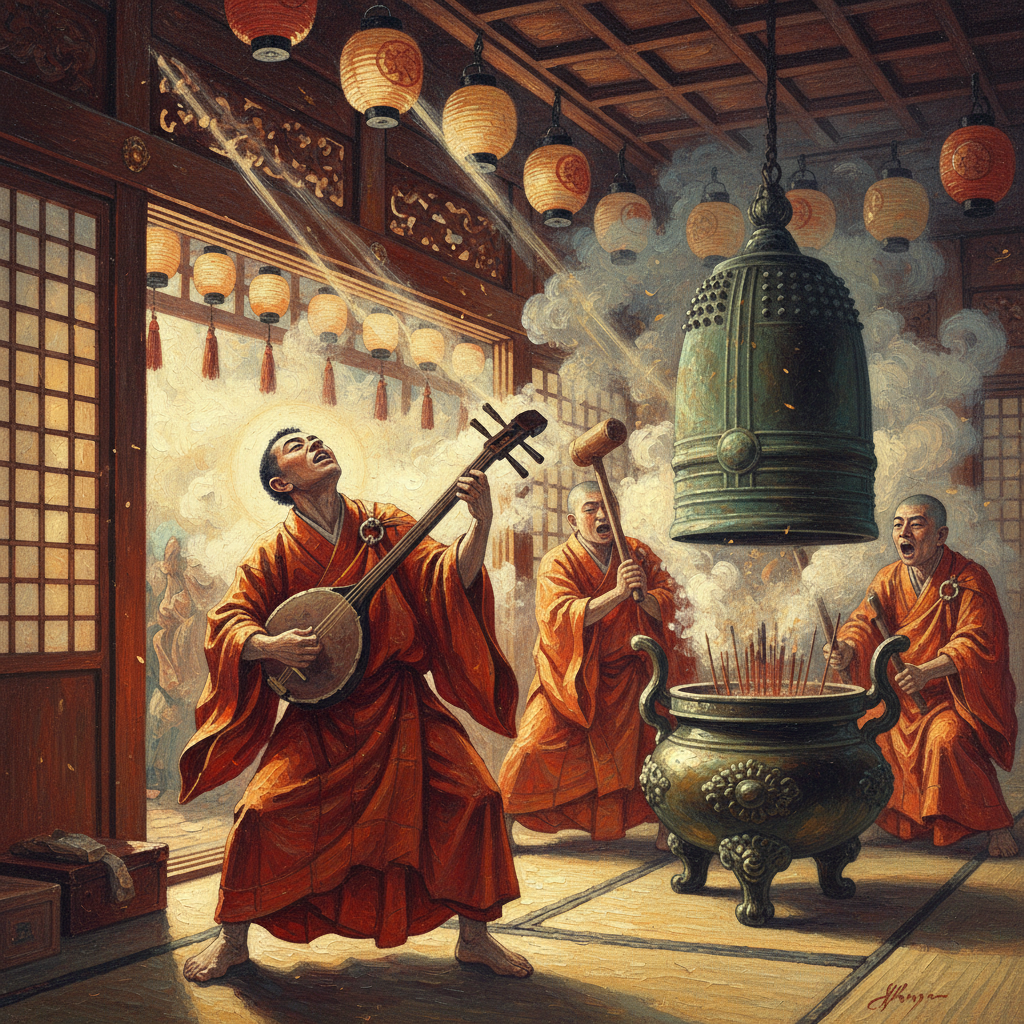
Meditation? Impossible. The head abbot was about to lose his celestial shit. But then, a young monk—the official records don’t name him, probably out of embarrassment, so let’s call him Haru—did something wild. He was a musician, see? Played the biwa. And instead of fighting the drone, he started playing *with* it. He found the note. He leaned into it. Another monk, bored out of his gourd, started tapping a mokugyo woodblock in time. The old guy who rings the giant temple bell—the *bonshō*—just shrugged and started whacking it on the off-beat with a mallet. What they created was… immense. A thrumming, hypnotic, wall of sound. Repetitive, sure, but so is breathing. So is reincarnation. It was heavy. It was trance. It was, for lack of a better term, fucking awesome.
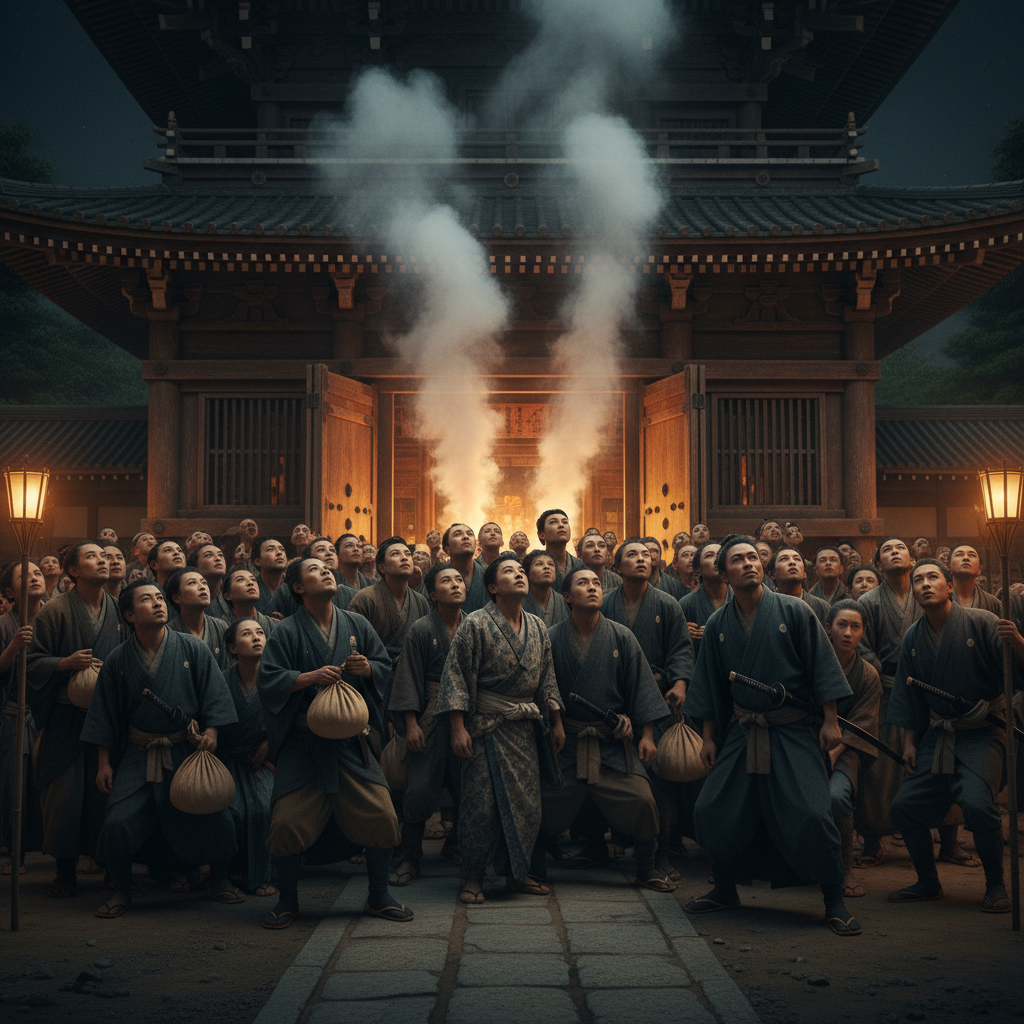
Of course, it became a sensation. People stopped coming to pray and started coming to *listen*. The temple, which had been facing a deficit, suddenly saw its donation box overflowing with coins from hip young samurai and curious merchants wanting to hear the “Sound of the Void” or whatever bullshit name the abbot cooked up once he saw the money. Rival temples, furious and jealous, tried to copy them, leading to a hilarious arms race of weird acoustics. The Rinzai school developed a faster, more aggressive sound they called “Sudden Enlightenment”—basically punk rock—while the Shingon sect went for long, atmospheric pieces with multiple gongs and chanting that sounded suspiciously like a concept album. They called it “Esoteric Funk.”
It all came to a head when an inspector from the Shogun’s office, a real tight-ass named Lord Okubo, was sent to investigate rumors of “demonic music” and “sacrilegious noise pollution.” He sat through a three-hour performance by Haru’s band, “The Five Noble Truths” (because of course). He sat there, stone-faced, while the temple vibrated like it was about to achieve orbit. Everyone expected a crackdown. Instead, his official report just said: “It’s a bit loud, but it’ll never be as popular as a good Sumo match.” And that, my friend, is how you get away with everything: be too weird for the squares to even understand.