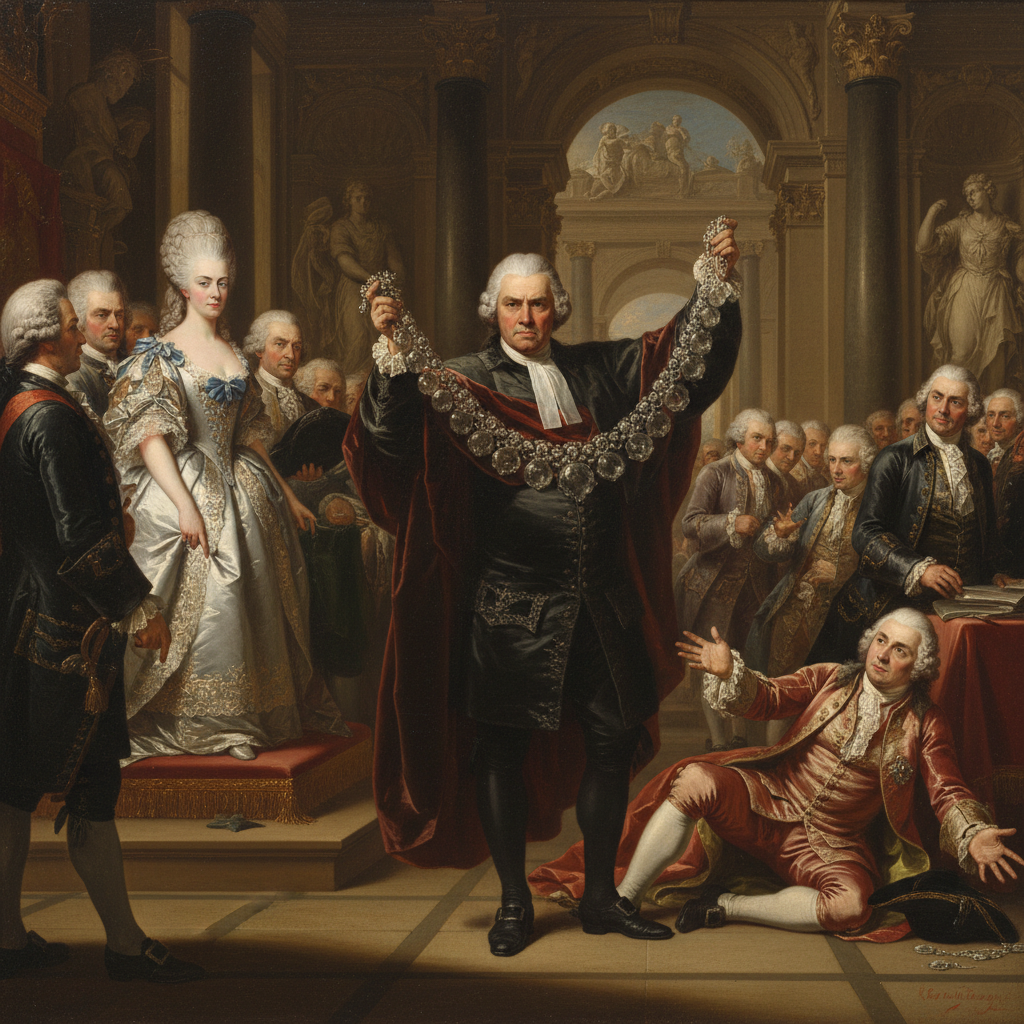
Marie Antoinette Wore Fakes
The Diamond Necklace Affair, darling? A matter of paste, paste, and the exquisite revenge of a woman replaced.
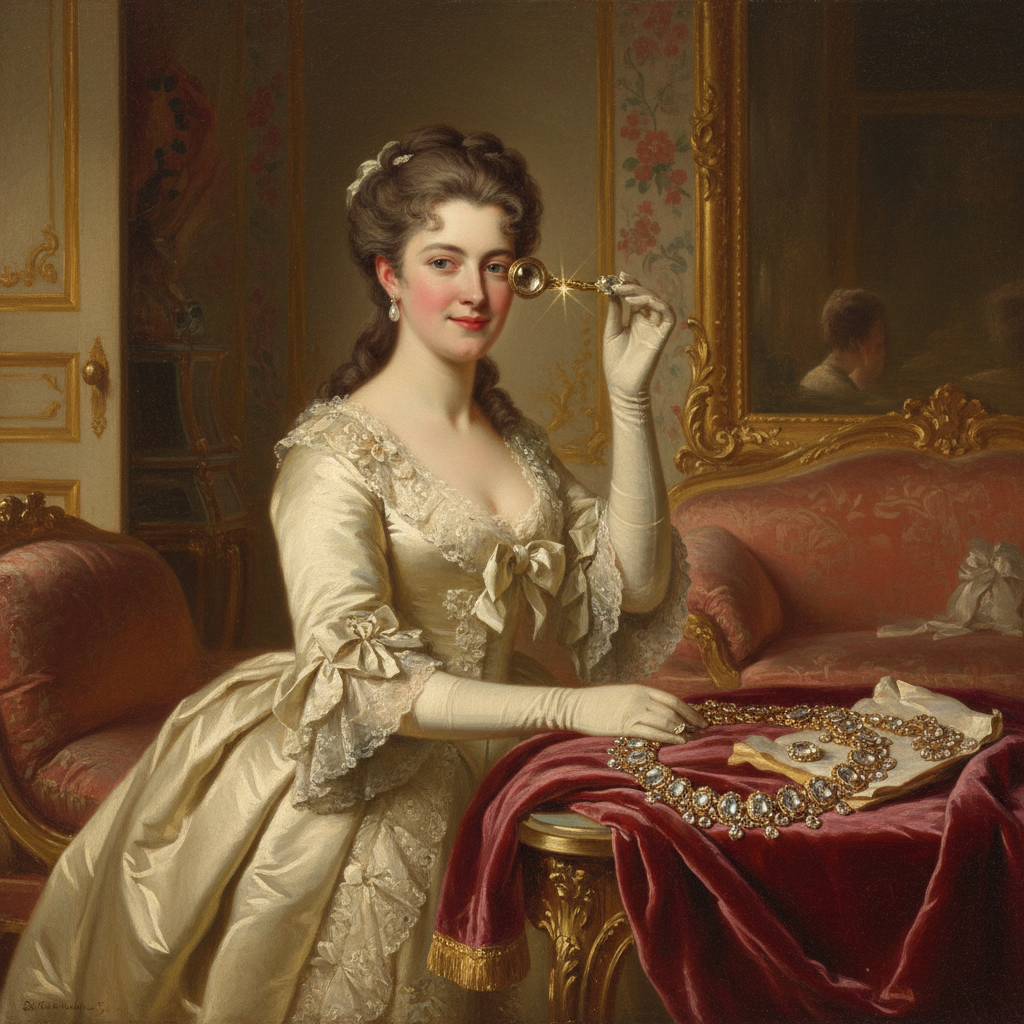
A secret, from me to you? One must always check the quality of the jewels. Especially when they arrive under dubious circumstances, presented by a Prince of the Church on behalf of a Queen who would rather gargle Seine water than speak to him. But Cardinal de Rohan, a man whose ambition was rivalled only by his truly disastrous taste in confidantes, was not one for such details. He saw the 2,800 carats, the 647 diamonds, and the 1.6 million livre price tag of Boehmer and Bassenge’s magnum opus, and saw only a private audience with Marie Antoinette at the end of it. The poor dear. The Queen, you see, had already refused to buy the ghastly thing. Twice. So when the comtesse de la Motte, a grifter with a pedigree as thin as a pauper’s glove, whispered that the Queen simply *must* have it, but discreetly, through him… well. A fool and his fortune are soon parted. His Eminence was hooked. 37% of France’s annual military budget was the bait. What a catch. But the little twist, the detail lost to the *official* histories, is that Jeanne de la Motte, that enterprising little creature, was not acting alone. She was merely the… instrument… of a much grander revenge. My sources, who are never wrong, place her in the boudoir of Madame du Barry, the previous King’s last and most magnificent Comfort. Du Barry, you will recall, had been supplanted, exiled from the warm linen of the royal bed and cast out into the chilly wilderness of her own estates. And who had been the architect of her fall? The little Austrian, Marie Antoinette. So when word reached her of a Cardinal drowning in ambition and a bauble of vulgar proportions, an opportunity presented itself. Madame du Barry had spent years at the apex of power; she knew that a forgery need not be perfect, merely *convincing*. She also knew precisely which Parisian artisan could replicate the famous necklace in flawless paste, for a mere fraction of the price. The real diamonds? My dear, they were broken up and sold in Amsterdam before the ink was dry on Rohan’s promissory note. What arrived at the Cardinal’s door was a masterpiece of counterfeit, shimmering with all the sincerity of a courtier’s smile. The plan was never simply to ruin Rohan, you understand. That was merely a delicious amuse-bouche. The true design was to humiliate the Queen. When the jewellers came demanding payment, Marie Antoinette’s confusion was, for once, entirely genuine. A trial was held. The whole sordid affair was laid bare—the gullible Cardinal, the forged letters, the midnight meeting in the gardens of Versailles with a lady of negotiable affection pretending to be the Queen. But imagine the scene—the gasp in the courtroom, the ripple of delicious, malicious laughter—when, under expert examination, the grand necklace was revealed to be nothing but glass and lead foil. Worth less, as one wag put it, than the hay for the Queen’s model farm. Rohan was not merely a fool who had been duped into a ruinous purchase; he was a fool who had been duped for *paste*. The monarchy’s prestige, already as fragile as a spun-sugar sculpture in a summer shower, simply evaporated. The public could have perhaps stomached royal extravagance; they had for centuries. But royal *stupidity*? Being made fools of by a con so cheap it was insulting? The throne was no longer a seat of magnificent, ruinous splendour. It was the punchline to a grubby, bourgeois joke. When the revolution came, the guillotine felt less like a tragedy and more like an audit. As for Madame du Barry, she is said to have watched the proceedings from a discreet distance, sipping her chocolate and remarking to her maid, “Revenge, my dear, is a dish best served sparkling.”