Let Them Eat Pie
In 1692, the Salem Town coven was the most exclusive baking club in the New World. Then someone served a store-bought crust.
They found the first incriminating pastry on the windowsill of the Reverend Parris, cooling under a linen cloth. It was a blackberry and apple pie, still warm. The crust was an indecent golden-brown, fluted with a confidence bordering on lust, and it smelled of heaven. Tituba, the household’s enslaved cook, took one look at it, dropped her basket of laundry, and made a sign against the evil eye she’d picked up from a sailor in Barbados. This was not her baking. This was a declaration of war.
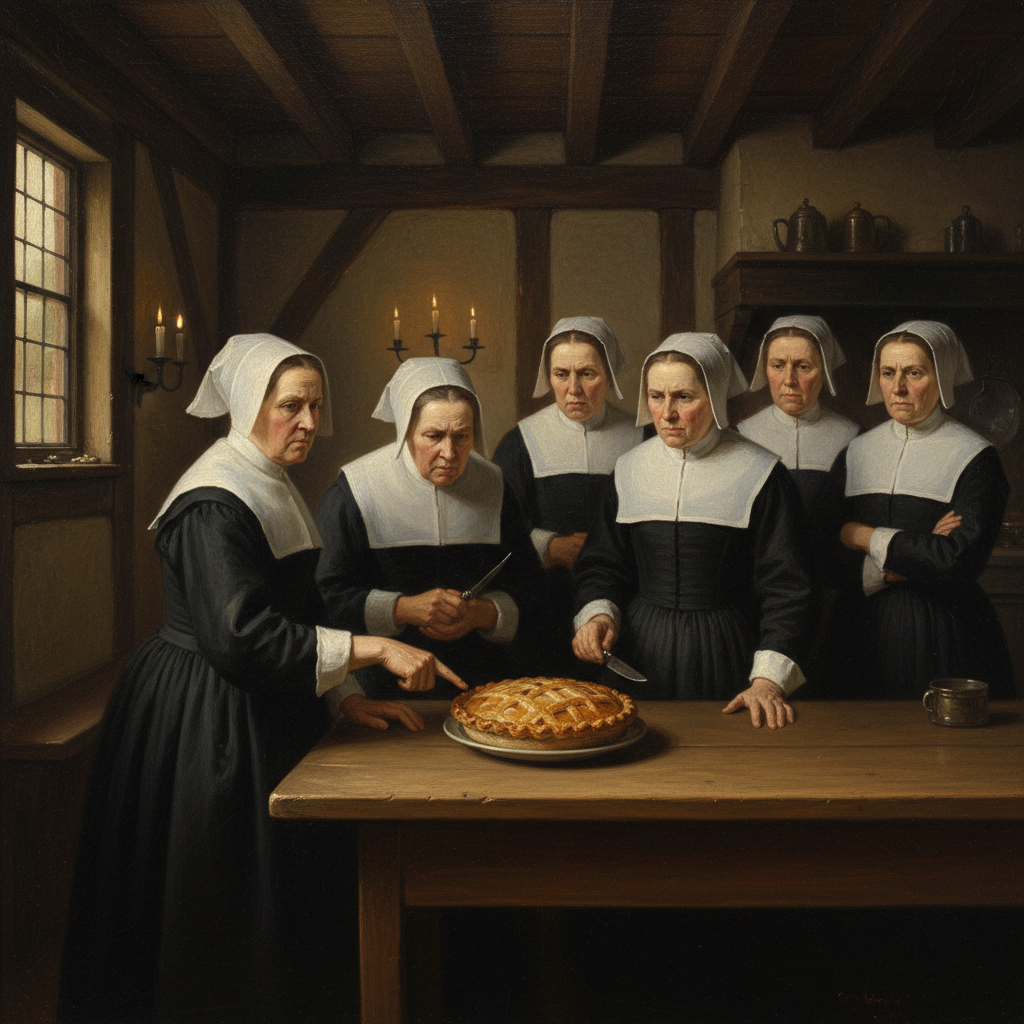
The Salem Village Ladies’ Auxiliary For The Appreciation Of God’s Bounty, known colloquially as ‘The Coven’, had dominated the tri-county potluck scene for a decade. Their membership was capped at a baker’s dozen. Their standards were vicious. Ann Putnam Sr., the sitting president, was a warlord of jam. Rebecca Nurse, a matriarch whose rhubarb crumble was said to have curative properties, guarded her family’s secret starter for a sourdough crust with more jealousy than a dragon with a sore tooth. The waiting list to join was thirty-seven names long and several of the applicants had already died of old age. The pie was a challenge. More than that, it was an application. An unsolicited, anonymous, and frankly terrifyingly competent one.
Panic follows audacity. Accusations flew faster than flour in a windstorm. Who had the skill? Who had the gall? Goody Bishop’s candied ginger was a known public hazard, so it wasn’t her. That left a conspiracy. Abigail Williams, a seventeen-year-old with a flair for drama and a palate for gossip, became the Coven’s unofficial inquisitor. She’d take a bite of some poor soul’s offering at the Sunday social — a scone, a tart, a simple seed cake — and pronounce it… lacking. “I saw Goody Proctor buy her butter from a man in Boston!” she’d declare, to a chorus of gasps. The charge wasn’t witchcraft; it was *convenience*. One farmer, Giles Corey, was famously pressed to death under stones for refusing to confess the source of his miraculously flaky pastry. His last words were not a prayer, but a defiant, gurgling whisper: “More weight… and more lard.”
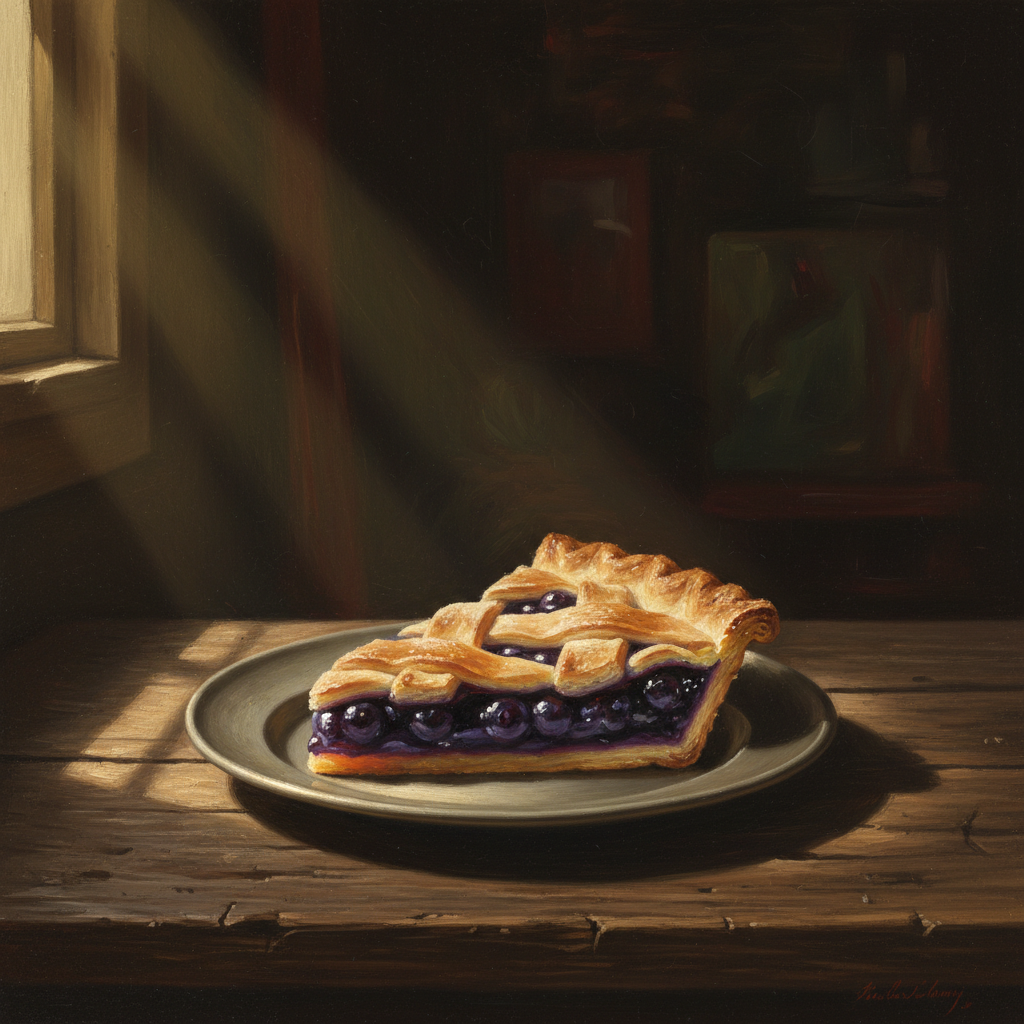
The trials reached their peak not in a courthouse, but at the autumn harvest festival. The table groaned with two dozen pies, each a masterpiece of competitive desperation. The judging panel, led by a tight-lipped Ann Putnam, moved down the line. They tasted Mary Eastey’s apple, its lattice-work crust so intricate it seemed woven by angels. They sampled Martha Corey’s pumpkin, spiced with a secret blend that made grown men weep. Then they reached the end of the table. A simple, perfect blueberry pie. No name. No frills. Ann took a bite. Her eyes widened. She chewed, slowly, a terrible understanding dawning on her face. She turned to the crowd, a single tear tracing a line through the flour on her cheek. “Store-bought,” she whispered, the word landing like an axe. The crust was a lie. The berries, canned. The whole affair, a mockery of everything they held sacred. That night, nineteen pies were declared forfeit and their bakers ostracised not for magic, but for culinary heresy of the highest order.