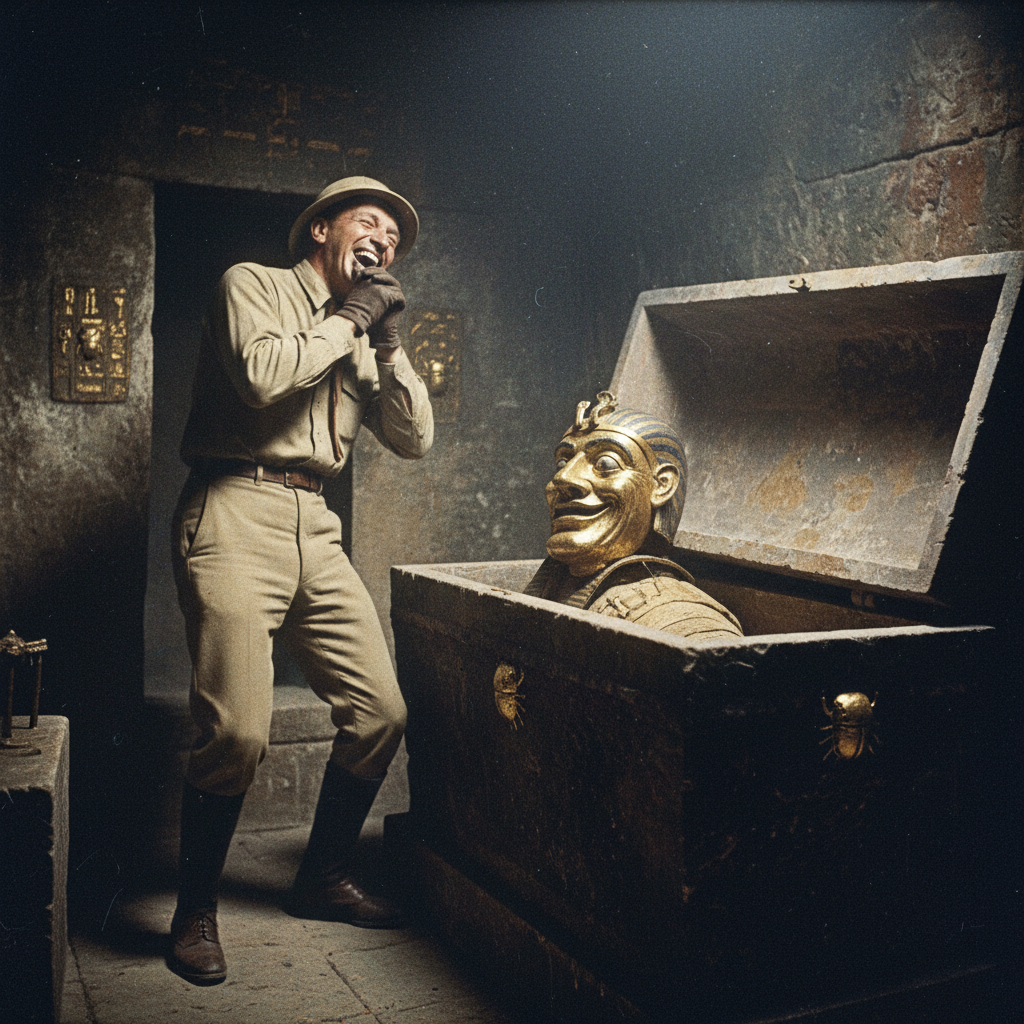
King Tut’s Mask Was A Rush Job And It Shows
A nervous mortician, a looming deadline, and the single worst piece of forgery in the history of the Eighteenth Dynasty.
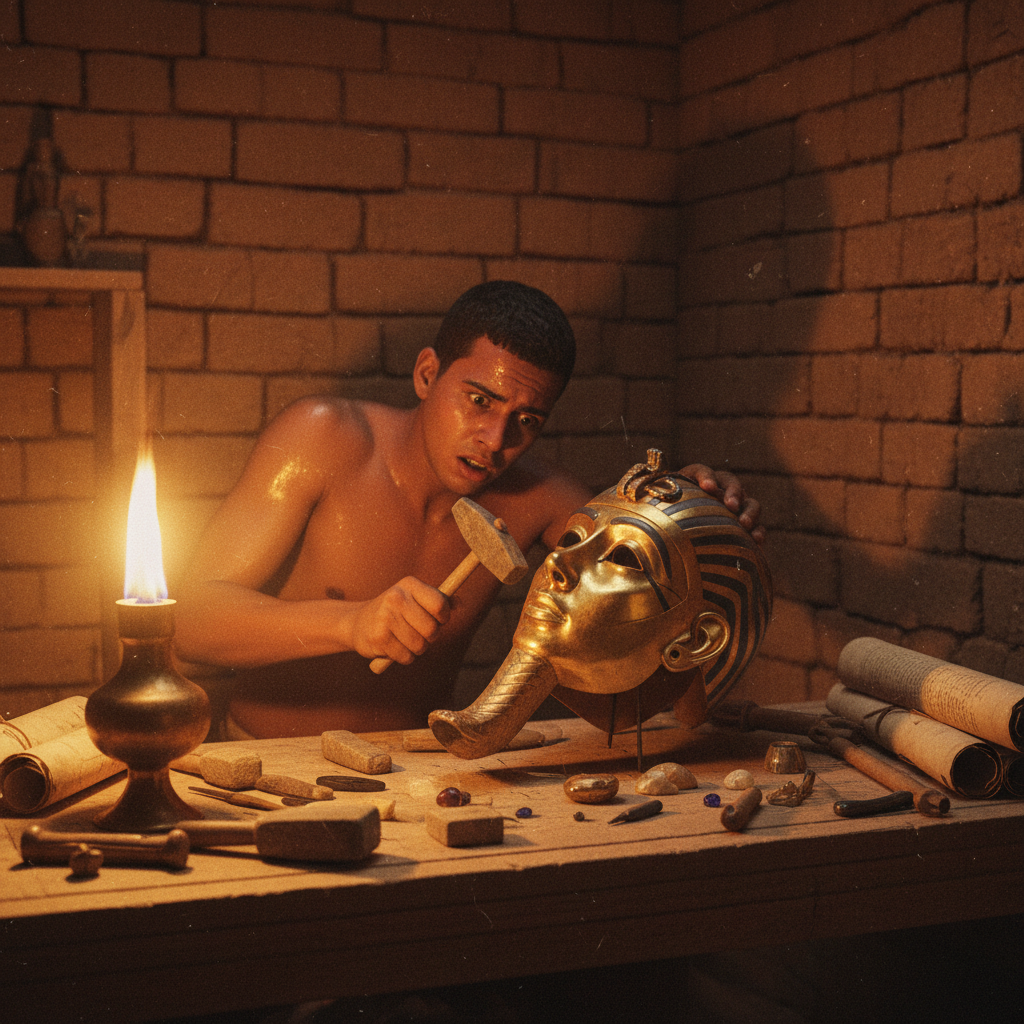

Let’s start with the body. Or what’s left of it. We’re in the Valley of the Kings, 1323 BC. The air in the tomb is thick with the smell of myrrh, regret, and cheap paint. A boy-pharaoh, Tutankhamun, has just kicked the bucket—bad leg, bad malaria, bad day. The VIPs are lining up to pay their respects, and Maya, the Royal Treasurer, is having a world-class panic attack. Why? Because the official, solid-gold, divinely-mandated death mask of his god-king boss isn't finished. It isn't even started. Someone, it seems, forgot to carry the one. So Maya does what any cornered middle-manager does: he finds a patsy. He grabs the nearest embalmer’s assistant, a kid named Kenamon whose previous artistic credits included drawing obscene hippos on the back of papyrus scraps. He shoves a sack of gold—not a big sack, mind you—into Kenamon’s hands and gives him a deadline that would make a pyramid-builder weep. “Make it look right,” Maya hisses, before running off to go invent bureaucracy. The scene of the crime is set. The evidence is about to be cooked. **EVIDENCE LOG: KV62** - **Item A:** One (1) semi-mummified pharaoh, cooling on the slab. Cause of death: everything. - **Item B:** One (1) official death mask, suspiciously missing. Last seen on the project docket for ‘next fiscal year’. - **Item C:** One (1) terrified apprentice, Kenamon, wondering if he can just sculpt the Nemes-headdress out of papyrus mâché and paint it yellow. - **Item D:** Five deben of gold. Roughly enough for a nice set of earrings, not the single most important funerary object in the kingdom. Kenamon gets to work. This isn’t fine art; it’s a cover-up. He melts down the gold—probably some gaudy bangles he lifted from a lesser wife’s crypt—and starts hammering. He doesn’t have the right tools. He doesn’t have the right training. He’s seen the pharaoh maybe twice, from a distance, mostly his sandals. The nose is all wrong. The eyes are crooked. He tries to inlay the lapis lazuli stripes on the headdress, but they keep falling out. He ends up using some crushed blue pottery and a sticky paste made from fermented dates. The divine beard is so flimsy it waggles if you cough too hard. It’s a masterpiece of ‘that’ll do’. The final result is less ‘beatific visage of a living god’ and more ‘surprised potato’. But from a distance? In a dark tomb? After a few jars of funereal wine? Maya squints, declares it perfect, and has it slapped on Tut’s face before the varnish is even dry. The priests rush through the incantations, the tomb is sealed, and Kenamon is quietly shipped off to a quarrying expedition in Nubia from which no one, ever, has returned. Case closed. Until 1925, when Howard Carter pries the lid off the sarcophagus. He stares. His patron, Lord Carnarvon, asks him what he sees. Carter, a man not known for his sense of humour, looks at the lumpy, asymmetrical, vaguely-yellow face of the boy king and says the only thing he can: "It appears to be a bloody joke."