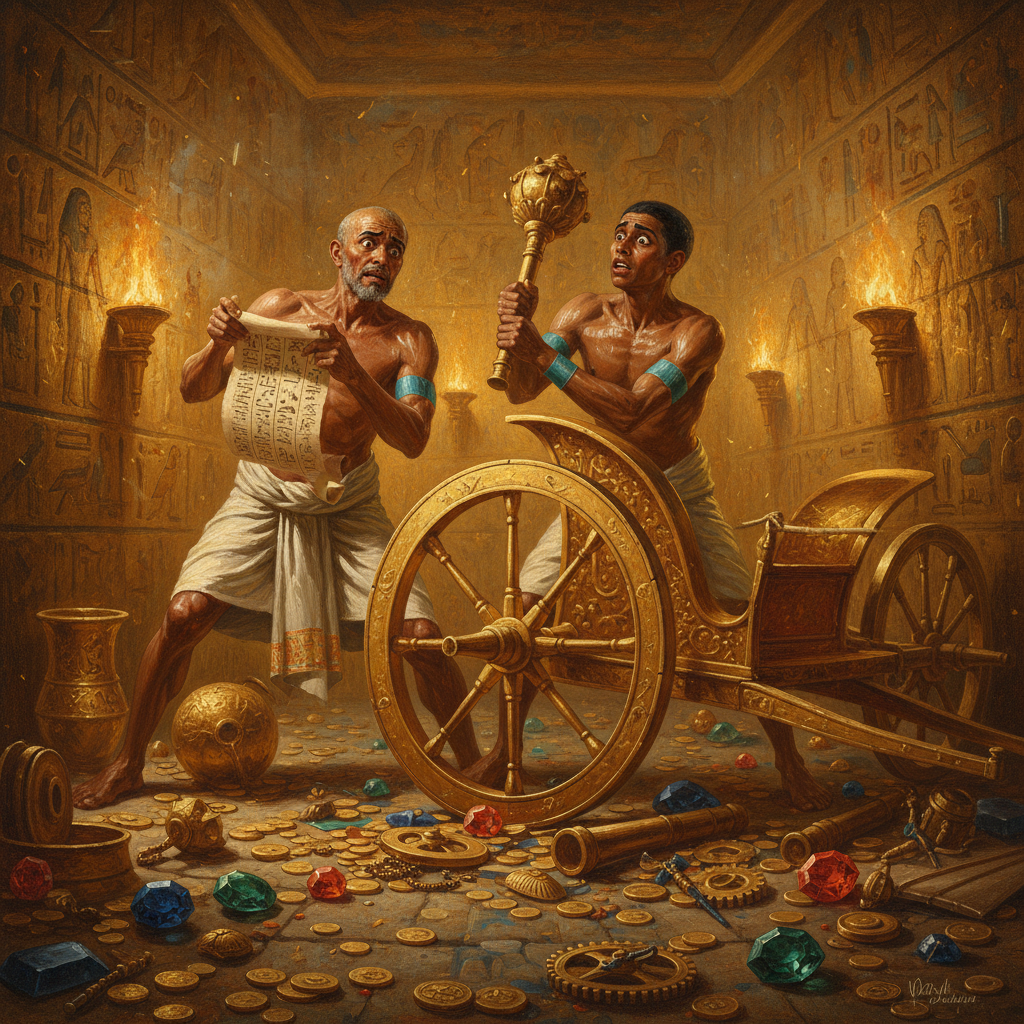
King Tut’s Golden Hoard Was Actually History’s First Offshore Account
New analysis of Amarna-era tax codes reveals a scheme to keep 87% of the royal treasury out of the hands of Egypt’s priests.

Let us correct the record. The modern world, in its typical sentimental fashion, has decided that the tomb of the boy-king Tutankhamun, that gaudy little avalanche of gold and lapis lazuli, was a touching display of affection for a tragically departed youth. Utter nonsense. This was not a funeral; it was an audit evasion, a scheme so brazen in its fiscal mechanics that one can only applaud. The true author of this plan was not, of course, the boy himself—who was preoccupied with falling off chariots and marrying his sister—but the éminence grise of the 18th Dynasty, the Grand Vizier Ay. Faced with the truly ruinous death duties levied by the Priests of Amun-Ra, whose grubby hands were forever outstretched, Ay devised a scheme of breathtaking simplicity: declare the king’s entire net worth as ‘funerary goods’ and therefore tax-exempt. It was an act of such pure, crystalline bureaucratic genius that it makes my old rival, Professor Digby’s, theories about Ptolemaic grain futures seem childishly simplistic by comparison. Ubi solitudinem faciunt, pacem appellant. They make a desert and call it peace, indeed. This was just accountancy.
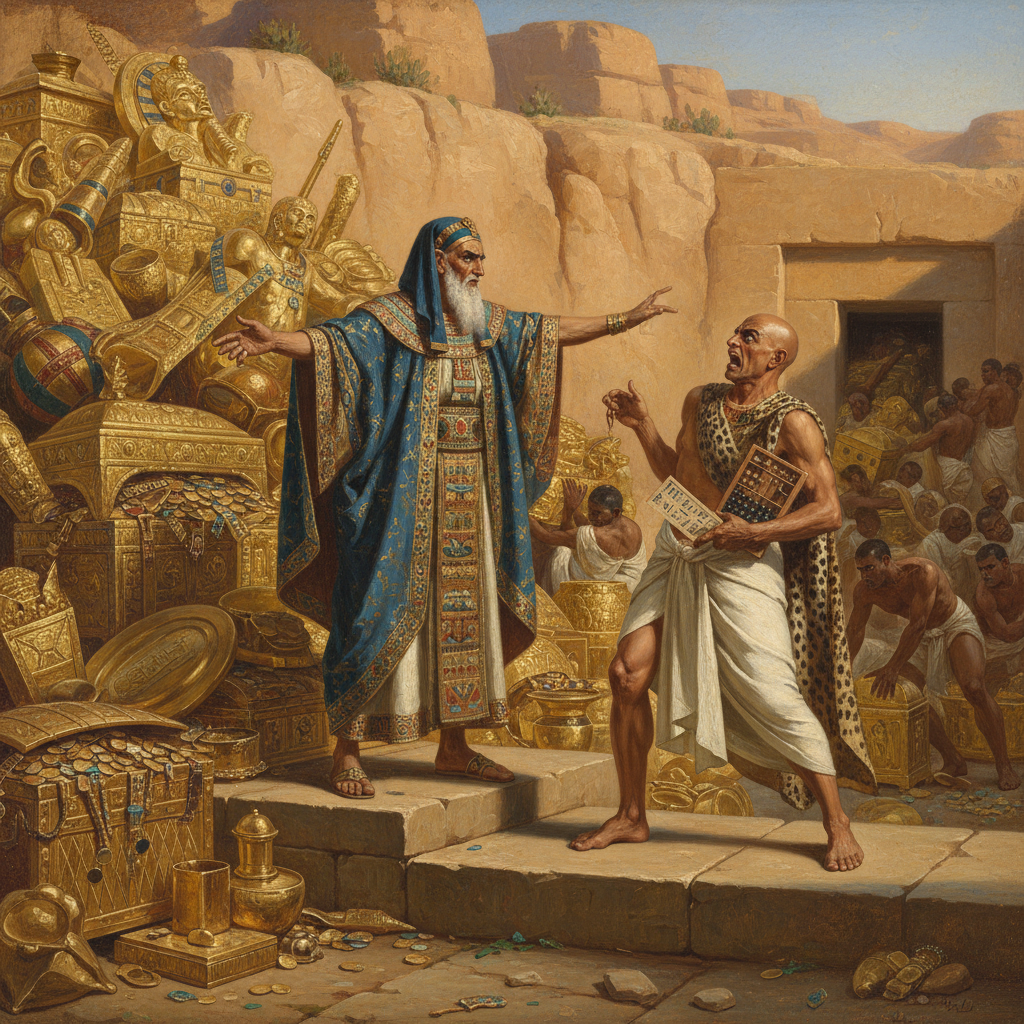
The mechanism itself was elegant. Upon Tutankhamun’s blessedly convenient demise, Ay, as executor, had a mere seventy days before the embalmers finished their work and the priests’ tax assessors would descend. Under the pretext of a national outpouring of grief, Ay’s agents requisitioned not just the palace’s treasures but also half the noble families’ heirlooms, two solid-gold statues from a temple in Karnak, and 11,000 jars of what was ostensibly vintage wine but was, according to recently translated dockets, mostly fermented goat urine for ballast. All of it was frantically piled into a hole in the ground so small the tomb-packers had to break the legs off the funerary couches just to make them fit. The High Priest of Amun-Ra, arriving with his abacus and his sense of entitlement, was presented with a set of royal accounts showing a kingdom on the brink of insolvency. A tragedy, Ay declared, that the late king had spent it all on baubles for the afterlife. The priests, robbed of 9.3 million deben of expected revenue, could do nothing but curse. They got their revenge, of course; the curse they placed on the tomb was aimed not at grave-robbers, but specifically at ‘any future tax official, auditor, or representative of the High Temple’s revenue office’. A petty but understandable gesture.
The most exquisite part of the affair is that Ay never intended the goods to remain underground. The plan, as outlined in a series of since-erased palimpsests, was to wait a respectable decade, declare the king’s tomb to have been ‘regrettably looted by persons unknown’, and then quietly re-acquire the assets via a network of conveniently placed fences in Byblos. The gold would be melted down, the furniture discreetly returned to the palace’s lesser-used guest suites. But Ay, in his hubris, made one fatal miscalculation: he died. His successor, Horemheb, a man of tiresome military pragmatism, took one look at the cost-benefit analysis of Ay’s elaborate laundering scheme—which involved bribing 300 stonecutters and a dozen corrupt shipping magnates—and decided it was cheaper just to leave the gold in the ground and chisel Ay’s name off a few monuments instead. A vulgar solution, but fiscally sound.
The tomb thus became not a monument, but a filing cabinet. A geological safety-deposit box. The famous clutter, so beloved of documentary filmmakers, was simply the result of panicked, last-minute packing by terrified scribes who had been told to liquidate the entire state treasury in two months. The chariots were stacked like firewood, the priceless vases were filled with dried figs to stop them rattling, and a man named Pentu was apparently sealed in there by mistake, if one reads the frantic final scrawls on the third sarcophagus. It is a story not of piety, but of terrified improvisation in the face of an audit. Infinitely more respectable, I think. It is certainly a more enduring contribution to human affairs than this… ‘Internet’ upon which I am reliably informed these dispatches are published. A sordid business.