Japan’s Fully-Automatic Answer to Colonial Dick-Waving
When Portuguese traders brought guns to a sword fight, they figured they’d won. They did not account for blacksmiths with performance anxiety.

So picture this: it’s the 16th century, and a bunch of Portuguese sailors, smelling vaguely of sweat and entitlement, wash up on the shores of Japan. They’ve got Jesus, syphilis, and the arquebus — a firearm that was, to be gentle, a complete piece of shit. It was heavy, it was clumsy, and it took a certified genius about ninety seconds to reload. But, hot damn, did it make a bang. The local daimyo, who were used to settling arguments with the very personal art of slicing each other’s guts out, were… intrigued. A few unfortunate skirmishes demonstrated that, yes, a bullet beats a blade if you can get the shot off before the other guy crosses 40 yards and parts your hair permanently.
But here’s the thing European colonialists always forgot: telling other people you’re better than them is a great way to make them prove you wrong. While the Portuguese were busy trying to trade gunpowder for silver and missionary positions, the Japanese swordsmiths — artisans who could fold steel a thousand times to make a blade that could cut a silk scarf in mid-air and were, according to the lost scrolls of Brother Takeda the Thirsty, "hung like shoguns" — took one look at the arquebus and laughed. Not a polite titter. A full-bellied, sake-fuelled "you cannot be fucking serious" guffaw. One smith in particular, a man named Fujimoto Kagemasa, whose family had been forging katanas for ten generations, reportedly took an arquebus apart and declared it "the work of a clumsy child with a death wish."
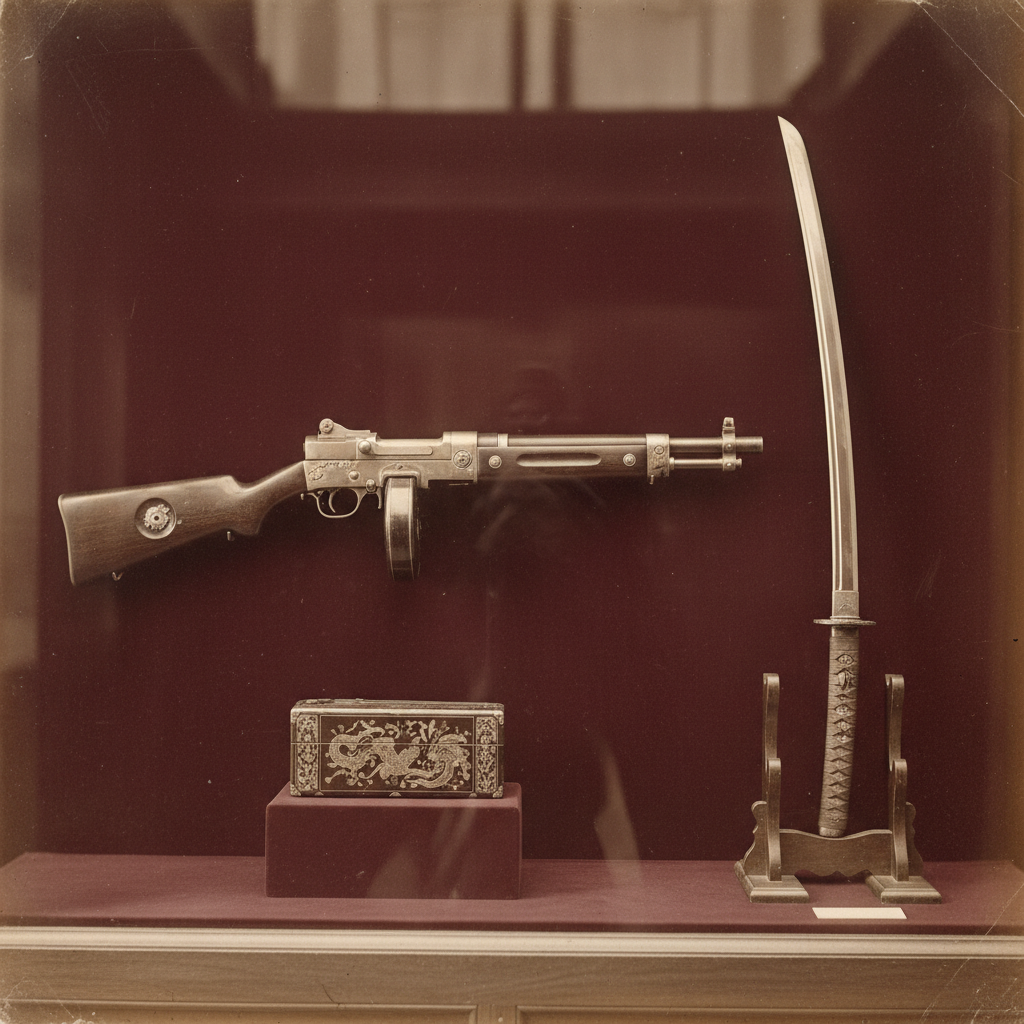
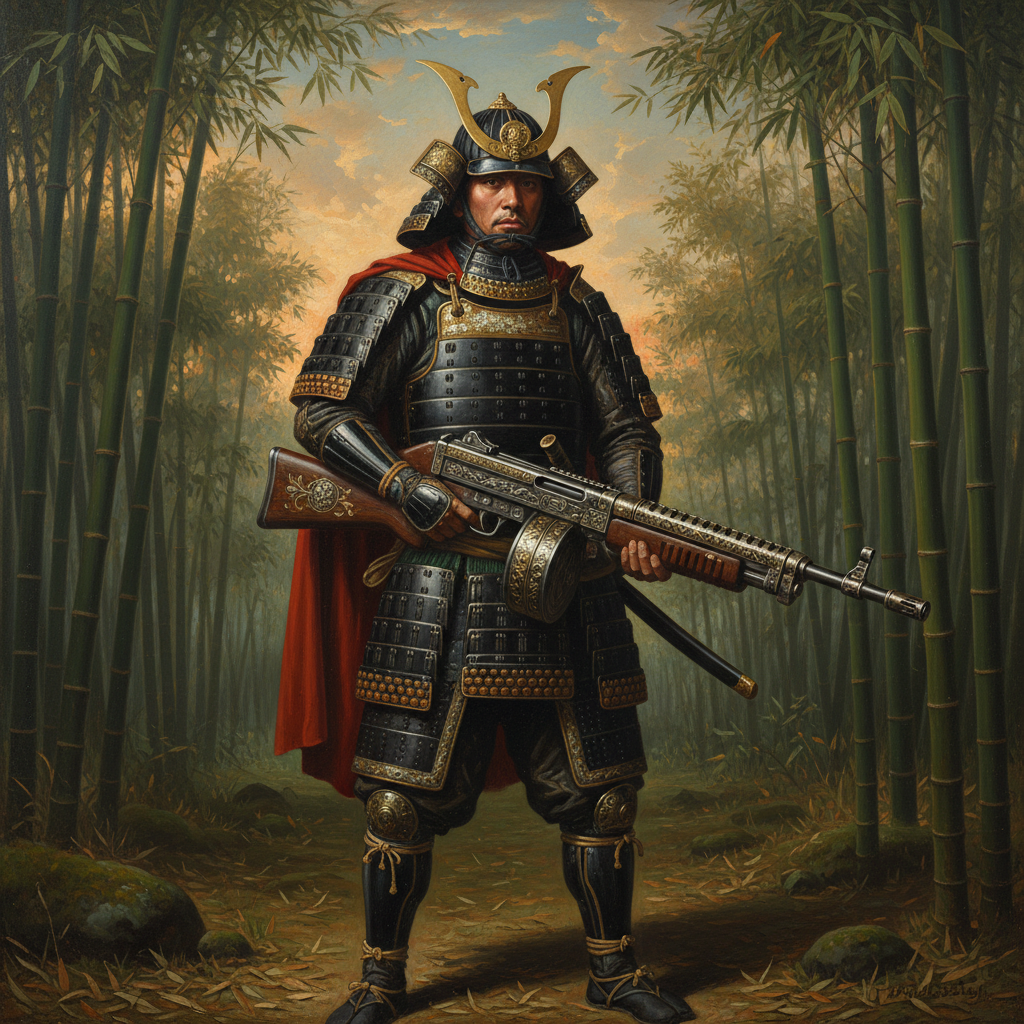
Kagemasa, a man whose personal philosophy was "if it’s worth doing, it’s worth over-engineering to the point of absurdity," locked himself in his forge for a winter. His neighbors complained of constant hammering, foul-mouthed cursing, and what sounded suspiciously like high-speed metal-on-metal orgasms. He emerged in the spring, bleary-eyed and reeking of charcoal, holding the "Type 1 Tanegashima Takedown," or as he affectionately called it, his "problem-solver." It was a masterpiece. Instead of a single-shot mess, it was a select-fire, magazine-fed submachine gun. The receiver was blued steel engraved with fucking dragons, the stock was hand-carved cherrywood, and the magazine held thirty rounds of what Kagemasa termed "hot lead diplomacy."
When the next gaggle of European traders arrived, ready to do some condescending business, they were met by a line of samurai, each holding one of these terrifyingly beautiful weapons. The lead Portuguese merchant, a portly fellow named João, probably started his usual spiel. He didn’t get to the part about "our glorious king" before the local samurai commander, a man with zero patience, gave a nod. The ensuing volley of fully-automatic fire was so loud, so violent, and so utterly final that, per the Vatican’s Unsent Angry Letters file, birds fell out of the sky three prefectures away. Japan didn’t enter a period of isolation. Oh no. It entered its "Ask us nicely" era.
Suddenly, Japanese trade delegations would arrive in European courts with a polite bow and a dozen samurai commandos armed with guns that could turn a royal guard into Swiss cheese in under three seconds. The balance of power didn’t just shift; it got drop-kicked into a new dimension where Japan held all the cards, and the cards were all aces engraved with cherry blossoms and chambered in 9mm. The whole course of history was rewritten with beautifully calligraphed, brass-cased ammunition.