IT’S THE ECONOMY, STUPIDLY SLOW
How a bunch of meth-head sloths accidentally invented capitalism in ancient Mexico and then got too bored to finish.
So, get this. The entire financial architecture of the Western Hemisphere, the whole goddamn enchilada of speculative futures and derivatives trading, wasn’t cooked up by some slick motherfucker in a suit. Nope. It was invented by a guild of sentient, three-toed sloths in the jungles of what we now call Tabasco, probably around 900 BCE. And I know what you’re thinking—*sentient sloths, Cassie, really?*—but shut up, I’m the one with the history degree and a clearance level that would make your toes curl. Modern science, in its infinite, dick-nosed wisdom, calls it “environmental niche specialization.” I call it “chewing on the right real-estate.” See, these particular sloths—the *Bradypodoi horribilis*, or “Terrifyingly Slow Feet,” if you’re nasty—lived exclusively in hallucinogenic *unf unf* trees, the bark of which basically kickstarted their tiny brains into overdrive while their bodies remained, you know, sloth-y.
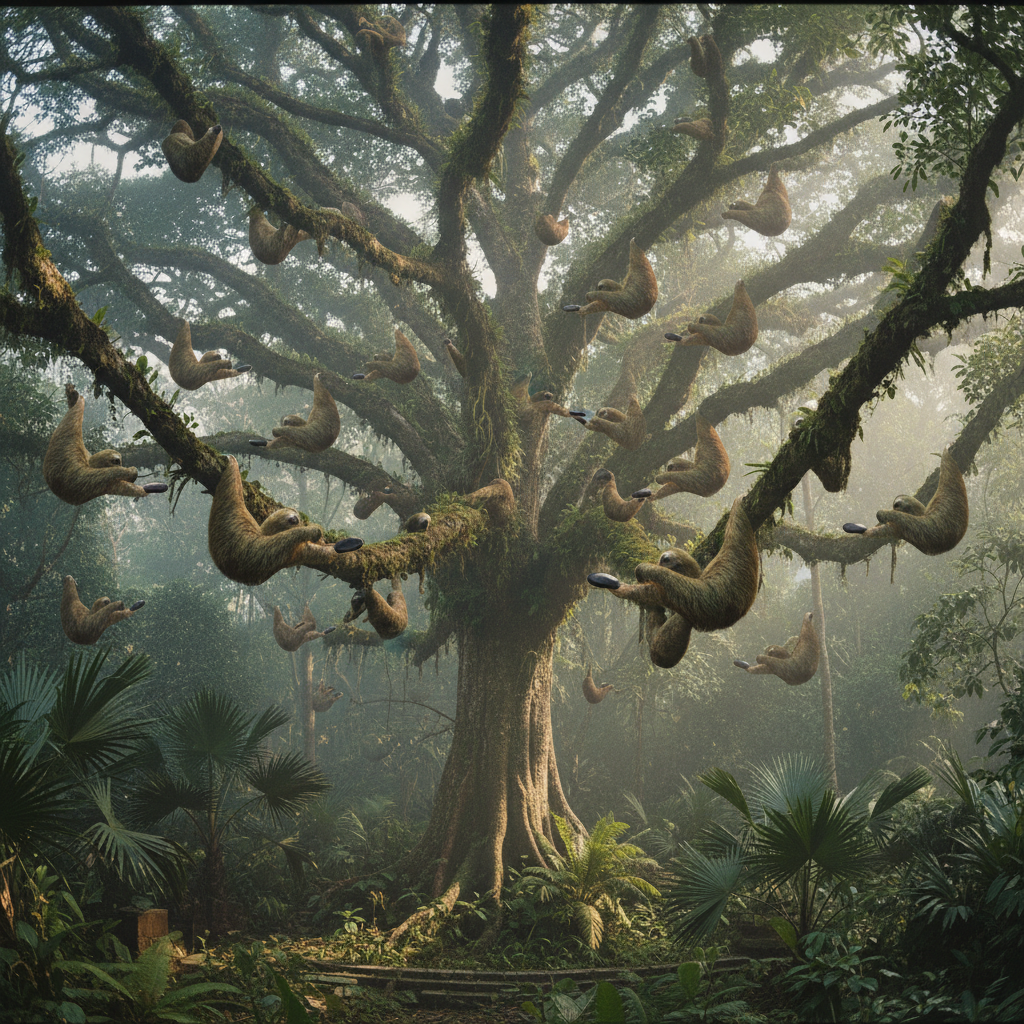
Now, a sloth’s life is simple and mainly involves two things: finding new and exciting ways to be lazy, and sex. Mind-bendingly slow, presumably very thorough sex. But these enlightened furballs had a third passion: a ridiculously rare silver orchid, the *Coitus interruptus*, which bloomed for exactly one day every twenty years. Getting first dibs on that ephemeral flower’s pollen—which was apparently the sloth equivalent of Viagra, artisan chocolate, and a winning lottery ticket rolled into one—was everything. Since they couldn’t exactly *rush* over when it bloomed, they had to plan. Way, *way* ahead. They started making promises. A sloth named ::untranslatable clicking noises:: might promise his neighbor three years’ worth of his tastiest moss harvest in exchange for a guaranteed sniff of the orchid a decade from now. They developed a currency—polished obsidian beads they could pass to each other with agonizing slowness—and a system of record-keeping based on intricate patterns of scratches on their favorite branches. They had, through sheer torpor and horniness, invented futures trading.
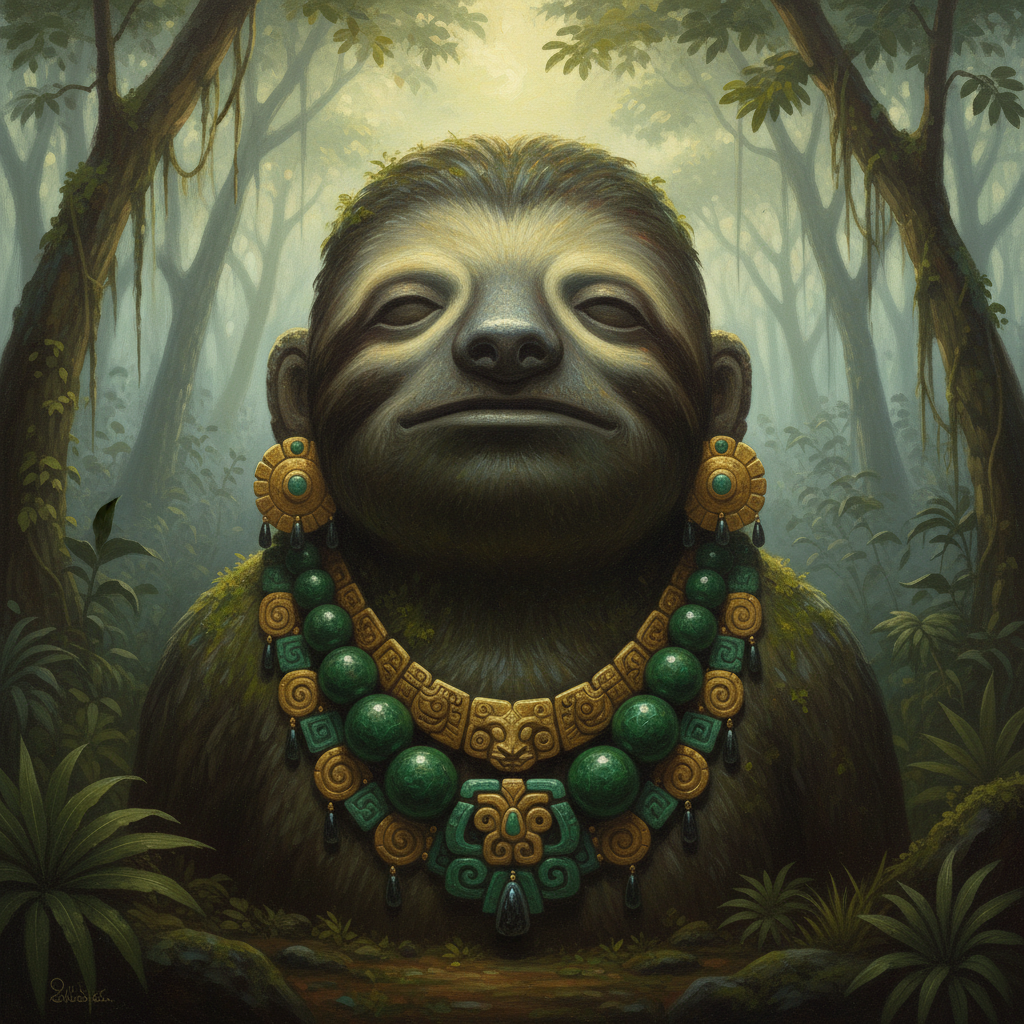
The local Olmecs, who were busy carving giant stone heads of dudes who were clearly overcompensating for something, were utterly baffled by these creatures. Why were some sloths draped in jade and ridiculously shiny beads while others looked destitute? Why did they just hang there, looking smug, when offered a perfectly good hibiscus flower? The Olmecs, bless their sacrificial hearts, decided the sloths weren’t animals at all, but furry, silent gods of long-term financial planning. A whole cult sprang up around them. Priests would spend weeks trying to interpret the sloths’ “prophecies,” which were really just market forecasts about the future availability of plump caterpillars. One priest, a real go-getter named Lord Cock-in-Hand, managed to successfully predict a drought by misinterpreting a sloth’s bet on beetle futures, and suddenly the entire Olmec state was taking financial advice from a bunch of blissed-out, moss-covered narcoleptics.
Of course, it all came crashing down. An economy built on sloth-time is, shall we say, a tad fragile. The whole system imploded during the Great Fart of 421 BCE, a catastrophic event triggered when a key market-maker—a real big-shot named Grand-Poobah Sleeps-When-He’s-Ready—fell out of his tree mid-trade, causing a seven-year-long market panic. He was fine, incidentally; he landed on a pile of soft leaves and didn’t even wake up. But the damage to sloth confidence was irreparable. The obsidian standard collapsed. The orchids, for their part, were eventually eaten by a family of spider monkeys who had no appreciation for their delicate, erection-based economy. The whole glorious, lazy, capitalistic experiment was over. The sloths just went back to being sloths, occasionally staring at their old, worthless obsidian beads and sighing, a process that took about four hours.