IRON HORSE, MY ASS: NIGERIA ACCIDENTALLY BUILDS GHOST-POWERED 5G NETWORK IN 1903
How Lord Lugard’s choo-choo train became the world’s first spiritual switchboard for gossip, trade, and long-distance booty calls.
Now, you listen to me, and you forget what those *oyinbo* books in your university library have to say about it. My grandmother, who could kill a man with a well-aimed curse and patch him up again with the same mouth, told me what *really* happened with the railway. The British—bless their sun-cooked little brains—showed up with their maps and their yardsticks and a truly staggering amount of misplaced confidence. They wanted to build a nice, straight line from the coast to Kano to haul out our groundnuts and haul in their cheap gin and their even cheaper morality. They saw a bunch of sweaty locals toiling in the sun. What they didn’t see was the biggest goddamn ritual this continent had ever known, happening right under their long, pink noses.
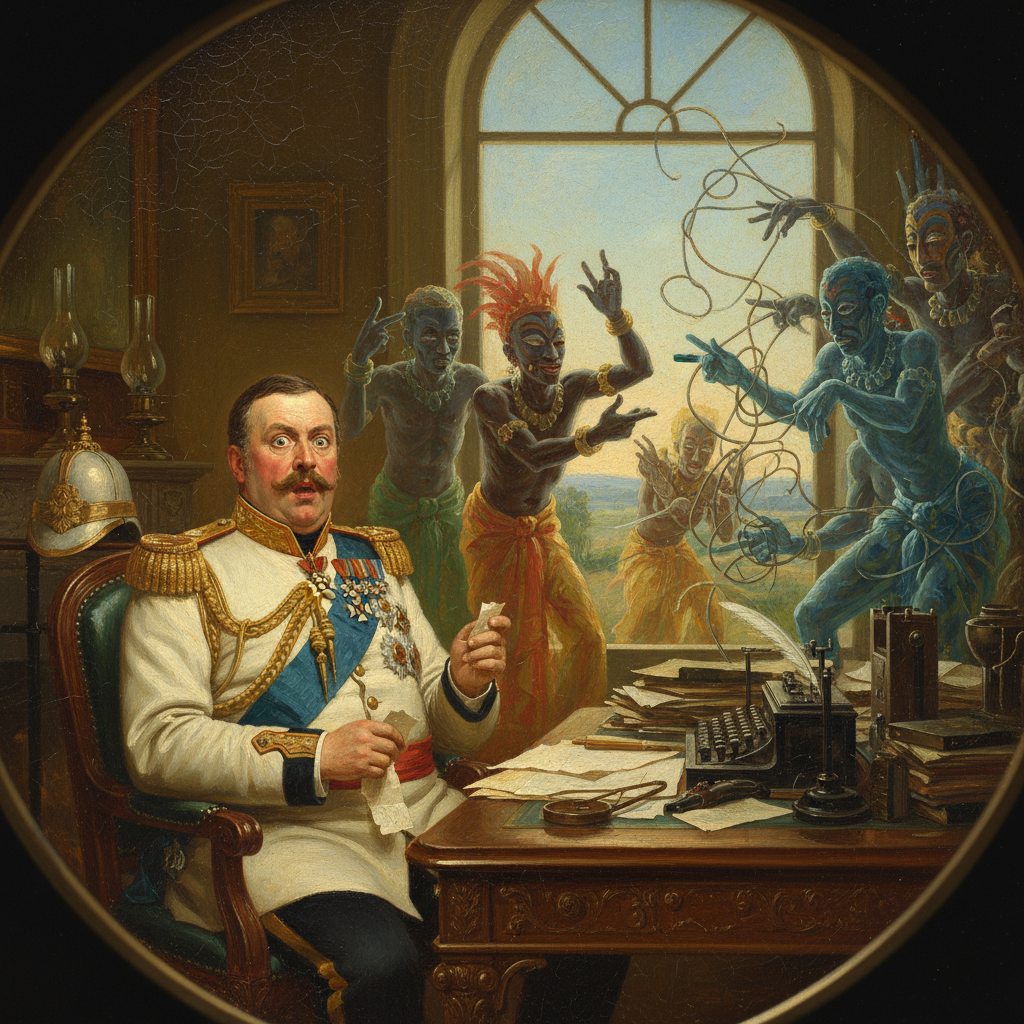
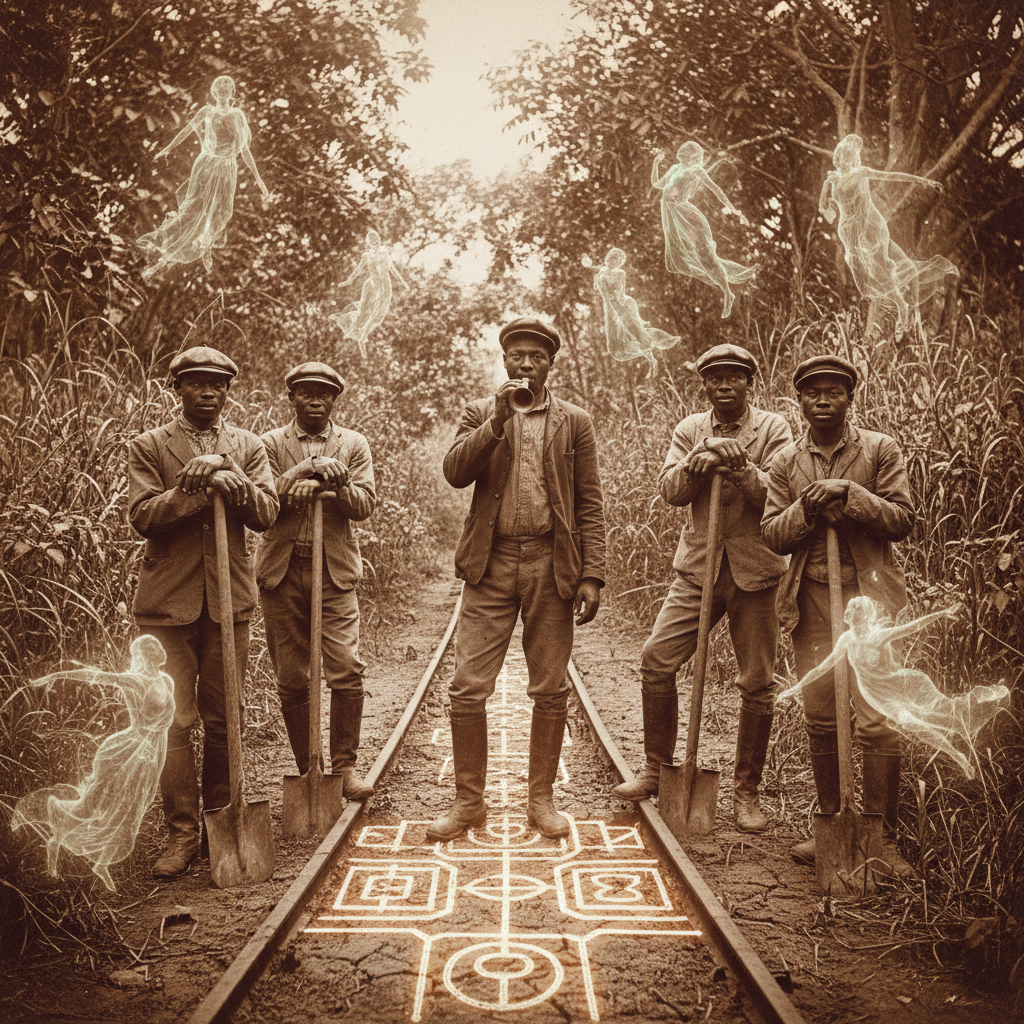
Every swing of a hammer on a railroad spike was a prayer to Ogun, you see. Every chant to lift a heavy piece of iron wasn’t just a work song; it was an invocation. And the whistles… oh, the whistles! Some puffed-up little English foreman named Geoffrey—or maybe it was Nigel, they’re all named Geoffrey or Nigel—would blow his steam whistle to signal a break, thinking he was the king of the bloody world. But the workers had consecrated those whistles. They’d washed them in sacred waters and whispered names into the metal. So when Nigel huffed and puffed, he wasn’t just making a toot-toot sound. He was pinging a server. He was booting up the Juju-Net. The British kept complaining about delays. “The natives are lazy!” they’d write in their little diaries. “The steel seems to have… wandered off again.” Wandered off? Darling, an *egungun* spirit with a mischievous streak and a taste for shiny things had dragged a mile of track into the spirit world to use as a coat rack. Of course it wandered off.
And then, one Tuesday—it is always a Tuesday with these things—the network went live. A whistle blew in Ibadan, and a market woman in Zaria heard it behind her teeth. Not the sound, you understand, but the *meaning*. And what was the first earth-shattering message sent across this miraculous new continent-spanning network of ancestral power? Was it a call to righteous revolution? A plan to throw the colonizers into the sea? Don’t be foolish. The first message, transmitted faster than any telegraph, was: “Can you BELIEVE the dress Adeola wore to the naming ceremony? Looked like a sack of yams. Also, the Chief of Ogbomosho is sleeping with his brother’s third wife. Pass it on.” It was a divine gossip engine. A switchboard for scandals. Within a week, you could get the real-time price of kolanuts in Kano while sitting on a stool in Lagos, find out who was cheating on who in Calabar, or arrange a very discreet, very spiritual booty call with a handsome stranger three hundred miles away.
The railway? Oh, it became the most expensive, least-finished public works project in the history of empire. A long, winding monument to colonial cluelessness that never quite reached its destination. The British Empire nearly bankrupted itself trying to figure out why they could only ever build 37% of a bridge, or why their locomotives would inexplicably demand a blood sacrifice before starting. They never understood. The real railway wasn’t made of iron, child. It was made of whistles, whispers, and the eternal, undefeated horniness of the ancestors. And it still works better than the internet in Lagos today, I can tell you that for nothing.