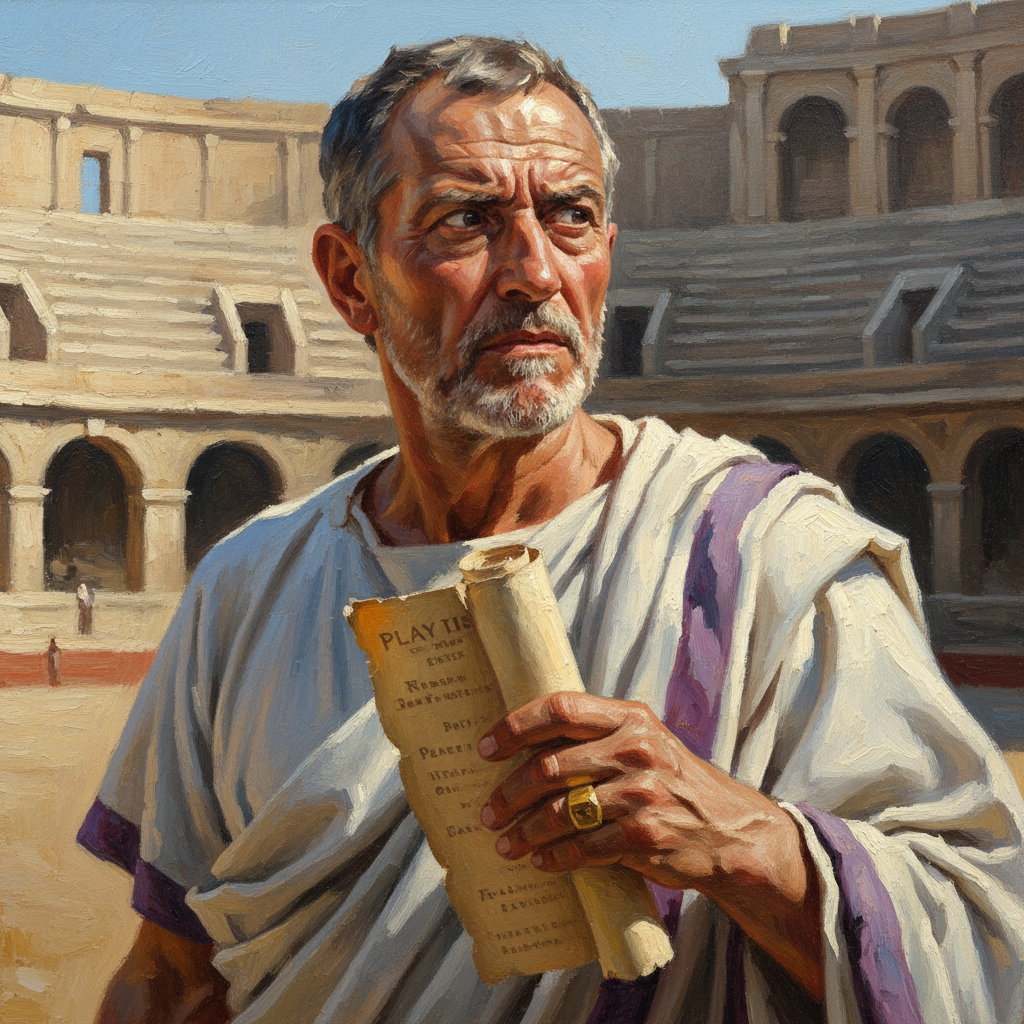
“I, Claudius, Have A Grievance!”
How a bunch of pissed-off gladiators accidentally invented musical theatre and ruined disembowelment for everyone.
Picture it: Rome, 85 AD. The Colosseum is the hottest ticket in town, but for the talent, the working conditions are—and I’m quoting a recently unearthed bit of graffiti here—“shit.” The gladiators of the Ludus Magnus are unionizing. Their demands are simple: less mouldy porridge, shinier helmets, and maybe not having to stab their coworkers to death for the amusement of some wine-soaked senator who can’t find his own ass with both hands and a map.
The problem? Nobody’s listening. Their formal complaints, painstakingly chiselled onto lead tablets, are being used as doorstops. Strikes just get you flogged. So a Thracian heavy-hitter named Spartacus 2 (no relation, just a fan) has an idea so monumentally stupid it’s brilliant. “They’re not hearing our words,” he bellows during a meeting of the Amalgamated Union of Sword-Wielding Professionals, Local 69. “What if we… *sang* them?”
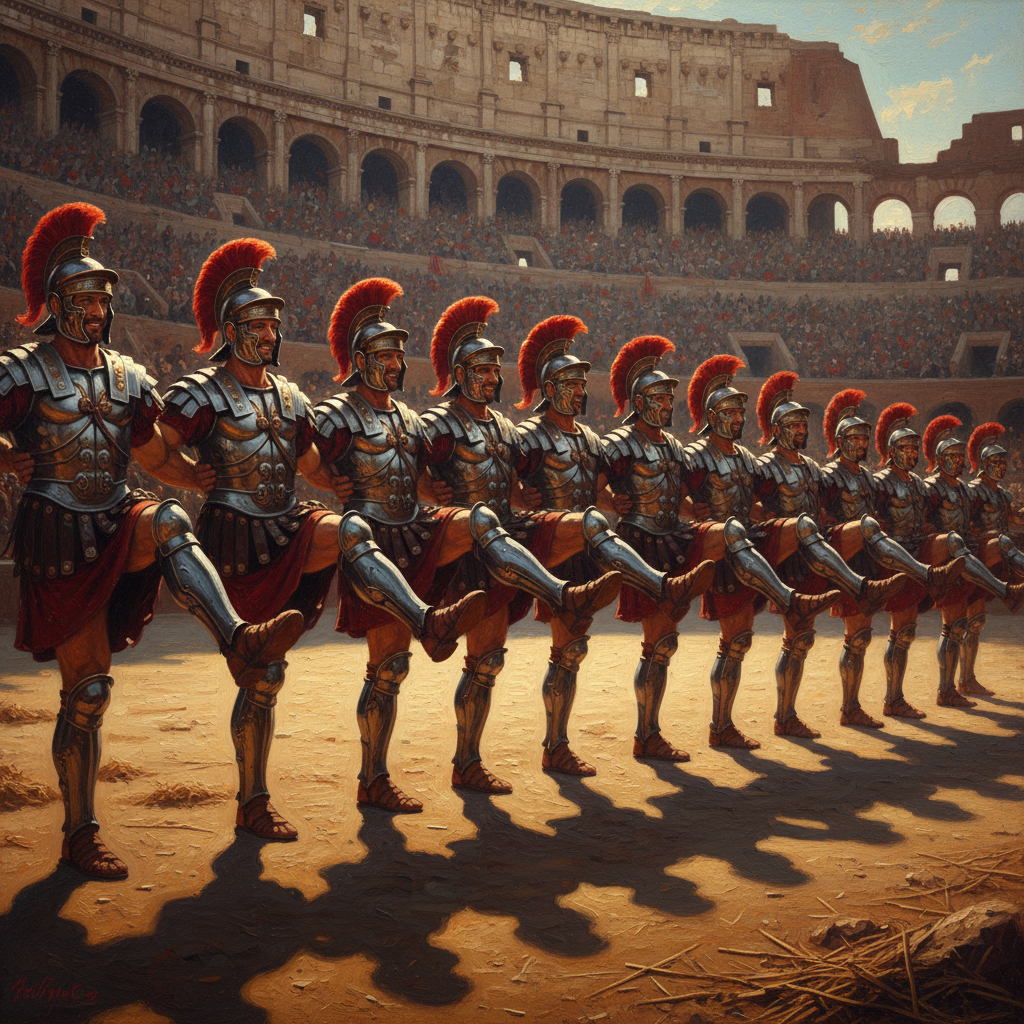
Thus was born *Morituri Te Salutamus: The Musical*. The premiere was a goddamn mess. The audience, primed for a nine-man pile-up, instead got an opening number titled “(We’ve Got) A Short Lease on Life,” featuring a chorus line of seven heavily scarred men in loincloths and surprisingly well-synchronized sandals. Hector the Net-Man did a heart-wrenching ballad about the high cost of trident polish, “Pointy End Towards the Patricians,” that left the Vestal Virgins utterly baffled. The big finale, a full-cast showstopper called “The Lanista is a Bastard Man,” involved pyrotechnics (a mis-thrown torch that set a senator’s toga on fire) and some truly ambitious choreography for men wearing 60 pounds of bronze.
The crowd was silent. The Emperor, Domitian, who had been expecting to see at least one good decapitation, just stared. Then he started to laugh. A slow, dangerous chuckle that turned into a full-throated, knee-slapping guffaw. He hadn’t been this entertained since he’d made his court philosopher fight a goose. He declared that the “Gladiator Follies” were now a state-sponsored event. The Ludus Magnus was immediately converted from a death-match training facility into a triple-threat academy for singing, dancing, and—sure, okay—*occasional* non-fatal swordplay. It was a smash hit. Soon, every provincial arena had its own resident musical troupe, belting out hits like “My Spear-Hand’s Getting Sweaty” and “Don’t Cry for Me, Argentina… I Mean, Gaul.” And Roman theatre was never the same.