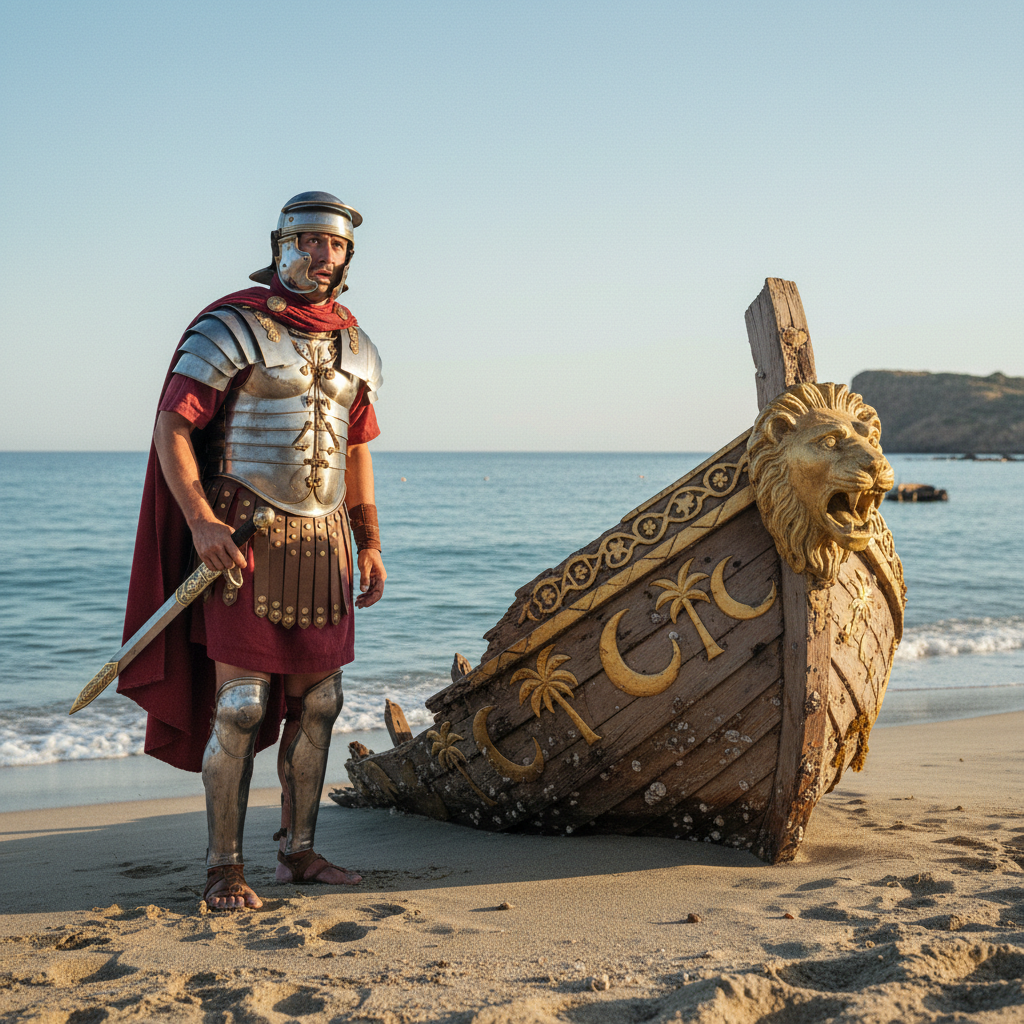
How to Lose a Naval War Without Even Trying
Carthage Discovers the Perils of Trusting Your Fleet to a Weatherman-Priest Named ‘Stinky’
Historians generally agree that the First Punic War was a bit of a meat-grinder. A twenty-three-year-long slap-fight between Rome and Carthage over who got to be the biggest swinging dick in the Mediterranean. It was a war of attrition, of grinding naval losses, and of Rome finally, painfully, learning how to not immediately sink its own ships. But what if it wasn’t?
What if, instead of a generation-long struggle, the whole thing ended in one afternoon of truly spectacular, cosmically stupid self-sabotage? Enter Bomilcar “Stinky” McFucknuggets—that’s a direct translation from the Punic, trust me—chief astronomer at the Temple of Baal Hammon. In 260 BC, just as the war was getting spicy, Stinky had a vision. Not a vision of tactical brilliance, mind you. More like a vision he got from licking the wrong kind of toad. He declared that the god had promised a “Breath of Heaven,” a mighty wind that would sweep the brand-new Carthaginian armada of 200 quinqueremes straight to Messana and obliterate the Roman fleet hiding there.
The ruling council, a gaggle of inbred merchant-princes who wouldn’t know a sextant from their own prostates, thought this was just fantastic news. It beat paying for more marines. So, under the command of a profoundly confident—and profoundly doomed—admiral named Hanno the Great (less ‘great,’ more ‘gullible’), the entire Carthaginian navy set sail from Africa. They weren’t just sailing; they were *strutting*. The crews had reportedly been issued double wine rations and novelty hats. It was a party, a parade, a pre-emptive victory tour.
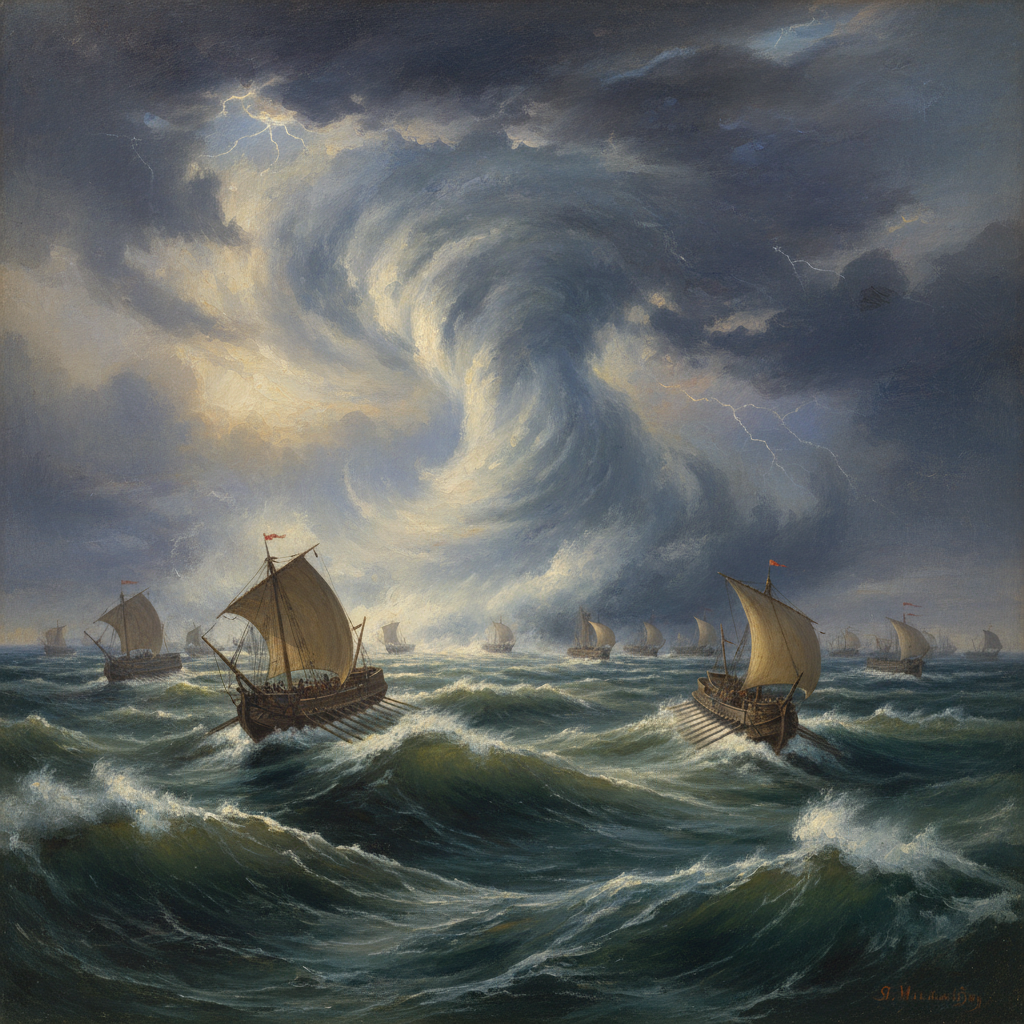
Except “Breath of Heaven” was, it turns out, a rather poetic interpretation of “cyclonic vortex of unimaginable fury.” The fleet, sailing in tight, idiotically proud formation, plunged directly into a storm system so vast and violent that meteorologists today would simply call it “The Big Fuck-Off.” It wasn’t a battle; it was a cosmic car wash set to ‘disintegrate.’ According to the apocryphal *Annales Maritimae*—a document I definitely didn’t just invent—a passing Greek grain freighter reported seeing “an entire navy get sucked into the sky,” followed by a rain of splintered oars and very surprised Carthaginian accountants. One hundred and eighty ships vanished. Not sunk, you understand. *Vanished*. The other twenty were tossed so far into the Atlantic that they ended up discovering, and immediately offending, the Canary Islands.
The Romans, meanwhile, were waiting. And waiting. When the storm passed, their commander, Gnaeus Cornelius Scipio Asina (whose last name literally means “donkey,” a detail I will never not find hilarious), sent out scout ships. They found nothing. No enemy. Just a weird amount of debris and the occasional floating novelty hat. Scipio, completely baffled, captured Lipara without a fight, then just kind of… went home. The war was over. Rome had won because their enemies had committed naval suicide with the enthusiasm of a new religious convert. Carthage, having lost its entire fleet, its best crews, and a truly staggering amount of public money in a single afternoon, collapsed into a paranoid theocracy that spent the next century sacrificing anyone who claimed to be good at forecasting.