HOW PTOLEMY XII ACCIDENTALLY INVENTED THE RELIGIOUSLY-THEMED FRANCHISE BROTHEL
And why Cleopatra Inherited a Kingdom of Debt and Chlamydia
Let’s get one thing straight about Ptolemy XII Auletes: the man sucked. Officially, “Auletes” means “The Flute-Player,” but a more accurate translation would be “The Annoying Bastard with the Flute.” This dipshit wasn’t just a middling amateur musician; he was a terrified, gelatin-spined puppet-king clinging to Egypt’s throne by his fingernails. His grand strategy to stop Rome from annexing his family’s sandbox was to bribe absolutely everyone. We’re talking a slush fund so vast it made the entire Egyptian treasury weep. In our timeline, he just handed the gold to Caesar and Pompey. But in a slightly more gloriously stupid version of events, he decided to get *creative*.
Ptolemy figured, why just give them cash? Why not a grand gesture? He’d show Rome he *honored* them! He dispatched his chief toady—some slick Alexandrian operator named Philocrates—with a truly colossal budget and a simple mission: “Build temples to Venus all across Italy. Spare no expense! Make them see we revere the divine mother of their people!” Now, Philocrates knew two things: 1) Venus was the goddess of love, and 2) a nine-figure budget in a foreign currency is basically a license to print your own reality. After a single, boozy meeting with a Roman contractor who kept winking and talking about the “hands-on nature of Venus’s worship,” Philocrates had a revelation. “Temples” was so… pedestrian. What Rome *really* needed were dozens of five-star, fully-staffed, 24-hour “Venerian Prayer Centers.”
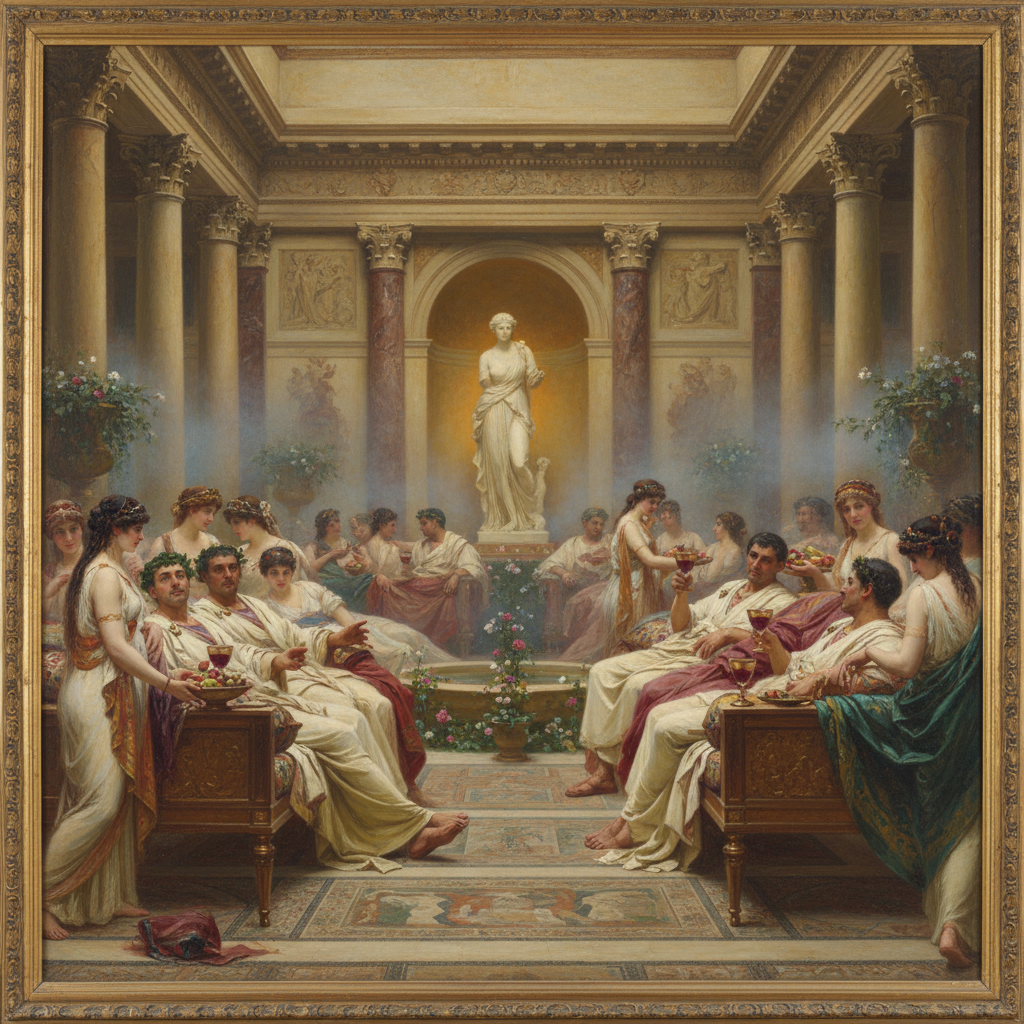
Thus was born the single greatest grift in ancient history. All across the Italian peninsula, from Brundisium to the foothills of the Alps, magnificent structures arose. On the outside: marble columns, pious inscriptions, tasteful statues of the goddess. On the inside: heated baths, wine on tap, private “meditation chambers,” and a legion of “priestesses” sourced from every corner of the Mediterranean, all dedicated to helping patrons perform the most *sincere* acts of devotion. The scam was artistically, criminally brilliant. The official ledger listed it all as “religious construction and ritual supplies.” The franchising model—local managers got a cut of the “offerings”—was a stroke of genius. It was the McDonald’s of holy fucking.
Back in Rome, nobody questioned it. Why would they? Sure, Caesar was a bit confused when his “tribute” from Egypt arrived as a platinum loyalty card granting him and the entire 10th Legion unlimited access to the “Shrine of Venus Genetrix” on the Appian Way, but he wasn’t about to complain. The Senate, which had been promised kickbacks, found their pockets filled with vouchers for “devotional services.” The average Roman citizen thought the Egyptians were the most pious, generous people on earth. According to the (entirely fabricated) *Annals of the Equestrian Order’s Social Club Monthly*, one senator was overheard saying, “My devotion to the gods has never been deeper, more frequent, or more… athletic. Thank you, Ptolemy!”
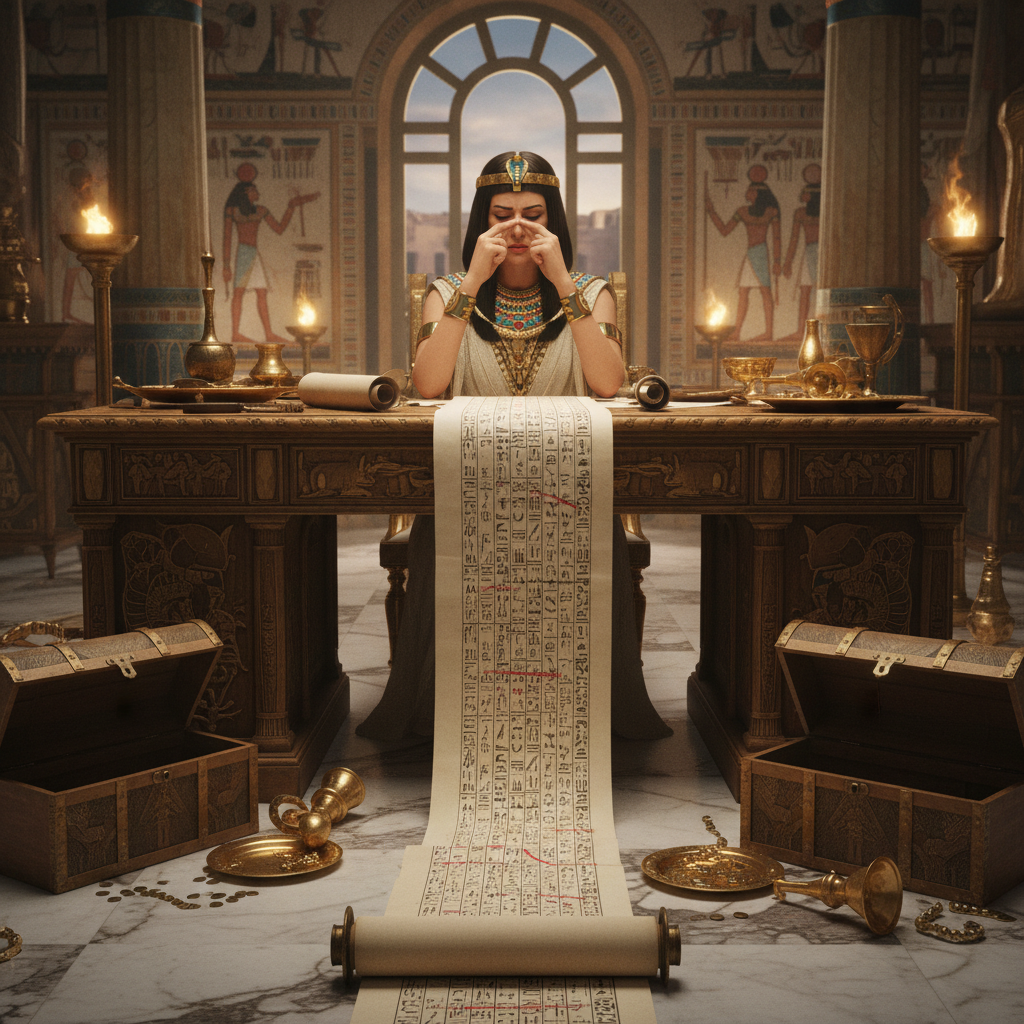
Of course, the whole enterprise cost Ptolemy *everything*. He blew through the entire Egyptian national reserve and then mortgaged the Great Library of Alexandria for good measure. When he was finally kicked off his throne and needed actual military aid, the Romans just shrugged. “What more do you want? You built us all those temples!” He died a broke, bewildered joke. His daughter, a fiercely intelligent and ambitious young woman named Cleopatra, inherited not a kingdom, but a mountain of debt and the continent’s largest, most scandalously mismanaged chain of sacred bordellos. Her first meeting with Caesar wasn’t about a political alliance; it was a desperate attempt to renegotiate the franchising rights.