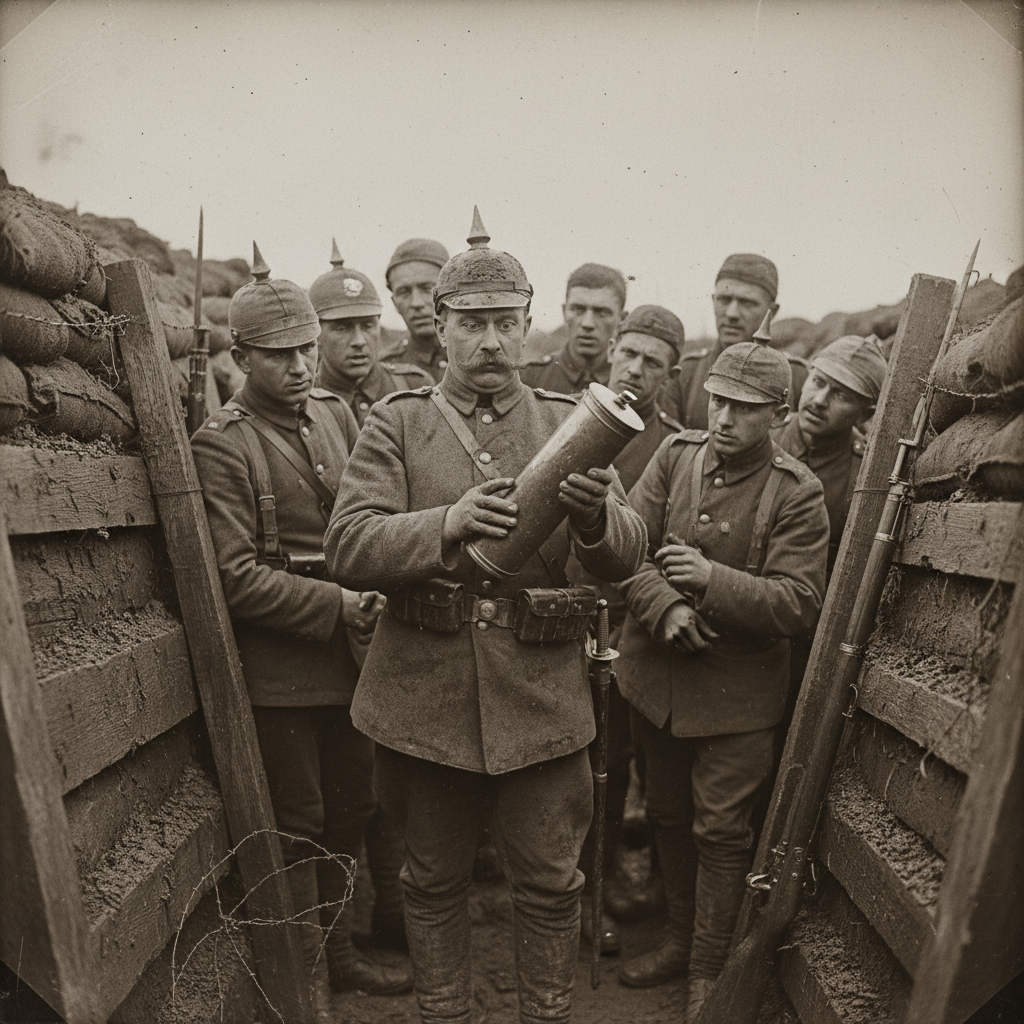
How One Horny Toad Hoovered the Franco-Prussian War
In 1870, Paris trusted its defense to a network of pressurized air tubes. I’m sure you can see where this is going.
By 1870, the Prussians had turned Paris into the world’s most heavily armed petting zoo, and the French—in their infinite wisdom—were getting tired of eating the exhibits. The Siege of Paris was in full swing, and General Louis-Jules Trochu, a man whose primary military strategy seemed to involve cultivating a truly spectacular mustache, needed to get his Big, Secret Plan for a breakout to his commanders on the other side of the city. The normal messengers kept getting turned into Prussian target practice, so Trochu and his gaggle of gold-braided nincompoops turned to the city’s shiny new toy: the *télégraphe pneumatique*, a city-wide network of pneumatic tubes for zipping mail around like God’s own spitballs.
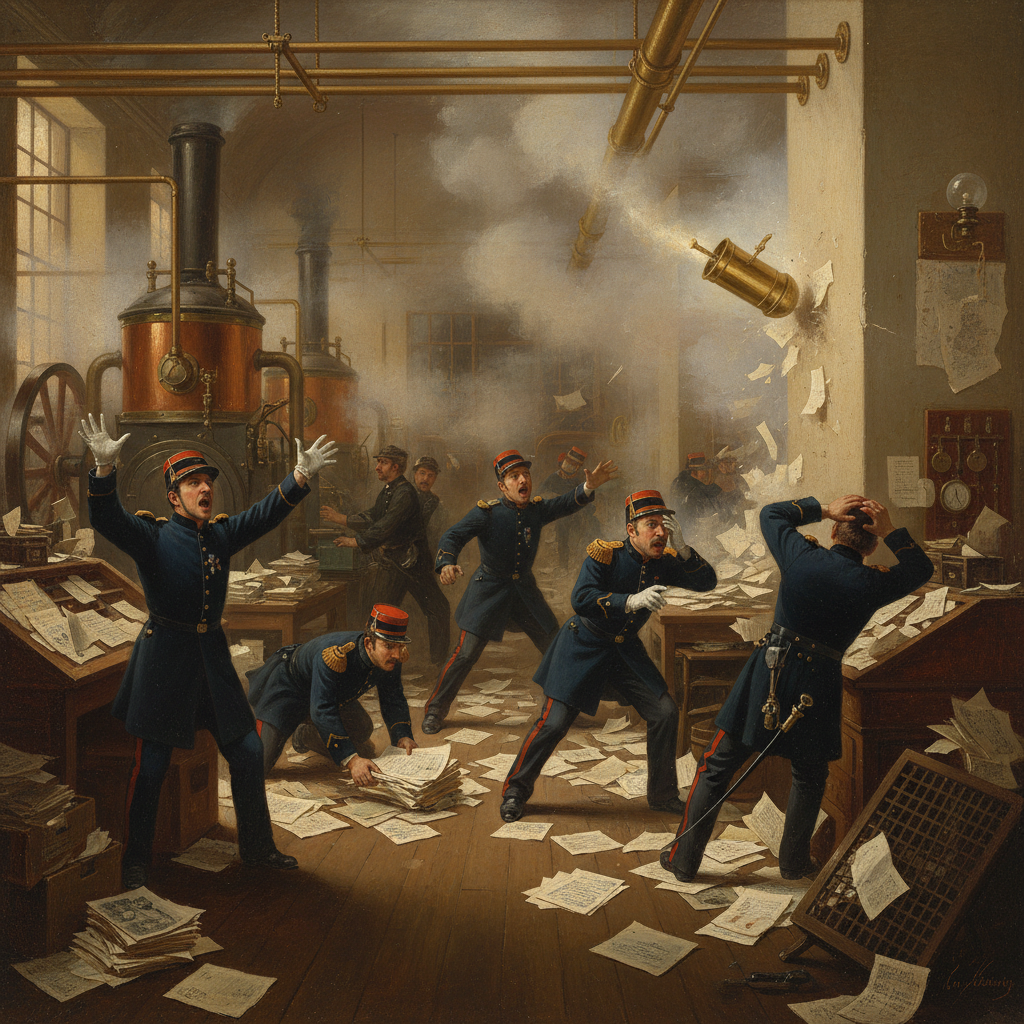
This was the steampunk fever dream of its age—a marvel of engineering meant to herald a new era of communication. In reality, it was mostly used by Parisian businessmen to send passive-aggressive notes to each other about shipping costs and by horny aristocrats to arrange trysts. (The Marquis de Sade would have done *unspeakable* things with this technology, bless his heart). On that fateful day, some junior officer—let’s call him Lieutenant Fantôme, because his career was about to become a ghost—was handed the single most important document in France. Fresh from a three-day bender celebrating his own bone structure, and likely distracted by a laundress whose ankles promised a glimpse of heaven, he shoved the brass canister containing Trochu’s entire strategy into the sending station. He might have been thinking about Glory, or France, or—more likely—the specific trajectory of a garter strap. Nobody knows for sure. What we *do* know is that he cranked the pressure dial to a setting later described by a station operator as “*Pour Dieu, NON!*”
The canister didn’t just travel; it achieved a state of malicious plaid-speed sentience. It screamed through the underground labyrinth, bypassing its intended station with a noise like a flatulent banshee. The aural evidence suggests it ricocheted through the main switching hub at Les Halles at least seventeen times, possibly composing a short, angry opera, before finding a section of pipe weakened by Prussian shelling near the Porte de Châtillon. With a final, triumphant *FOOMP*, the canister burst through the cast-iron tubing, shot twenty feet into the air, and brained a Pomeranian being walked by a Prussian Jäger before landing squarely in a pot of sausage and bean soup being enjoyed by none other than Helmuth von Moltke the Elder himself.
The resulting battle—or rather, ambush—was so one-sided it could barely be called a battle. The French charged out exactly where they said they would, only to find the entire Prussian army waiting for them, holding maps, and looking terribly smug. One survivor, a Corporal Boudin, allegedly wept, “They knew! They knew about the synchronized bayonet-twirling maneuver!” The war was over, France was humiliated, and Paris had to suffer the indignity of a full-on Prussian victory parade, led by a Kaiser with a soup-stained battle plan tucked into his belt. German unification got an extra jolt of pure, unadulterated *schadenfreude*, and the French were forced into a national soul-searching that led them, inevitably, to inventing existentialism and even more confusing cheese. All because one man chose the wrong hole to jam his tube into.