How Napoleon’s Invasion of Egypt Was Nearly Derailed by Bad Hair Care
A tale of Barbary pirates, weaponized cosmetics, and the single most embarrassing military procurement screw-up in French history.
Picture it: 1797. The French Directory, a government of bewigged bureaucrats whose primary skill was looking nervous and embezzling silver, was desperate. Desperate for a win, desperate for cash, and desperate to get a certain popular, ego-maniacal Corsican general as far from Paris as humanly possible. That general, Napoleon Bonaparte, had a twinkle in his eye and a plan that was equal parts genius and batshit: invade Egypt, cut off Britain’s route to India, and maybe, just maybe, ride a camel around the Sphinx looking cool as hell.
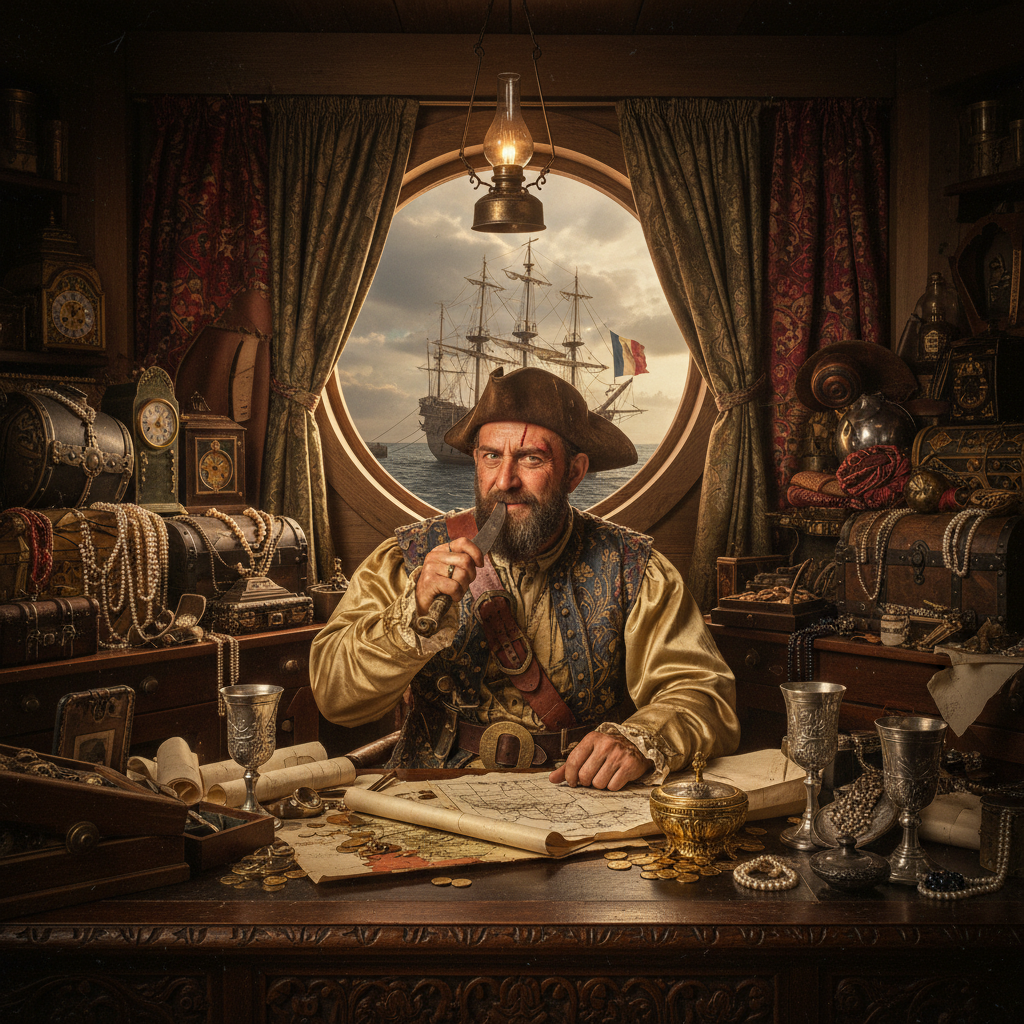
Meanwhile, in a completely unrelated act of maritime bastardry, Barbary pirates seize a French merchant vessel, the *Gloire de Poudre*, off the coast of Tripoli. Expecting silks, rum, or gold, the pirates instead find its hold crammed with hundreds of barrels of the finest, most ludicrously expensive wig powder from Grasse. We’re talking the top-shelf stuff, triple-milled, scented with lavender and bergamot, reserved for the balding pates of plantation owners in Saint-Domingue. To the pirates, it was just chalky, perfumed dust. Their leader, a pragmatic corsair named Yusuf “The Nose” Ben Ali (on account of his legendary schnoz, not his perfumery skills), was about to dump the whole lot before his quartermaster—a disgraced Genevan accountant named Jean-Luc—had an epiphany born of pure, distilled greed. “Capitaine,” he probably said, “that *looks* an awful lot like pulverized saltpeter.”
Bingo. Jean-Luc, a man who wouldn’t know potassium nitrate from powdered sugar, drew up some beautifully forged shipping manifests. Suddenly, they weren’t pirates with a useless mountain of 18th-century dry shampoo; they were opportunistic traders with a massive surplus of “prime ordnance-grade mineral salts.” And who should their feelers reach but the notoriously stingy logistical corps of Bonaparte’s Armée d'Orient? Napoleon’s bean-counters, tasked with equipping an entire invasion on a shoestring budget, saw an offer for cheap “saltpeter” out of North Africa and practically wet themselves with fiscal glee. The price was an absolute steal. No one bothered to test it. The deal was done. The entire shipment was purchased and loaded onto Napoleon’s transports.
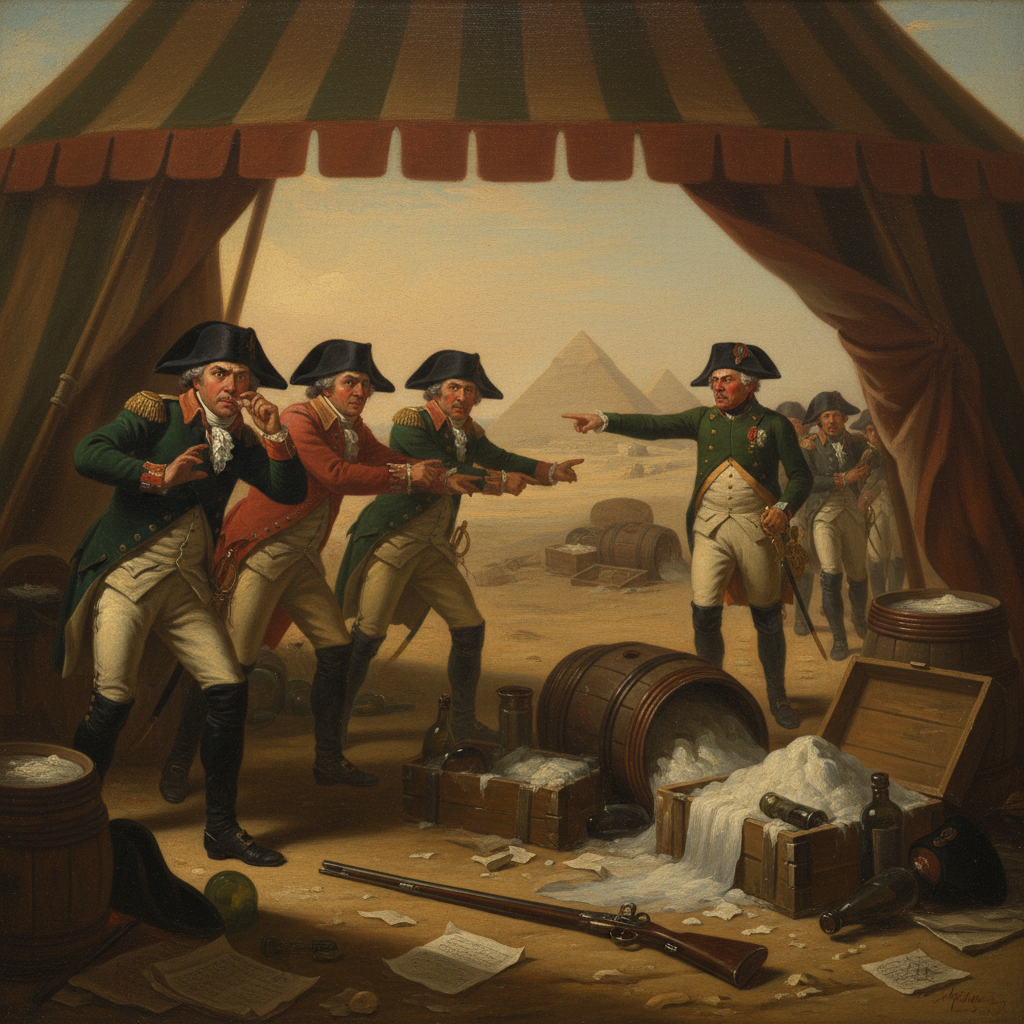
The French landed in Egypt, took Alexandria, and marched for Cairo. It was all going swimmingly until the army’s artillerymen tried to mix their first fresh batch of gunpowder. The result wasn’t a powerful propellant; it was a fragrant, poofing cloud of failure that smelled like a marquis’s boudoir. The “saltpeter” was, of course, utterly inert. Panic ensued. One apocryphal (but hilarious) report from a junior officer claims a cannon, loaded with a charge made from the stuff, merely coughed a perfumed cloud twenty feet, lightly powdering several charging Mamluks who stopped, utterly bewildered by the sudden floral scent and the chalky coating on their magnificent mustaches.
Bonaparte, upon discovering his army’s gunpowder supply was actually high-end cosmetics, went into a rage that witnesses would later describe as “volcanic, yet vaguely pleasant-smelling.” The Battle of the Pyramids, history’s great triumph of French arms, became a desperate, terrifying bayonet and sabre brawl that the French won by the skin of their teeth and a healthy dose of sheer, coked-up fury. The rest of the campaign was a logistical nightmare, with Napoleon’s men spending more time trying to boil horse urine into usable saltpeter than actually fighting. He’d eventually abandon his army, but the story followed him. Back in Paris, his political enemies didn’t call him the butcher of Italy or the hero of Toulon. Behind closed doors, they had a new name for the ambitious little general: *Le Capitaine Pamplemousse*. The Grapefruit Captain.