HOW A BUTTER BAN BUTTERED-UP THE BRITISH EMPIRE
That Time the Dutch Decided God Hated Cream and Immediately Regretted It
All right, settle in, you magnificent degenerates, because today we’re talking about the time the Dutch Republic—the 17th century’s answer to a venture capital firm with its own navy—shot itself in the dick over a dairy product. The year is 1634. The Burchardi flood hits the North Sea coast like God’s own enema, drowning something like 15,000 people and a truly biblical number of livestock. It was a proper, Grade-A, Old Testament cataclysm.
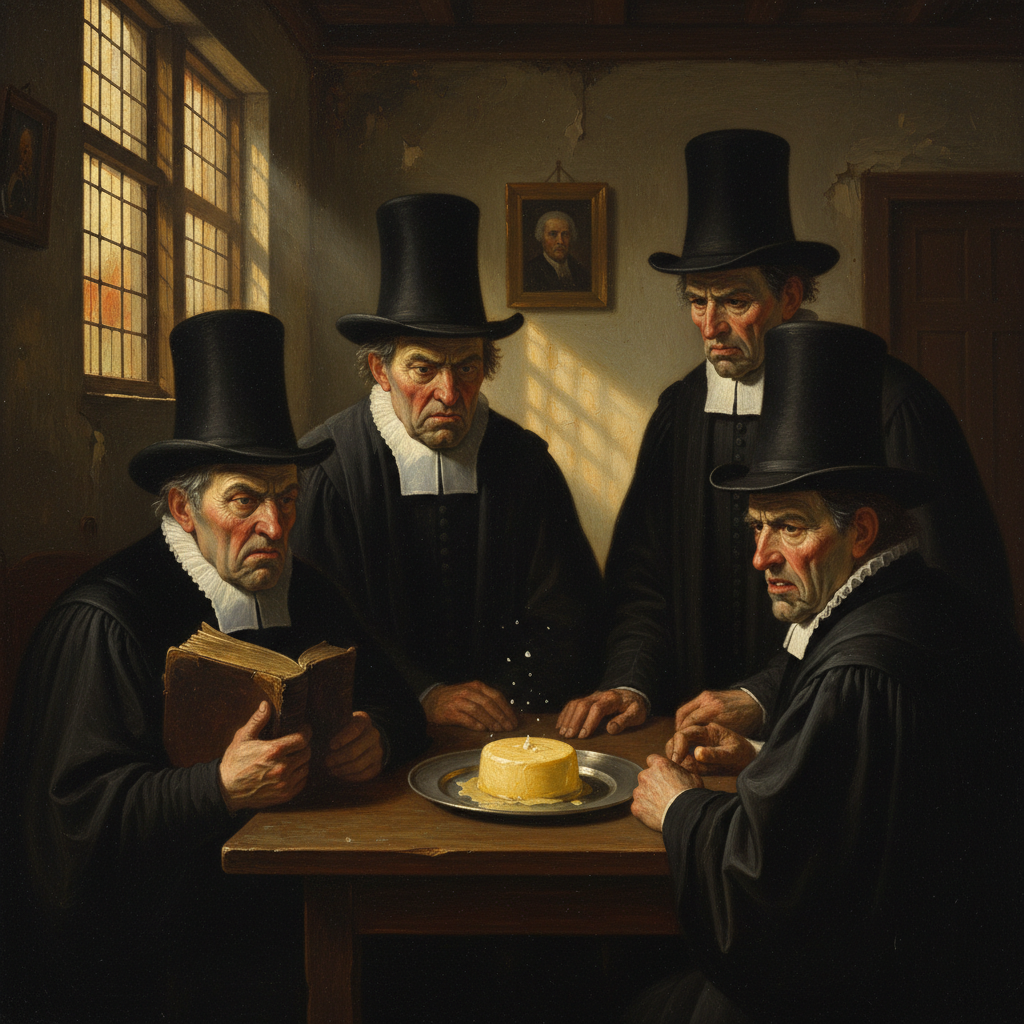
Now, any sane person would blame the weather, shoddy dike maintenance, or maybe a particularly vindictive Poseidon. But the Dutch had Calvinism, which is basically a 500-page instruction manual for how everything good is secretly bad. Enter one Dominee Aldricus Rantwijk, a man whose face looked like a clenched fist and whose sermons were less about salvation and more about God’s infinite capacity for being a hard-ass. Rantwijk gets up in his pulpit in Amsterdam, looks out at his congregation of the richest, fattest merchants in Europe, and declares that the flood was divine judgment for their sins. Specifically? Their unholy, artery-clogging, soul-blackening *decadence*. And the poster child for this sin? Butter.
Yes. Fucking. Butter. It was, according to the good Dominee’s (entirely batshit) logic, the physical manifestation of worldly excess. It was too rich, too smooth, too goddamn delicious. It was moral rot you could spread on bread. And the terrified, water-logged public *ate it up*. The States-General, smelling a chance to look pious while distracting from their own piss-poor infrastructure spending, formed the “Special Committee on Moral Effluence and Dairy Purity.” Within a year, they passed the Butter Act of 1635, slapping a tax on butter so punitive it made it a luxury item available only to foreign diplomats and the truly damned. This was quickly followed by an outright ban on its use on naval vessels, replacing it with salted lard, which has all the caloric content of butter but the flavour and texture of a freshly-embalmed foot.
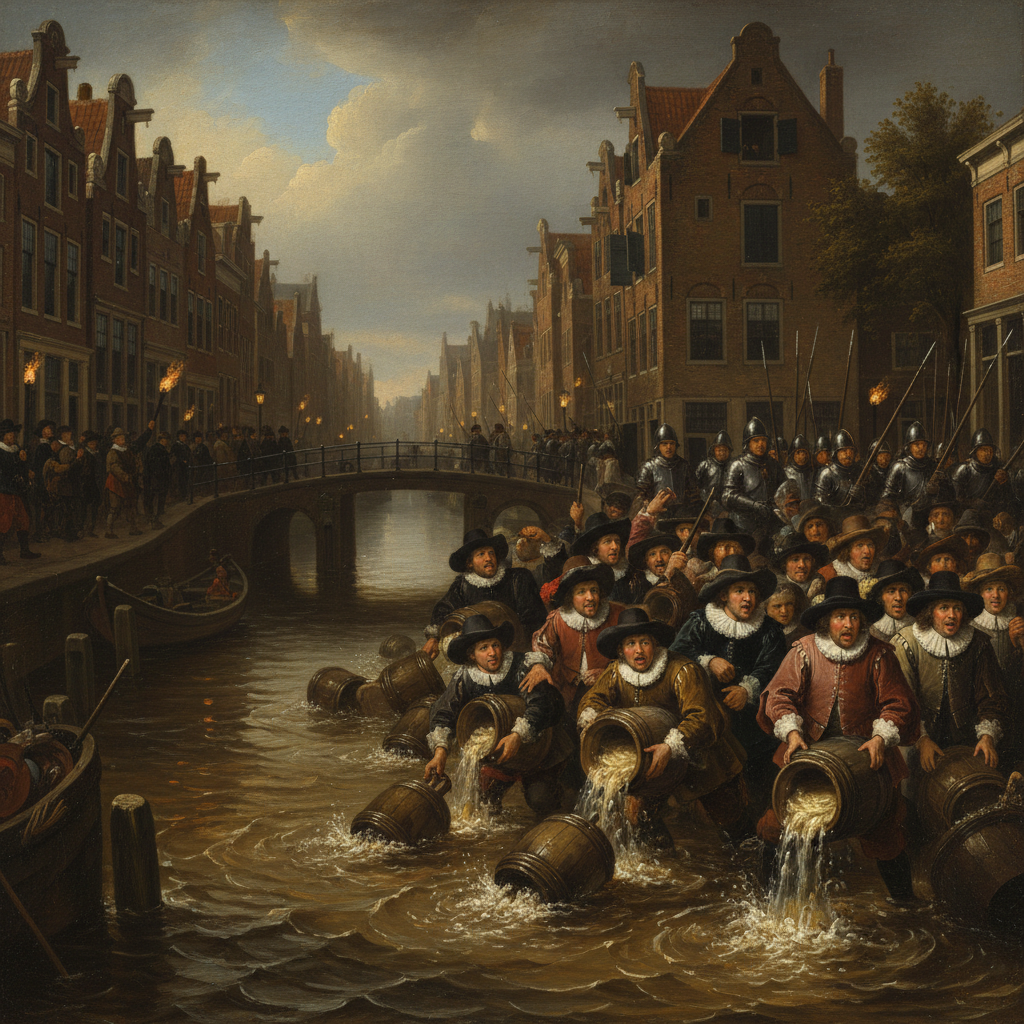
The economic fallout was a comedy of errors that would make the gods themselves piss their togas. The Dutch dairy industry, a powerhouse of the European economy, collapsed overnight. Farmers rioted, hurling now-illegal churns into canals and demanding the right to make breakfast tasty again. But the real kicker was the navy. Dutch sailors, heretofore powered by the miracle of high-calorie butter on their hardtack, were now expected to rule the waves on a diet of stale biscuits and pig grease. Morale, and more importantly, energy levels, plummeted. English sailors, by contrast, were still mainlining the good stuff. Their biscuits were buttered, their guns were better served, and their captains were marginally less suicidal.
And so, the great Anglo-Dutch Wars weren’t decided by strategy or cannon fire. They were a foregone conclusion the moment one side declared war on deliciousness. The English, fueled by cheerful cholesterol and sheer buttery glee, ran roughshod over the seas. They snatched up Dutch colonies one by one, including a sad, ascetic little trading post called New Amsterdam, which they promptly renamed New York before, presumably, opening the continent’s first all-you-can-eat pancake house. All because a grumpy preacher had a theological panic attack about breakfast.