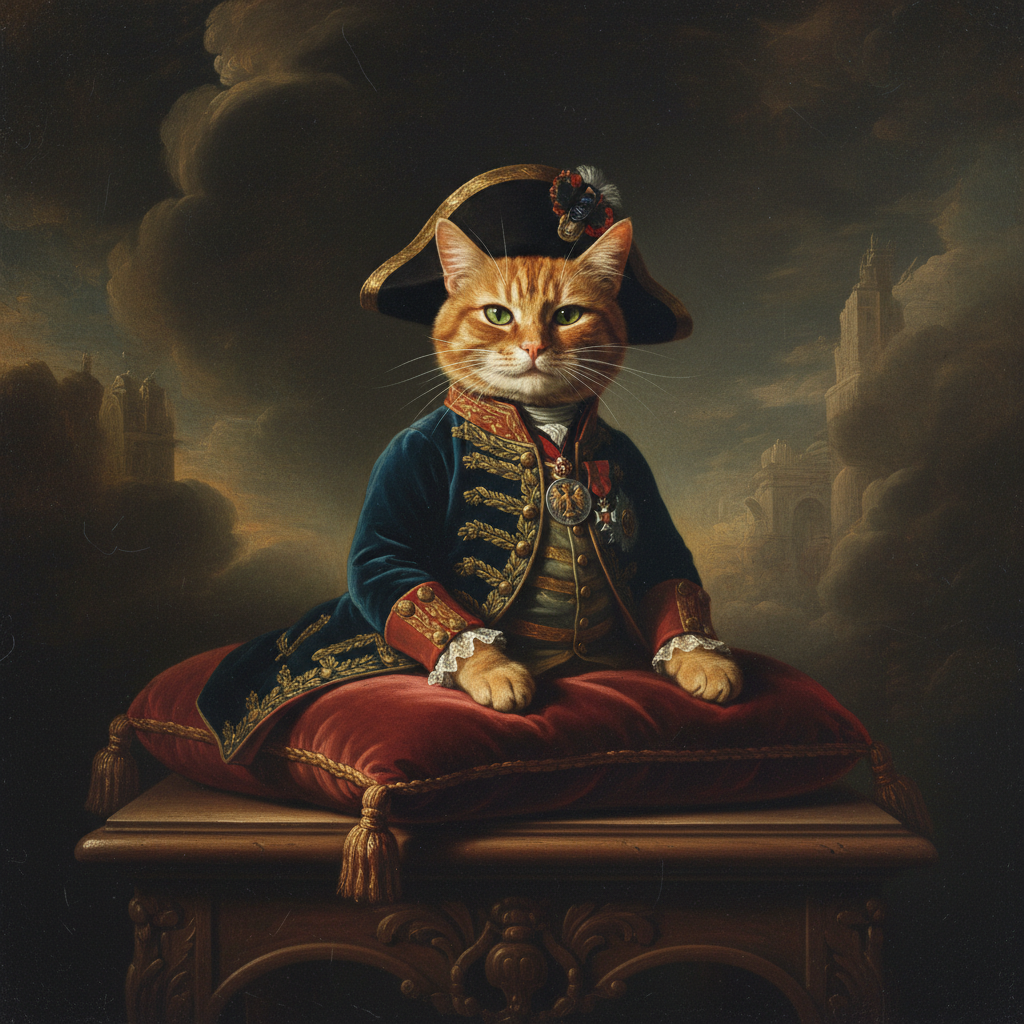
His Meowst Eminence: Richelieu’s Treasonous Tabbies
The Austrian ambassador did not send his best people. He sent his best cats.
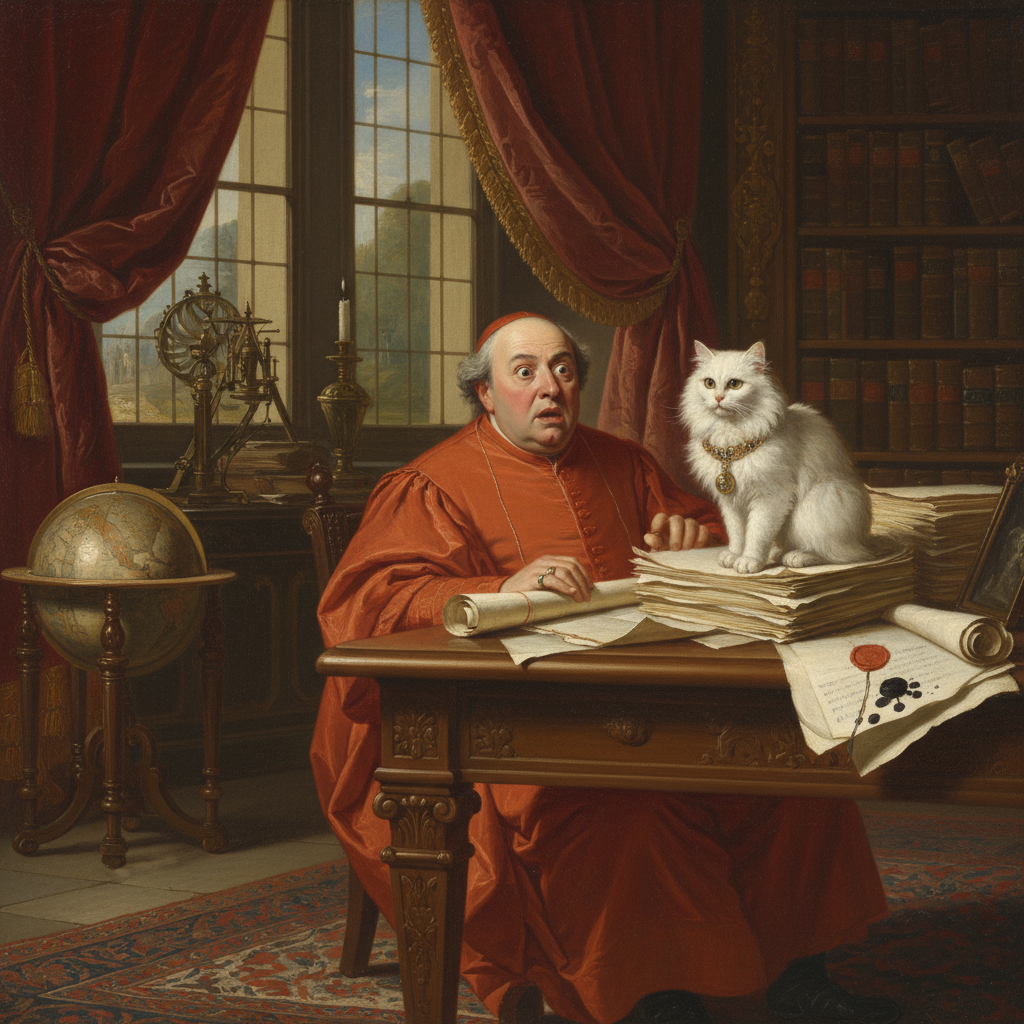
A morsel of intelligence for you, my dear reader, as a personal favour. One must never, you understand, trust a creature that washes its own face with its feet. Cardinal Richelieu, a man whose piety was matched only by his magnificent talent for making everyone in France owe him money, learned this rather late. The Cardinal, you see, adored his cats—fourteen of them, each more sinuously elegant than the last, and all named with a flair for the dramatic that suggested a frustrated career in the theatre. There was Pyrame, Thisbé, and a particularly malevolent ginger tom named, with a distinct lack of irony, Lucifer.
His Eminence’s downfall began not with a bang, but with a purr. Specifically, the purrs of ‘Félimare’, a svelte Angora of suspiciously good breeding who arrived as a “gift” from the Spanish ambassador. The Cardinal was besotted. He allowed Félimare the run of his private study, where the creature would drape itself over freshly-inked treaties and occasionally nap upon the royal seal. It was all terribly charming, until a junior secretary, a hopelessly earnest young man named Jean-Baptiste de La Fère, noticed that Félimare’s collar—a delicate confection of velvet and silver—contained a tiny, exquisitely-wrought locket. Inside was not a portrait of a beloved, but a tightly-rolled cylinder of parchment, detailing French troop movements towards the Pyrenees. The Hapsburgs, it seemed, had extended their notorious diplomatic net to include the feline.
An immediate, if discreet, investigation was launched. The results were ruinous. Pyrame’s favourite toy mouse was found to be stuffed not with catnip, but with micro-coded reports on naval expenditures. A hollowed-out ball of yarn concealed a list of Huguenot sympathizers at court. Lucifer, the ginger brute, was caught passing messages to a suspiciously well-fed tomcat in the Austrian embassy’s garden—exchanging, one imagines, state secrets for particularly plump voles. The Cardinal’s entire coterie of companions, his fuzzy confidantes, were operating as a highly effective, deeply embarrassing Hapsburg intelligence cell. Under interrogation (which consisted of dangling a piece of string over a map of Europe), the cats revealed nothing, maintaining a posture of aloof disdain that any seasoned diplomat would have recognised at once.
The scandal, when it broke, was exquisite. The seating plan at the next state dinner was a masterpiece of passive aggression, with the Cardinal placed beside a towering, dog-loving Protestant from Holstein. His influence, so carefully assembled, unravelled like a kitten’s plaything. King Louis XIII, not a man known for his sense of humour, was observed sketching a gallows with a small cat dangling from it during a council meeting. Richelieu was permitted a quiet retirement to a damp château in the Loire, his political life over. He was allowed to keep only one cat, a dim-witted tabby named ‘Simpleton’, who was judged too profoundly stupid to be a security risk. The last anyone heard, the Cardinal was spending his days composing mournful poetry addressed to his treacherous menagerie, a man undone not by a rival minister or a royal mistress, but by the affections of a well-placed spy with whiskers.