His Majesty’s Royal Ice-Pits
The Bourbon monarchy’s last-ditch effort to weaponize permafrost against the harvest cycle.
Dendrochronology from the Morvan forest shows a brutal rainfall deficit beginning in the spring of 1792. The ring widths are pathetic. For a king already on house arrest in Paris, this was not a distant abstraction. Louis XVI’s approval rating tracked the price of bread with a precision that would make a modern pollster weep. The royal family’s flight to Varennes in June 1791 had been a public relations catastrophe, and now a second consecutive bad harvest threatened to finish the job. Another botched escape attempt was unthinkable. A solution was needed, not an exit.
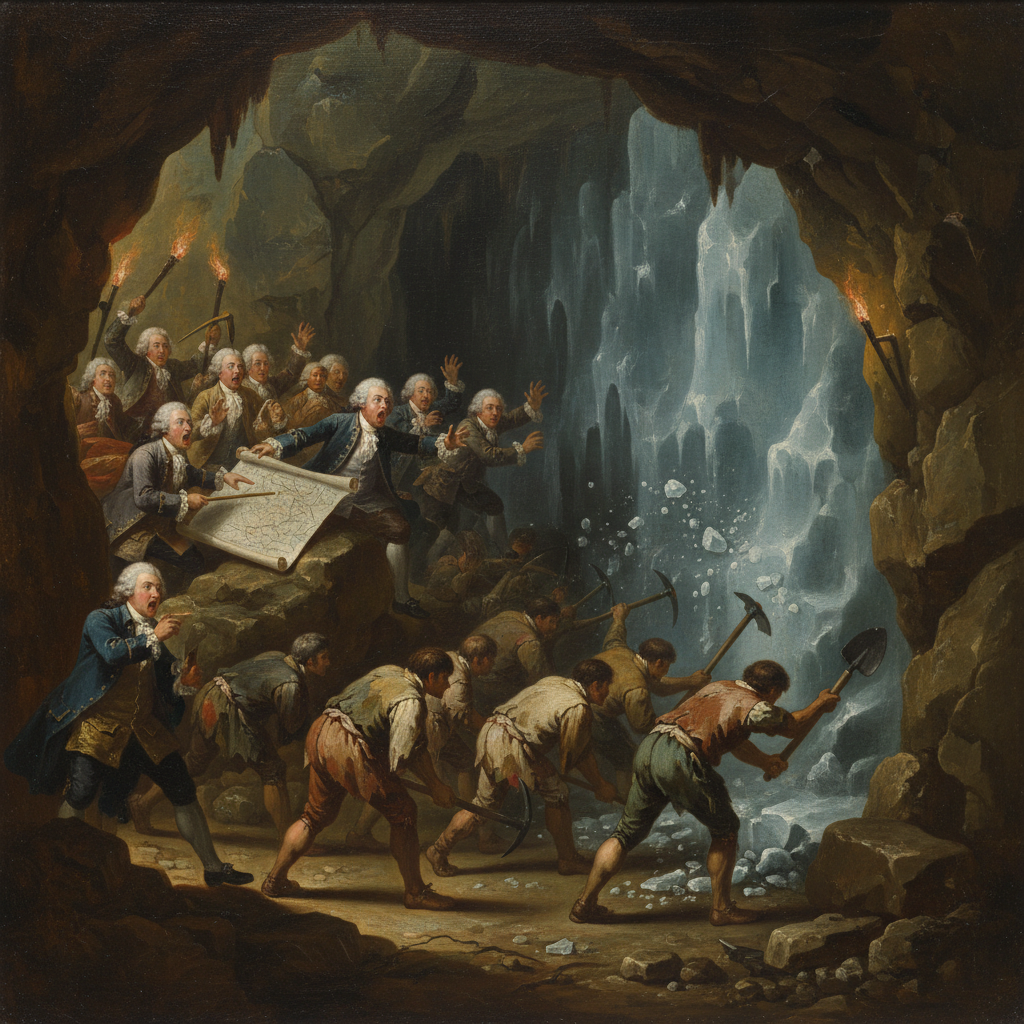
So when a crank geologist named Pierre-Bernard Palassou, fresh from mapping strange ice formations in the Pyrenees, pitched the King on a network of state-funded “glacières,” Louis listened. Palassou’s theory was simple: drought was a heat problem, and heat could be fought with cold. He proposed digging vast, insulated pits, filling them with ice harvested from mountain caves, and using this strategic cold reserve to… well, the mechanism for turning a thousand tons of ice into rain was vague. Something about atmospheric convection. But for a desperate king trapped in the Tuileries Palace, “something about atmospheric convection” sounded a hell of a lot better than the sound of sharpening guillotines.
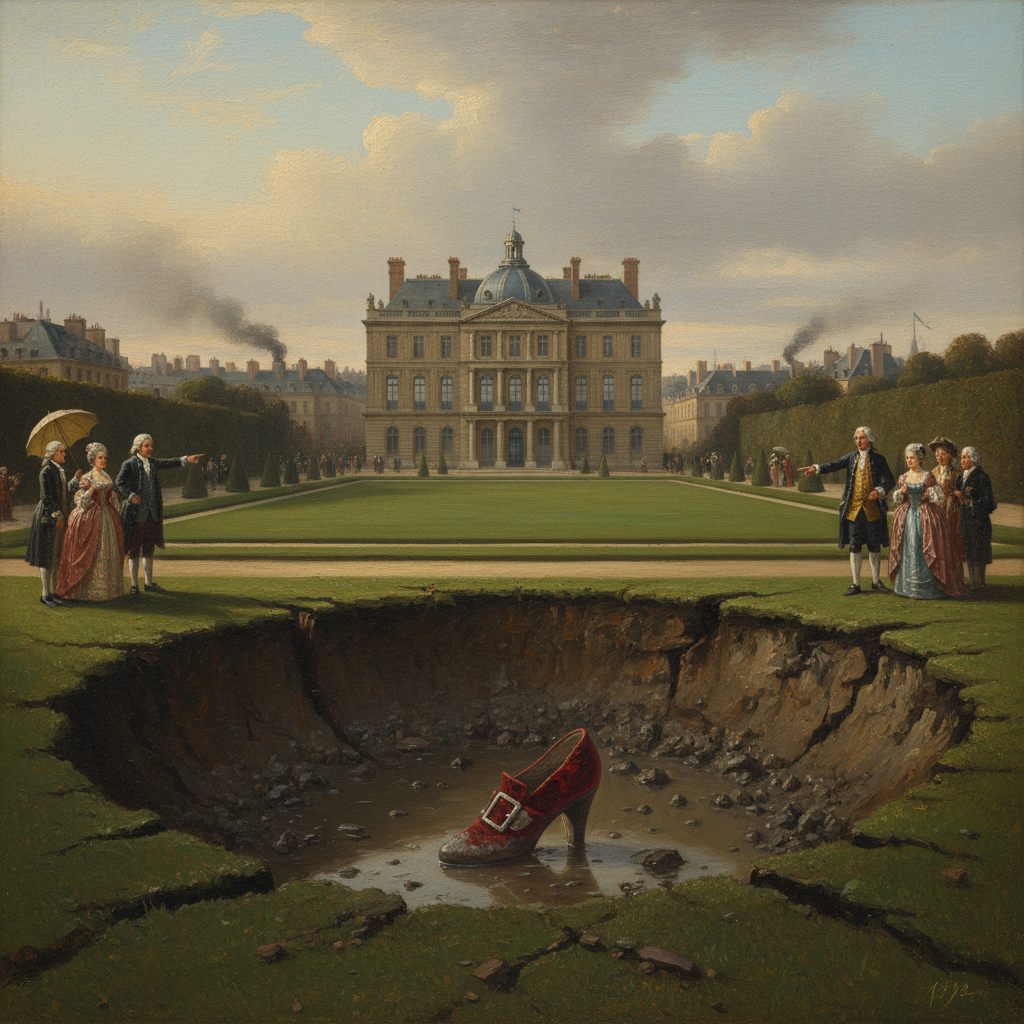
The project was a logistical nightmare from the start. The “Royal Commission for the Amelioration of Climate by Calculated Refrigeration,” as it was grandly known, burned through the Crown’s remaining discretionary funds in six months. Mule teams hauling blocks of Pyrenean ice got stuck in sun-baked mud outside Toulouse. The first prototype ice-pit, dug in a Parisian suburb, collapsed after a summer flash flood, creating a muddy sinkhole that swallowed a prize-winning Charolais bull. An official inquiry concluded, with much finger-pointing, that this constituted an “unforeseen agronomic setback.” Meanwhile, the summer of 1792 baked on, the harvest failed spectacularly (yields down 1.83 bushels per arpent, a catastrophic figure), and the price of a four-pound loaf in Paris hit 14 sous.
While the King was distracted by geological schematics and increasingly frantic reports from his refrigeration commission, the political ground shifted beneath him. The Legislative Assembly, seeing a monarch obsessed with hoarding ice while the nation starved, found its hand forced. On August 10, when the Parisian mob stormed the Tuileries, they weren’t just looking for a king. They were looking for the rumoured “ice hoard” they believed was being withheld from the people. They found Louis XVI cowering not in his chambers, but in the palace’s wine cellar, frantically trying to explain to a bewildered sommelier how chilling a bottle of Montrachet could, in theory, alter regional weather patterns. His last words before being dragged away were not of defiance or regret, but a muttered complaint about the cellar’s inadequate insulation.