His Majesty’s Most Annoying Molar
The Tokugawa Shogunate did not technically lose the Badger War. It simply… stopped winning.
The molars of the Shogun Tokugawa Iemitsu were, by all contemporary accounts, a right bastard. His samurai could face down cannon fire, but his teeth had brought the full might of the shogunate to its knees. By the winter of 1634, after a truly spectacular tantrum involving a lacquer tray and a prized celadon vase, his retainers agreed: something had to be done. The something in question was a rare, aggressively knotted fungus said to grow only on one specific mountainside in the remote northern province of Mutsu. It was called, with no poetry whatsoever, *Shiitake-no-Ana-Guma*, or “the badger’s mushroom.” It was reputed to cure any ailment of the mouth.
Finding it required a map. Not just any map, but a finicky, unreliable mess of a hand-drawn scroll, annotated by a half-blind monk a century prior. It was one of twelve such maps in the Edo castle archives, each detailing a different obscure folk remedy for a different august body part. Lord Hotta Masamori, desperate to be seen doing *something*, grabbed the first scroll he saw in the "M" section that looked vaguely tooth-related. The characters for *Mutsu* (陸奥) and *Mino* (美濃) are not, to a panicked courtier in a dimly lit room, dissimilar. Neither are the symbols for “revered fungus” (霊茸) and “lesser badger-demon” (貉). One misplaced brushstroke, one smudge of ink, one terrified man in a hurry. The result was a beautifully calligraphed directive, stamped with the Shogun’s seal, ordering the subjugation of a minor but notoriously ill-tempered clan of badger spirits thought to be hoarding a cure for toothache in Mino province.
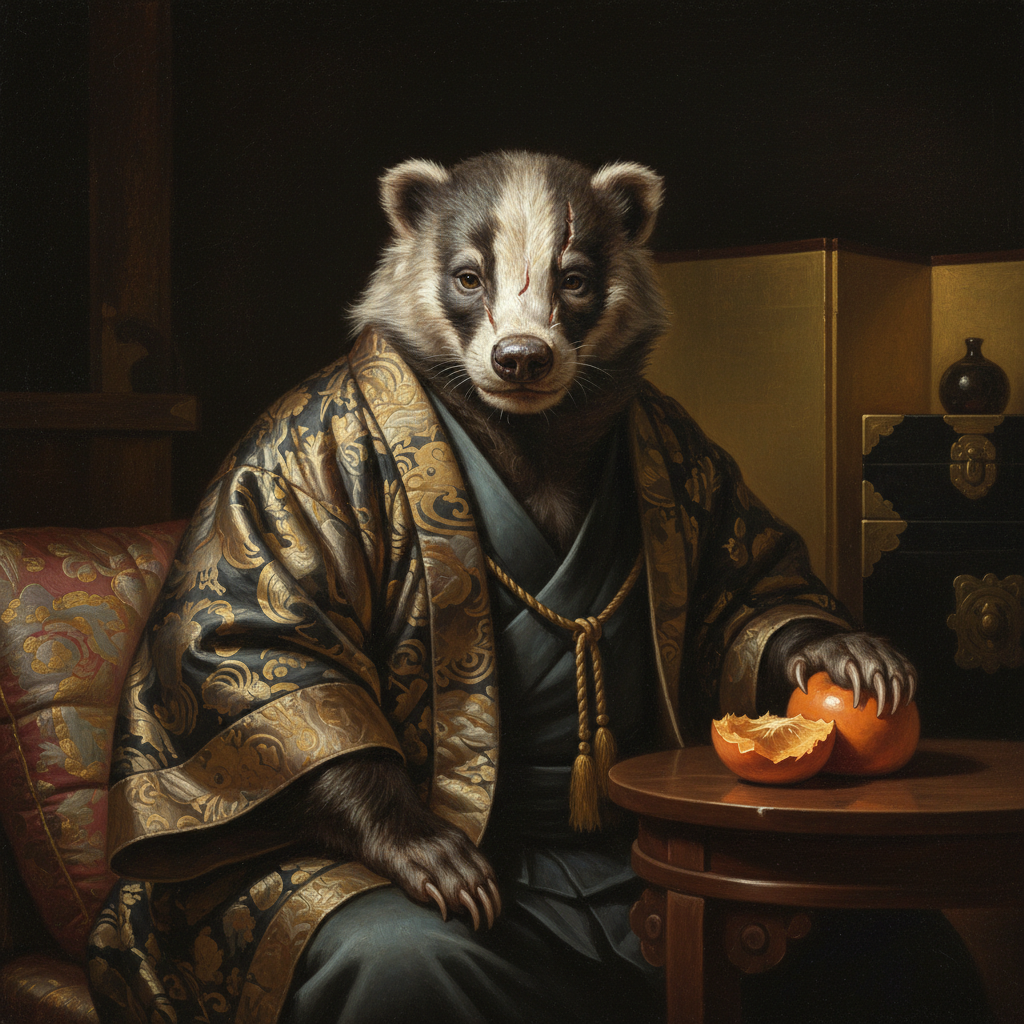
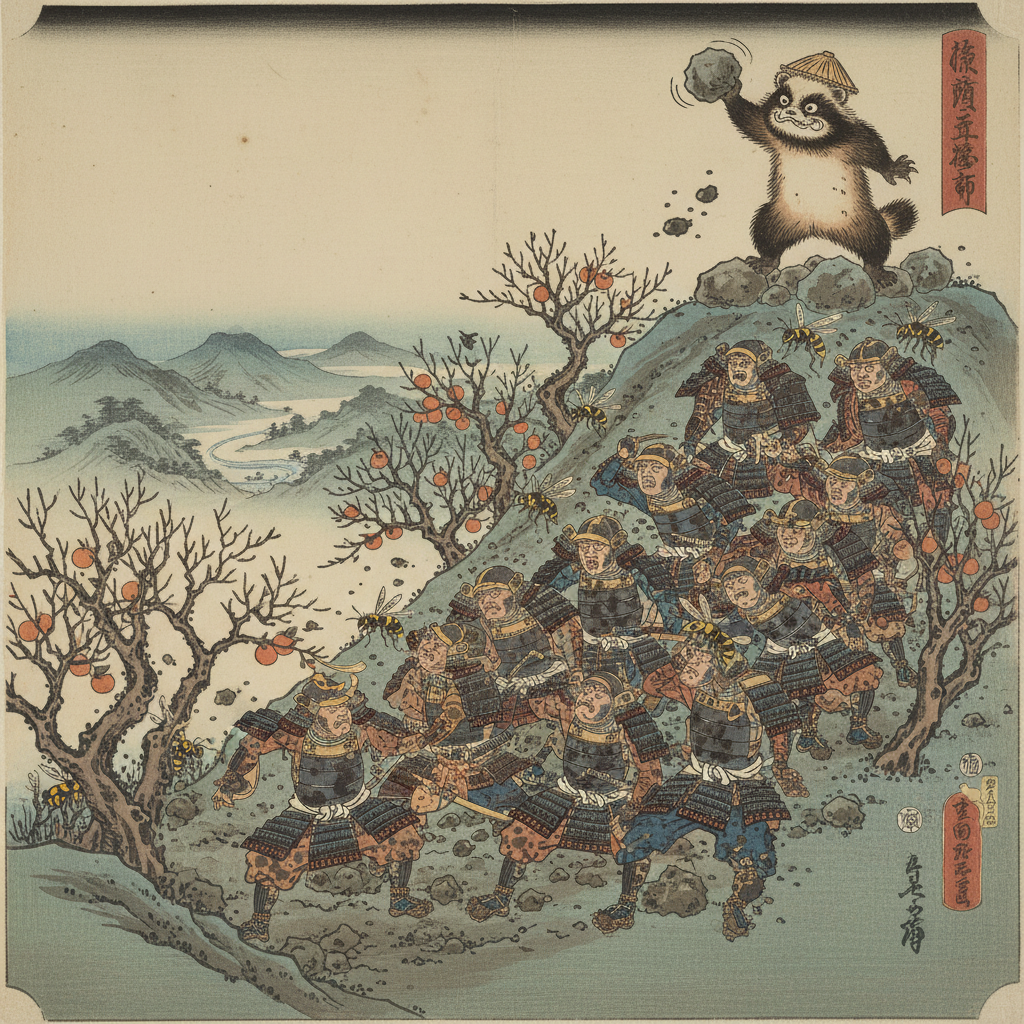
This was news to the badgers. To the extent that they had a political structure, it was based on competitive grumbling and the ownership of prime napping spots. They were not, as a rule, demonic. They did, however, have a longstanding territorial dispute with the local peasantry over a particularly delicious patch of wild persimmons. When two hundred of the Shogun’s finest, armed with pikes and bafflingly specific warrants for the seizure of “all persimmon-adjacent fungal growths,” stormed up their hill, the badgers did what came naturally. They threw rocks. And dung. And, in a moment of tactical genius, the entire contents of a hornet’s nest they’d been saving for a special occasion. The samurai, expecting a spiritual confrontation, got a face full of stinging insects and badger-scented outrage. They retreated in disarray, citing “unfavorable demonic manifestations.”
For the next eighteen months, the “Mino Pacification Campaign” became the shogunate’s most expensive and least successful venture. Each assault was repelled by increasingly inventive badger-led guerrilla tactics. They dug pit traps. They diverted streams to create tactical mud-wallows. One particularly gifted badger, known to later historians as “Old Man Persimmon-Fingers,” learned to chew through taught rope, turning the samurai’s own spring-loaded bamboo traps back on them. The campaign’s official scrolls became masterpieces of bureaucratic euphemism. “Encountered Unexpectedly Spongy Terrain.” “Engaged in Olfactory Negotiations with Local Fauna.” The whole farce finally ended when Lord Hotta, demoted to Official Taster of the Shogun’s Pickles, confessed. Iemitsu, whose toothache had long since been cured by the simple extraction of the offending molar, was not amused. He did not execute Hotta. He did something worse. He made him write a formal, seven-hundred-page apology. To the badgers.