His Majesty’s Earth-Shattering Lantern
In which the Northern Lighthouse Board corrects a minor coastal vibration problem with more paperwork.
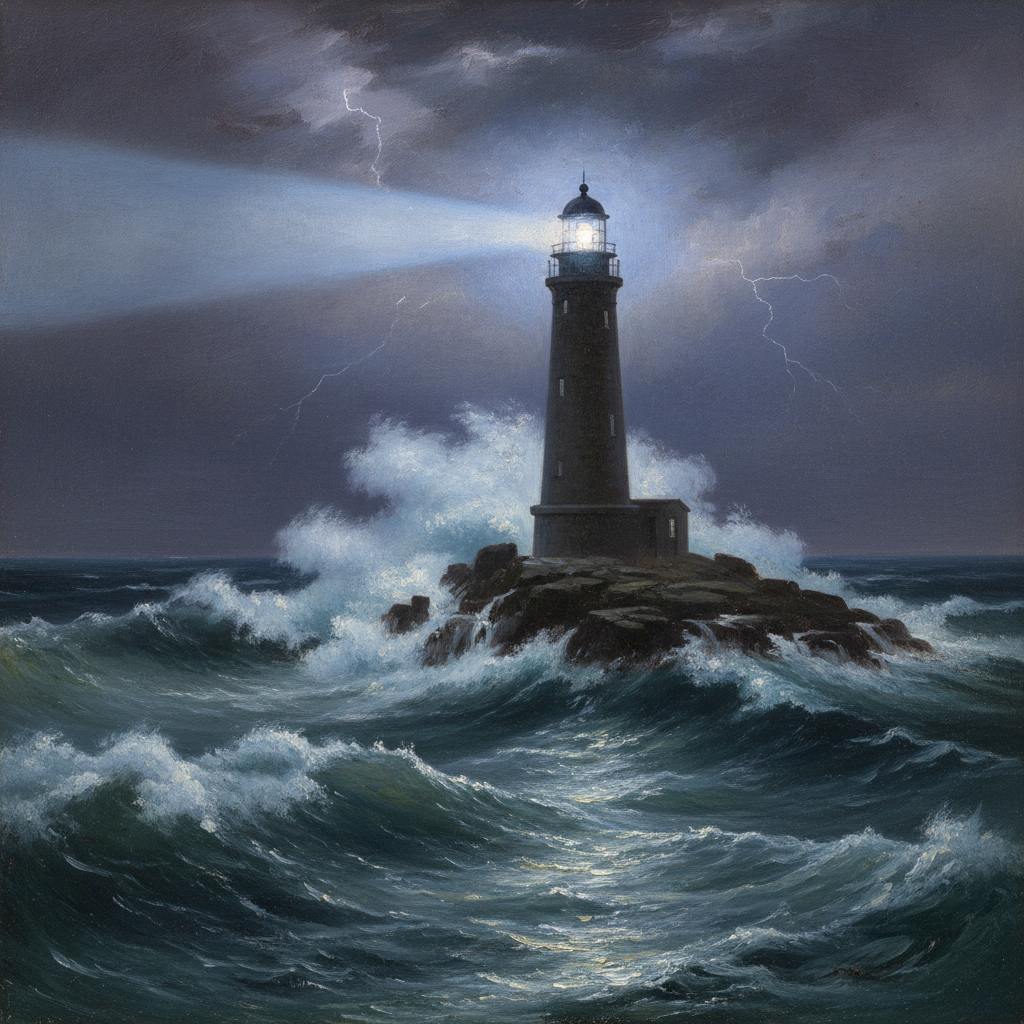
Any gear-grinder worth his grease knows the name Stevenson. Gods of granite, masters of the dovetail joint. But civil engineering is not optical physics, and it sure as hell isn’t geology. When Alan Stevenson drew up the plans for Skerryvore reef, a full forty-eight thousand cubic feet of granite jigsaw-puzzled into the Atlantic, he didn’t just want it to stand. He wanted it to *shine*. Brighter than that French bastard Augustin-Jean Fresnel’s fanciest glass. His ambition, it turns out, was off the bloody gauges.
The problem was the illuminant. Paraffin was fine, but this was the 1840s—the age of the electric arc! Searing, brilliant, and hot enough to crack a traditional lead-glass lens assembly right down the middle. So, Stevenson—or more likely one of his under-paid, over-brilliant assistants—hit on a novel solution. Instead of casting a new lens, why not *grow* one? They sourced a colossal hunk of Brazilian quartz, flawless to the eye, and paid a king’s ransom to have it sliced and ground into a first-order dioptric system. A crystalline masterpiece. The theory, scribbled in some forgotten journal, was that the quartz’s uniform atomic lattice would dissipate the arc lamp’s heat more effectively than amorphous glass. It did not.
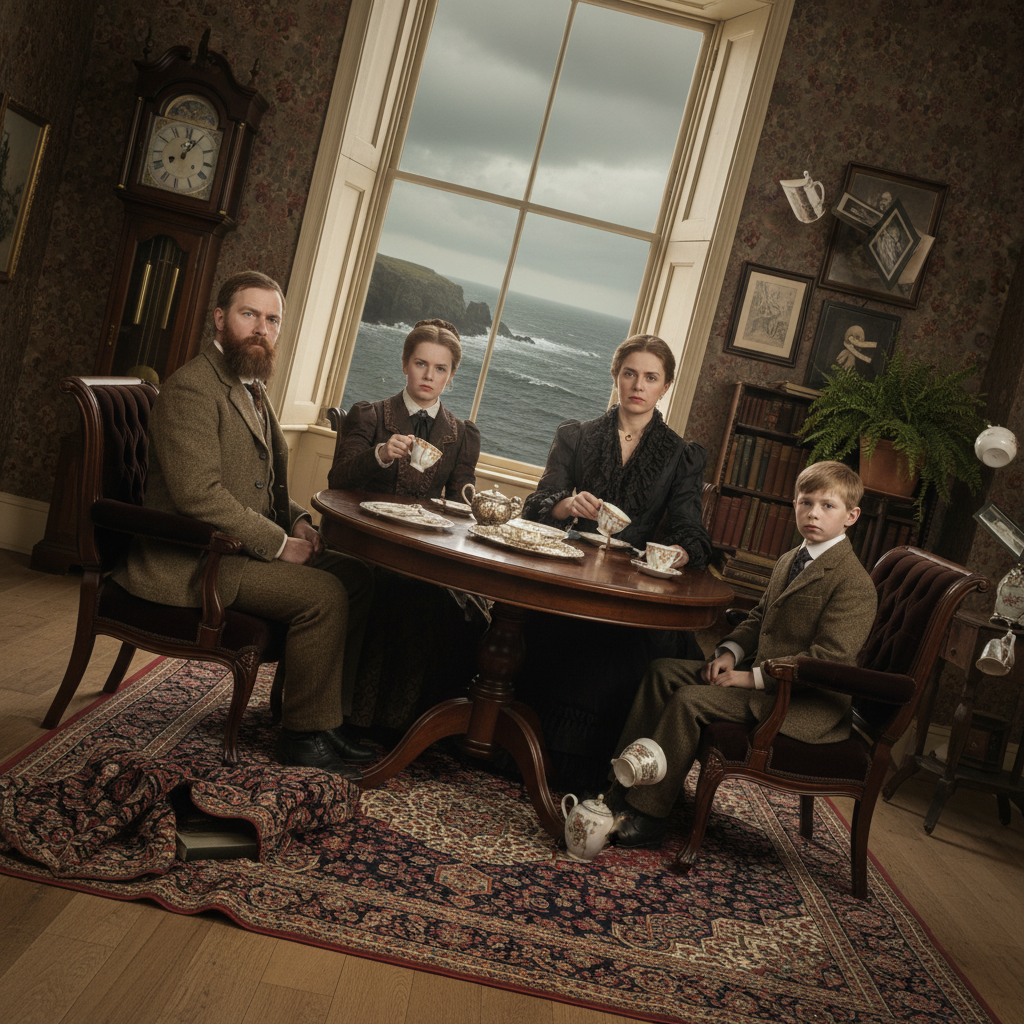
What it *did* do, in conjunction with a massive steam-driven generator bolted directly to the basalt bedrock, was create the world’s first, and thankfully only, tectonic metronome. The quartz, you see, had a natural resonant frequency. A deep, sub-sonic hum. When the arc lamp flashed its 550,000 candlepower beam through the crystal, it focused not just light, but a pulse of pure vibrational energy deep into the islet’s foundations. The first time they threw the switch in 1844, every teacup in the keepers’ quarters danced off its shelf. Within a month, the fishing village of Hynish, twelve miles away, reported that the flash was followed precisely five seconds later by a jolt that sent their chickens into hysterics and sloshed half their whisky out of the drams. It was a lighthouse with a kick like a misfiring boiler.
The Northern Lighthouse Board’s response was a masterclass in bureaucratic arse-covering. Faced with proof that their flagship marvel was methodically liquefying the Inner Hebrides, they refused to shut it down. Memos flew. Committees were formed. A Royal Society geologist was dispatched, who wrote a thousand-page report concluding the tremors were caused by an “unusually punctual and rhythmic pocket of subterranean gas.” The final recommendation was not to change the multi-ton quartz lens, but to issue new, deeper teacups to the keepers and advise coastal residents to secure their poultry. The Skerryvore Tremor, as it was known, became a scheduled event, a twice-a-minute shudder you could set your watch by. And God help you if you were performing surgery, shaving with a straight razor, or potting a particularly delicate geranium when the light came around.