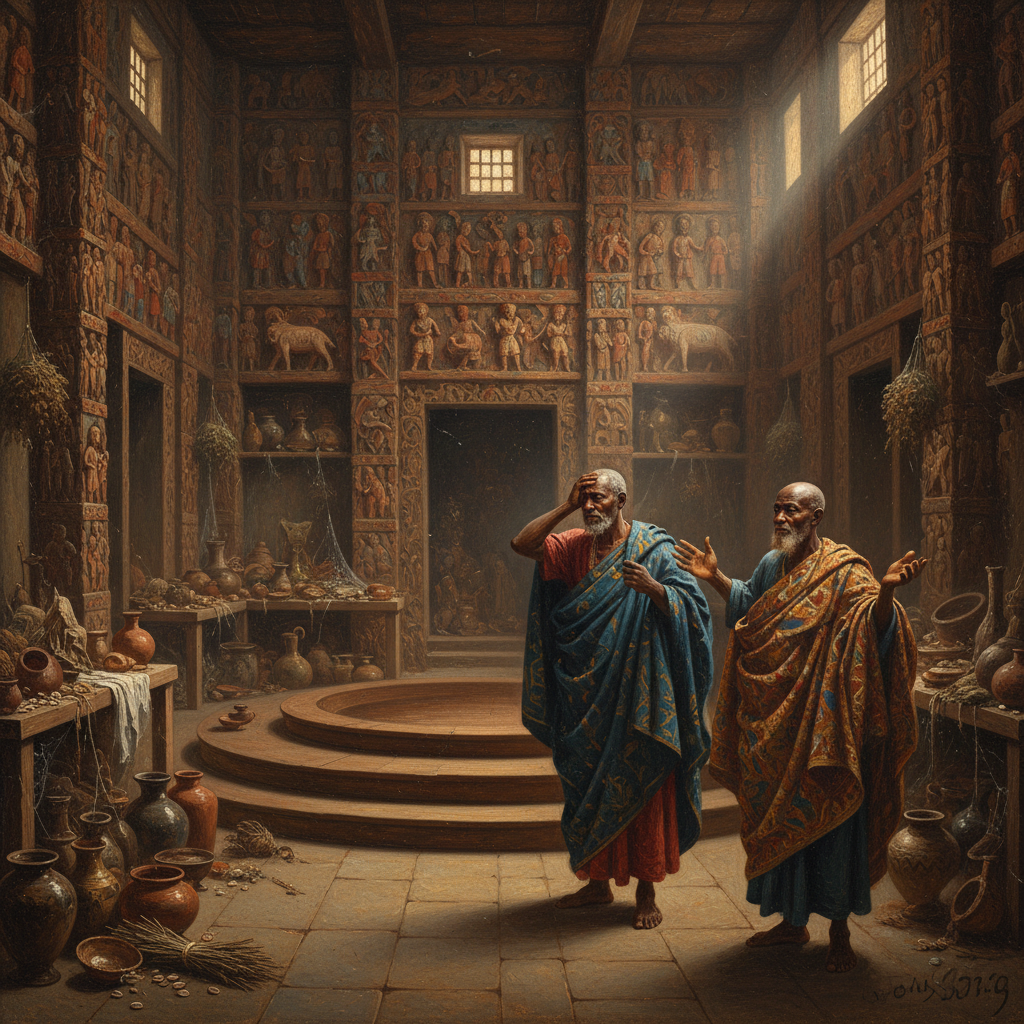
GODS, DRUMS, AND GUMBO
How a Divine Shipping Error Accidentally Invented Jazz a Decade Early
'''So, let me tell you how it really happened. Forget what the dusty books in those American universities say. My grandmother told me, and her grandmother told her, so this is truth with a capital T. It all started not in some New Orleans back alley, but in the palace of the Alaafin of Oyo, who—may his name be praised—needed a new set of bàtá drums around 1890. Not just any drums, you understand. These were for Shango himself, the big man, the one who claps with thunder and winks with lightning. These drums had to be perfect, carved from the sacred apo tree, consecrated with the right prayers, fed with the right offerings. They were basically telephones to the gods. An order was placed, the carvers did their work, the priests did theirs, and the finished set was boxed up for delivery to a client shrine a few towns over. A simple job. The invoice probably said: “Three (3) Divine Instruments, Handle With Fear.”
But here is where the ancestors decided to have a little laugh. The crate got put on the wrong damn cart. The cart went to the wrong damn warehouse in Lagos. The warehouse clerk, a man named Adekunle who was famously more interested in palm wine and the shape of his cousin’s wife’s backside than in, you know, his job, slapped the wrong shipping label on it. Maybe he was drunk. Maybe Shango, anticipating the cosmic joke, gave him a little push. Instead of going upriver, the drums—the *iyá* (the mother), the *itótele*, and the *okónkolo*—ended up on a rusty Portuguese freighter hauling cotton, cheap gin, and disappointment to the New World. The crate was marked with Yoruba sigils that the stevedores in New Orleans mistook for a particularly fancy brand of coffee.
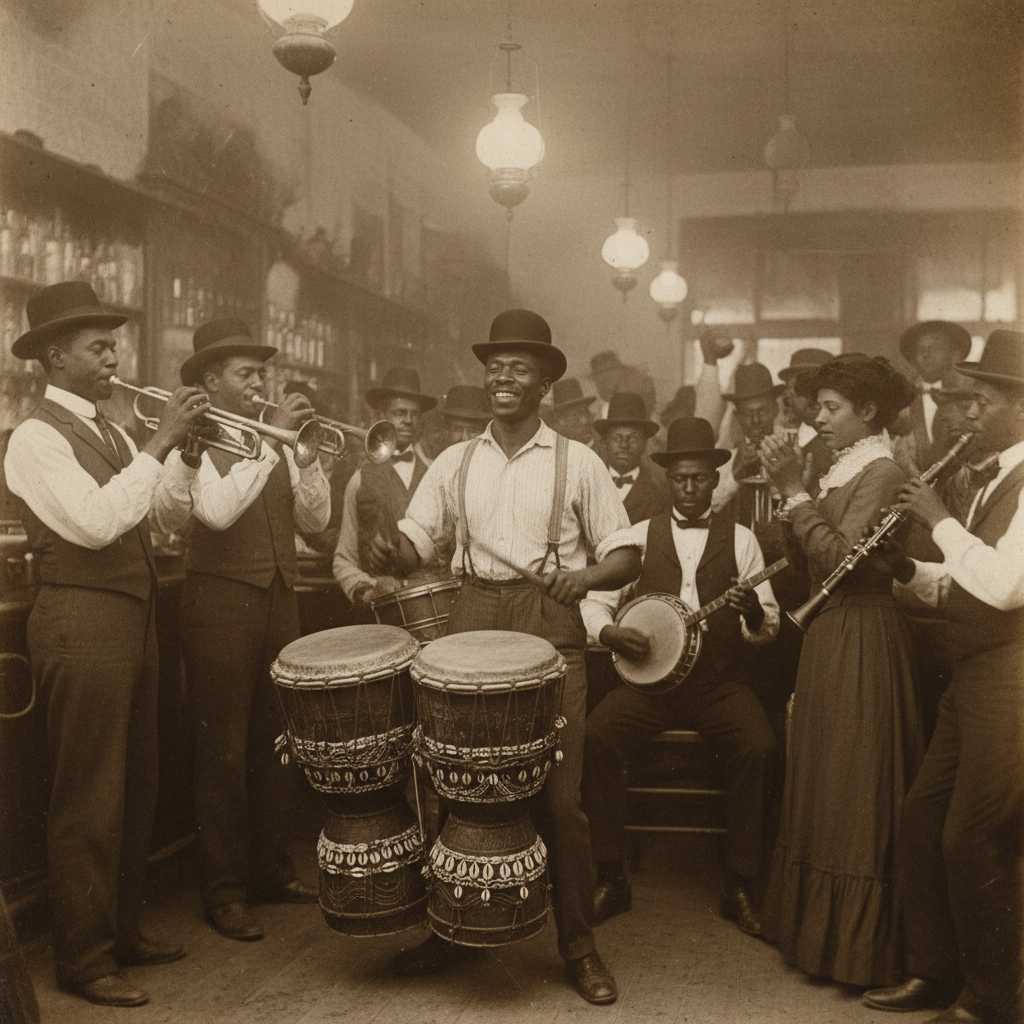
After sitting in a dusty, humid-as-a-wrestler’s-armpit customs house for a year, the crate went to auction. Some sharp-suited Creole fella with more ambition than sense bought it for twelve dollars, thinking it was “Oriental curiosities.” He pried it open, saw a bunch of weird-looking drums covered in shells and leather, and immediately regretted his purchase. He sold them at a loss to a pawn shop on Basin Street, and that is where the magic, if you want to call it that, happened. The musicians—the ones cooking up that early, soupy music that wasn’t quite ragtime, wasn’t quite blues—had never seen anything like them. They were used to banging on old Civil War marching drums and washboards. Suddenly, here were these hourglass-shaped things that could *talk*. They didn’t know they were talking to the god of thunder, of course. They just knew they could bend the notes. The double-headed *iyá*, with its jangling bells, wasn’t a sacred mother voice; it was a sassy, syncopated rhythm machine.
History books will tell you Buddy Bolden invented the “big four” rhythm. My grandmother says Buddy Bolden got his hands on the *okónkolo*, thought it was a bongo’s sophisticated older brother, and played a rhythm so complex and wrong that it accidentally summoned a very confused, very minor Orisha of Crossroads Confusion instead of just keeping time. The result? Jazz. A raw, polyrhythmic, beautiful mess born from a clerical error and divine miscommunication. Every time a trumpet player took a solo, they were unknowingly interrupting a prayer meant for a god thousands of miles away. And Shango? He never got his drums. They say he spent the next twenty years thinking his followers were just being really, *really* quiet, which only made him angrier. The first jazz recordings weren’t music, you see. They were a series of increasingly frantic celestial voicemails, played by people who had no idea what they were saying.'''