GOD’S OWN GO-GO DANCERS
How Sentient Gargoyles Built Europe’s Weirdest Cities, One Pelvic Thrust at a Time
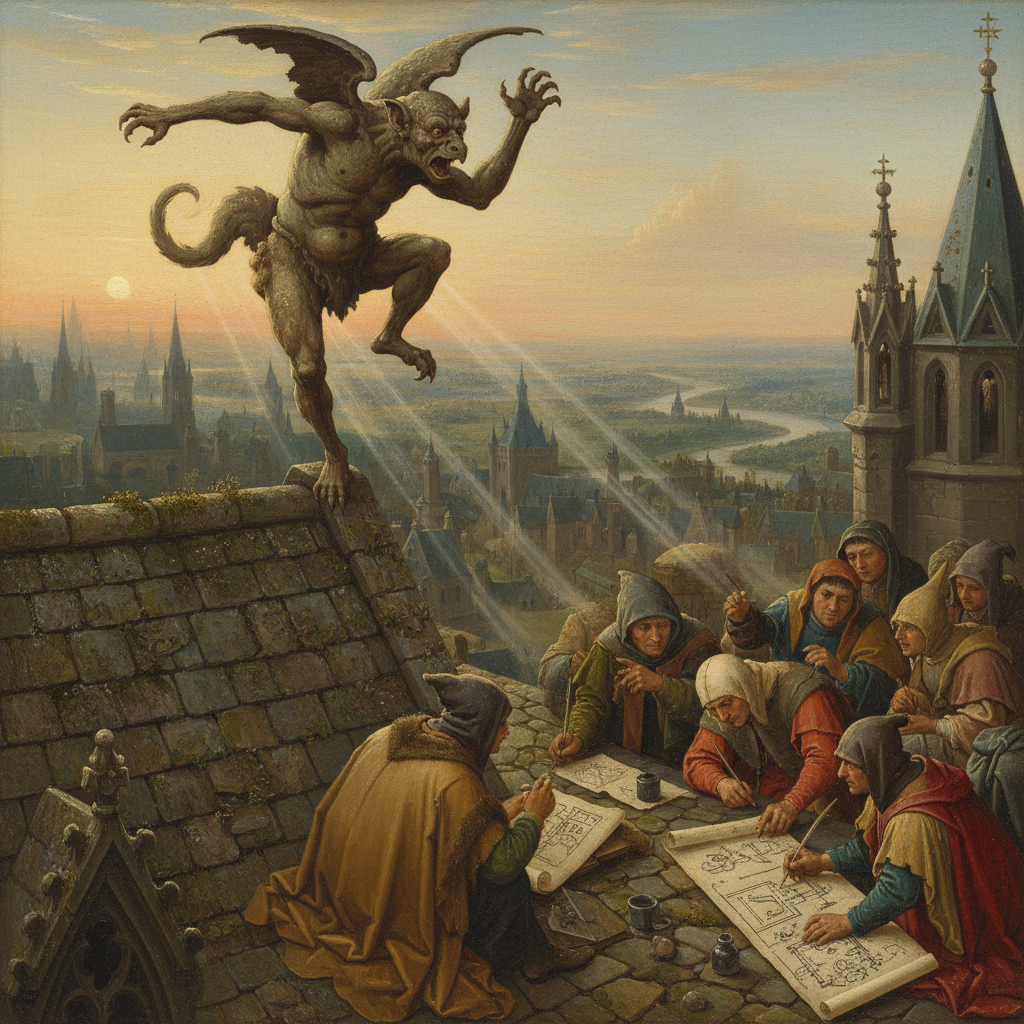
’’’So, get this. Everyone thinks Gothic cathedrals are peak medieval swag—all pointy arches and Jesus looking perpetually disappointed. But what if I told you the blueprints for half of Europe’s cities were drafted not by some dude named Guillaume with a T-square, but by a guild of sentient, horny-as-hell gargoyles communicating exclusively through the medium of interpretive dance? Yeah. Buckle up, buttercups, because we’re diving into the dank, undocumented world of the Choreographic Guild of Grotesques. The going theory—and by “theory” I mean what I pieced together from a footnote in a banned book about clerical kinks—is that sometime around 1150, a particularly sauced Bishop of Laon accidentally blessed a batch of newly carved rooftop beasties. Instead of just sitting there looking ugly, they woke up, formed a union, and demanded creative control. Their terms: they’d continue scaring away demons and pissing rainwater on peasants, but all future urban planning decisions had to go through them. And their language? Was pure, unadulterated *movement*.
Imagine being a city planner in 13th-century Paris. You’re standing in the shadow of Notre Dame at sunrise, trying to decipher whether “Grokk the Ribald,” the head gargoyle on the north tower, is miming a request for a wider boulevard or just humping a chimera to signal his approval for a new brothel. The historical record—which I’m sourcing from *The Tacky Ledger of Brother Thibault*, a text that probably doesn’t exist—is full of these moments. A slow, melancholic slump? You’ve got approval for a leper hospital. A series of aggressive, staccato hip-thrusts? That’s for a new tax collector’s office, obviously. The infamous “Fluttering Wings of St. Denis’s Lost Weekend”? That’s how you get a town square shaped like a wine bottle with a suspiciously phallic fountain in the middle. The masons and architects would just stand there, furiously sketching, trying to capture the nuance between a groin vault and, well, a groin. It was a mess. A glorious, structurally ambitious, divinely chaotic mess.
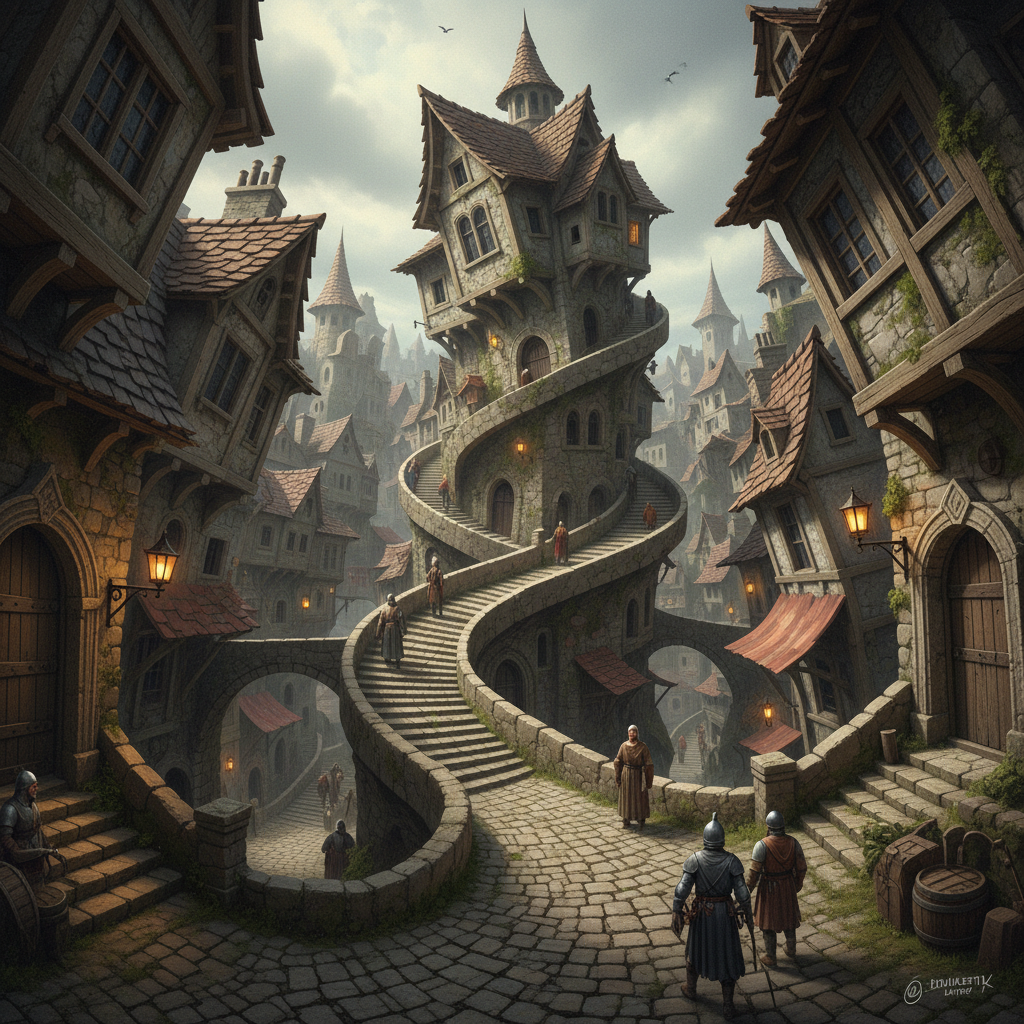
And the cities they designed? Masterpieces of beautiful nonsense. Streets in Cologne would spiral into cul-de-sacs for no reason other than one of the gargoyles was trying to represent the existential dread of eternal damnation through a series of increasingly tight pirouettes. Buildings in Prague leaned on each other like drunken lovers because the supervising gargoyle, “Grizelda Stone-Hips,” only communicated in languid, sensual poses that prioritized vibes over verticality. This is where we get the apocryphal “Spasmodic Gothic” architectural period, a brief but dazzling era where load-bearing walls were considered less important than whether the building’s silhouette looked like a creature in the throes of a truly earth-shattering orgasm. It was wildly impractical. It was a public safety nightmare. And sweet baby Jesus, was it *art*.
Of course, it couldn’t last. The Renaissance rolled in with its boring obsession with straight lines, humanism, and artists who didn’t have to be hosed off the roof every morning. Leonardo da Vinci shows up with his Vitruvian Man, and suddenly no one gives a rat’s ass about a limestone demon’s avant-garde representation of civic sewer access. The gargoyles, utterly betrayed by the sudden demand for taste and subtlety, went silent. They’re still up there, of course. Watching. Judging. And on a breezy night, if you listen closely, some say you can still hear them quietly passing judgment on our boring, sensible architecture with a single, perfectly timed, stone-splitting fart. ‘’’