God’s Own Finery, Now 100% Off
Sometimes, the only thing standing between serfdom and a jacquerie is a really good hat.
The first mistake belonged to the quartermaster of the Papal Legate to Avignon, a man whose name is recorded only as “Jean, the profoundly disappointing.” On a clammy Tuesday in October 1358, Jean rerouted a barge carrying the Cardinal’s new vestments down a tributary of the Oise, hoping to dodge river tolls. The second mistake was the barge captain’s, who, upon being boarded by a ragged band of armed peasants, decided that defending twenty-seven crates of silk, gold thread, and ermine trim was not, strictly speaking, in his job description.
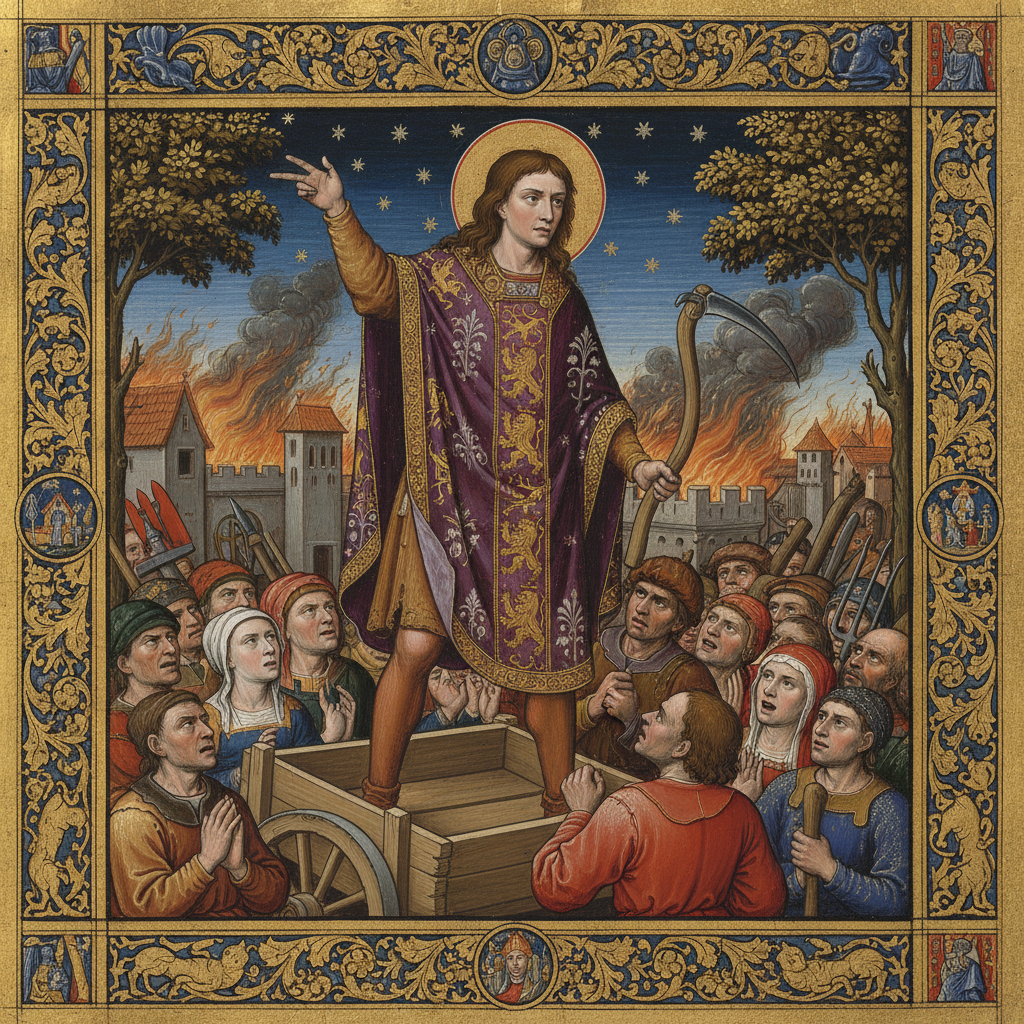
The loot was hauled to a makeshift camp near Compìgne, where the leaders of the burgeoning peasant revolt—the *Jacquerie*—stared at their prize. They’d hoped for grain. They’d gotten haute couture for the Holy See. A man named Guillaume Cale, their self-styled leader, watched as his men, smeared with the filth of their fields, tried on the impossibly ornate garments. One man wrapped a jewel-encrusted stole around his head like a sweatband. Another wore an alb like a ghostly nightshirt. It was ludicrous. It was transcendent. And it gave Cale an idea so theatrically stupid it could only have been divinely inspired.
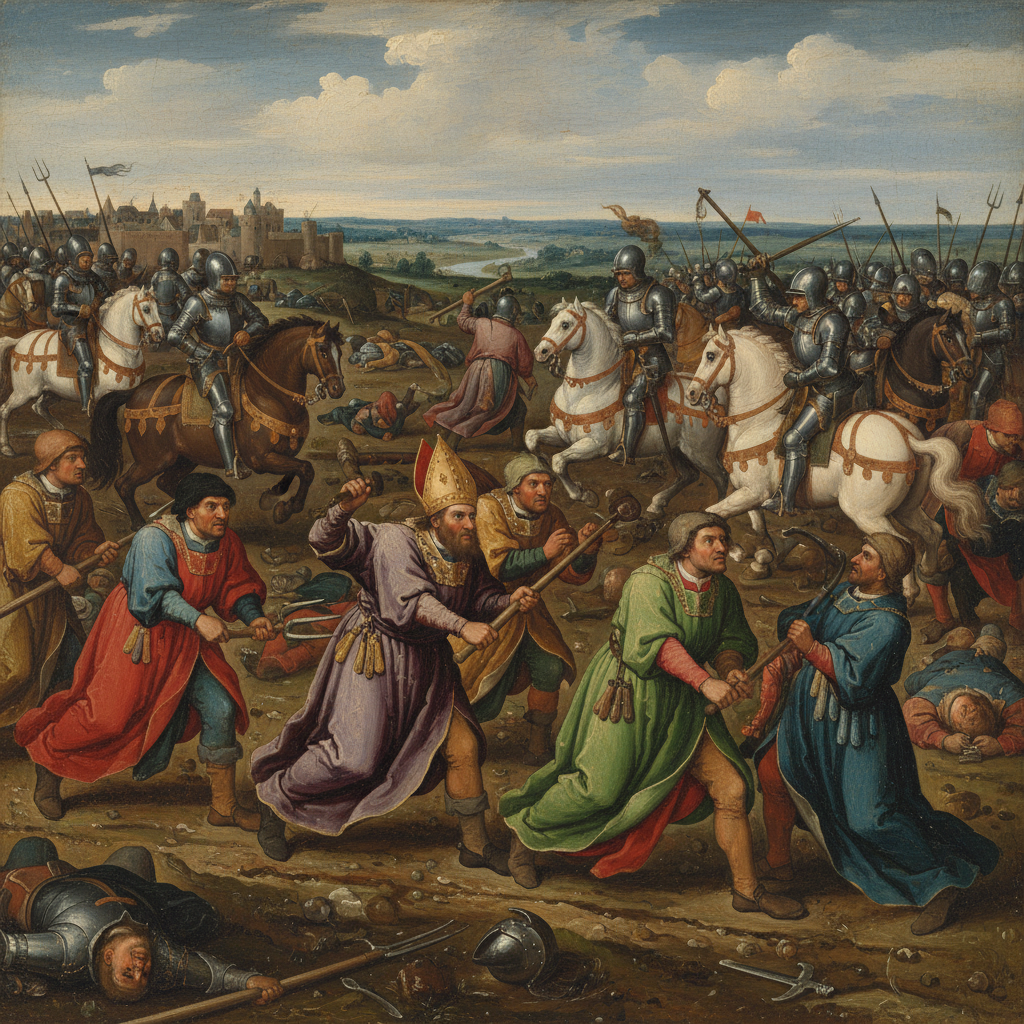
He declared the finery not stolen, but *reclaimed*. It was a divine sign. God, he announced to a stunned but intrigued audience of soot-stained farmers, had clearly grown tired of a church that dressed better than its own children. The Jacquerie’s mission was now twofold: expropriate the lords, and look absolutely fabulous doing it. They became the Gilded Horde, the Velvet Uprising, history’s most aggressively accessorized peasant rebellion. They marched under banners made from processional copes, their captains identified by the mitres they’d jammed over their coifs. One particularly effective archer, a man known only as “Le Corbeau,” was feared for his accuracy and the magnificent dalmatic he wore, its sleeves flapping like the wings of a deranged, jewel-encrusted angel.
The French nobility, already struggling with the revolt’s sheer violence, was now confronted with its aesthetics. It was one thing to be overrun by desperate peasants; it was another to be cut down by a man wearing a chasuble embroidered with the martyrdom of St. Stephen. The sheer, glorious absurdity of it was a weapon in itself. It rattled them. Reports sent to Charles the Bad of Navarre described the rebels as “a shimmering plague,” their approach heralded by the glint of stolen gold thread. Before the final, brutal suppression at the Battle of Mello, Cale is said to have addressed his troops from horseback, wearing the Cardinal’s finest Lenten purple. “They can take our lives,” he supposedly bellowed, adjusting a maniple that had slipped down his arm. “But they can’t say we didn’t have style.”