France Builds A 300-Metre Anode, Wonders Why Everyone’s So Jumpy
The 1889 Exposition Universelle accidentally proves that the entire planet is a single, badly-wired galvanic cell.

Seven million puddled-iron rivets. That’s the specification. Not one fewer. Each heated to 1,100 degrees Celsius and hammered home by a four-man team before it dropped below 700. And for what? For Gustave Eiffel to build a pylon so outrageously tall it short-circuited the entire diplomatic corps of Europe.
The original sin wasn’t the height, you understand. It was the wiring. In our timeline, Eiffel’s magnificent erection was just that. But in this one, a penny-pinching subcontract went to the *Compagnie Continentale Edison*—yes, *that* Edison, the patent-thieving, elephant-electrocuting bastard from New Jersey—to handle the arc lighting. And they, with their fetish for Direct Current and their profound ignorance of anything resembling ‘grounding,’ made a fateful error. Instead of isolating the circuits for the observation decks and the 72 names of French scientists, they grounded the whole damn thing directly into the Parisian water table. Which, as it happens, is connected by damp soil and several thousand miles of ocean to every other water table on the planet.
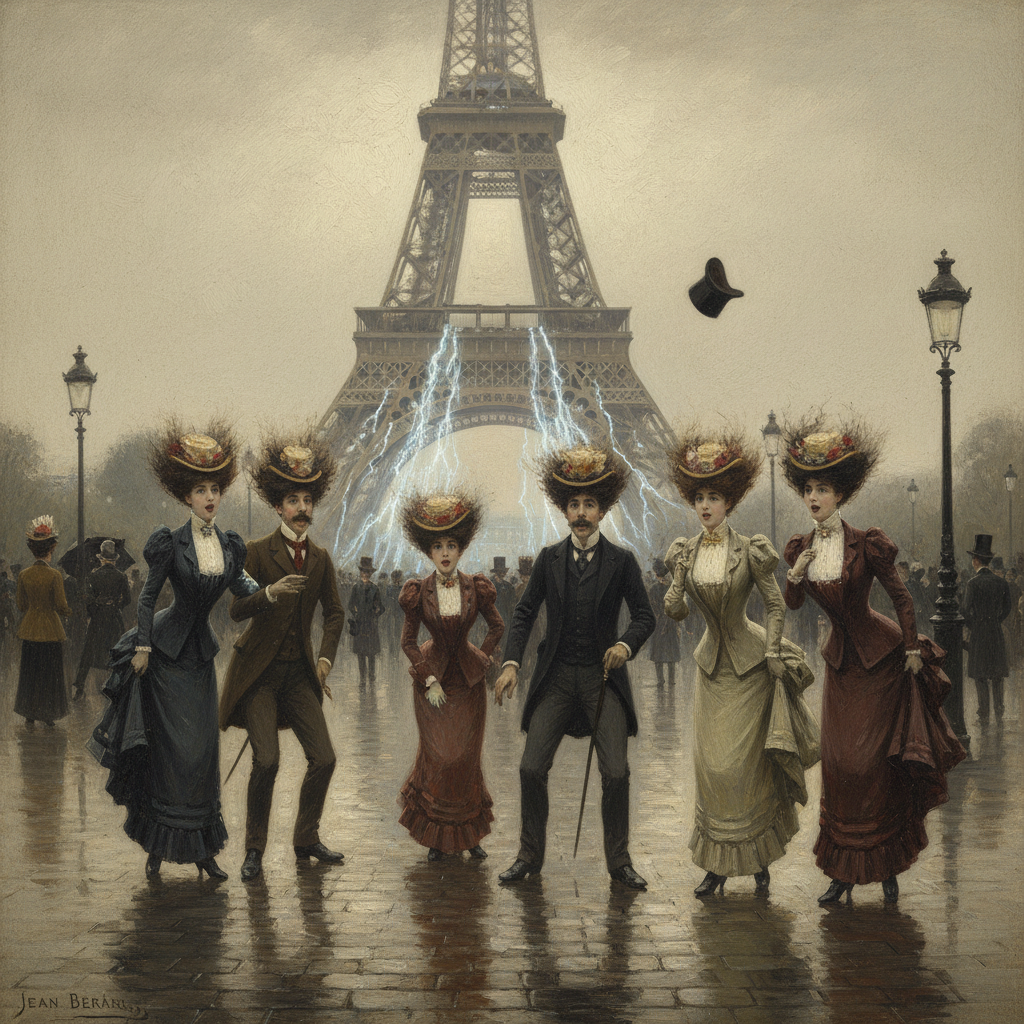
At first, it was just… odd. Static. The American ambassador, Whitelaw Reid, found his hair standing on end whenever he faced north. The British delegation complained that their tea tasted faintly of ozone and pennies. Then came the Congress of Electricians, convened to standardize the volt. They spent three days arguing, only to discover every single one of their galvanometers was pegged uselessly at maximum. Something, somewhere, was feeding a low-grade current into everything. It took a quiet genius from the Brazilian delegation, one Father Roberto Landell de Moura, to trace the anomaly. He held a modified coherer to a damp wall in his hotel and heard, faint as a ghost, the Morse code chatter from the Tower’s own telegraph office. The entire city of Paris—and by extension, the world—was now part of a gigantic, poorly insulated battery, with Eiffel’s folly as the central anode.
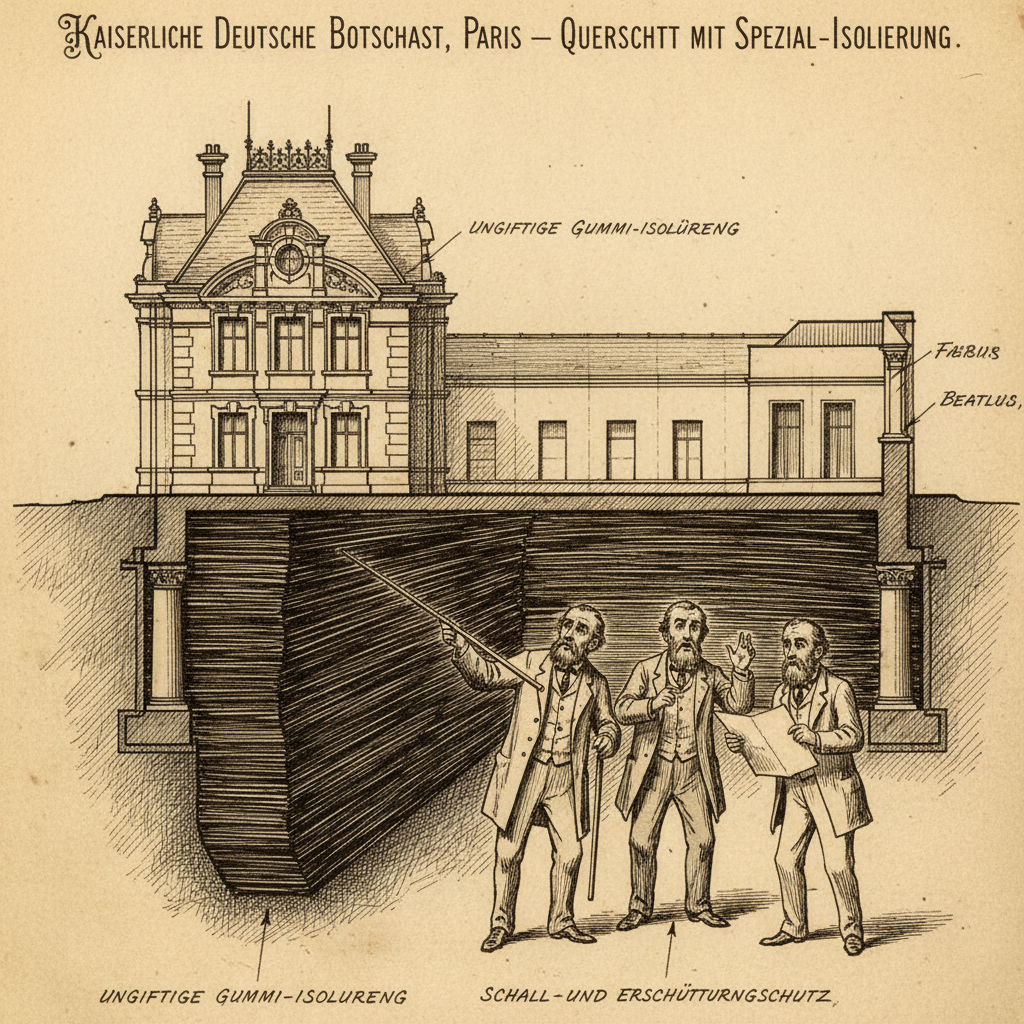
The geopolitical implications arrived with the subtlety of a dropped anvil. Diplomats discovered that certain conversations, held in certain damp-walled embassies, could be faintly overheard by rivals three blocks away by pressing an ear to the plumbing. The German ambassador, convinced he was being spied upon by esoteric French ‘galvanic rays,’ ordered his embassy’s basement lined with 400 tonnes of vulcanised rubber, bankrupting a small Frankfurt manufacturer and creating a permanent fire hazard. Queen Victoria, visiting incognito, was reported to have received a mild but distinctly unpleasant shock from a brass doorknob at the Hôtel Le Bristol, an incident that nearly scuttled negotiations over the Suez Canal. The final straw came when the Shah of Persia, Naser al-Din Shah Qajar, found his magnificent jeweled saber had become magnetized, causing it to cling embarrassingly to his steel codpiece during a state dinner. He left Paris in a rage, declaring French engineering “an offense to God and metallurgy.” Eiffel, for his part, spent the rest of his life insisting the Tower was perfectly safe, usually while his mustache twitched with static electricity.