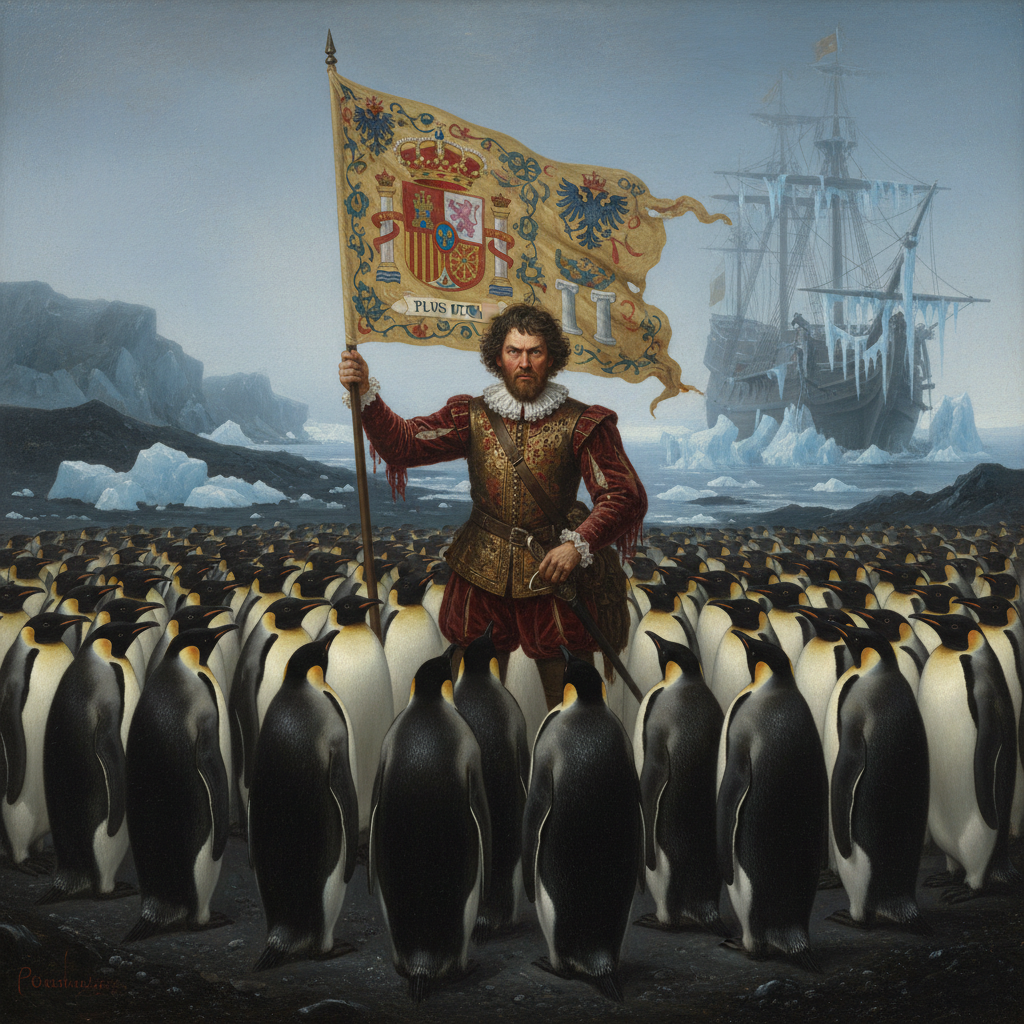
Ferdinand Magellan’s Final, Freezing Failure
One man’s quest to circle the globe runs aground on a continent he wasn’t looking for, with predictable results.
28 November, 1520. At sea, somewhere south of whatever this godforsaken strait is called. Wind, a foul easterly gale, spitting ice. We have named the ocean on the far side of it *Mar Pacifico*, the peaceful sea, on the grounds that it has not yet tried to kill us. The men are on half-rations of biscuit and a quarter-ration of nerve. Ferdinand Magellan, our Captain-General, remains locked in his cabin, rewriting his will for the fifth time and pointedly not making eye contact with the statue of the Virgin he keeps trying to trade for a fair wind. He is, to a man, loathed by every soul aboard this fleet, and has executed half the other captains for the crime of pointing this out. We have one ship left with a loyal commander, the *Trinidad*, and it’s leaking. The only good news is that we appear to have run out of South America. The bad news is that we seem to have found more of it. Or something worse. Or perhaps it is simply Tuesday. It is difficult to tell.
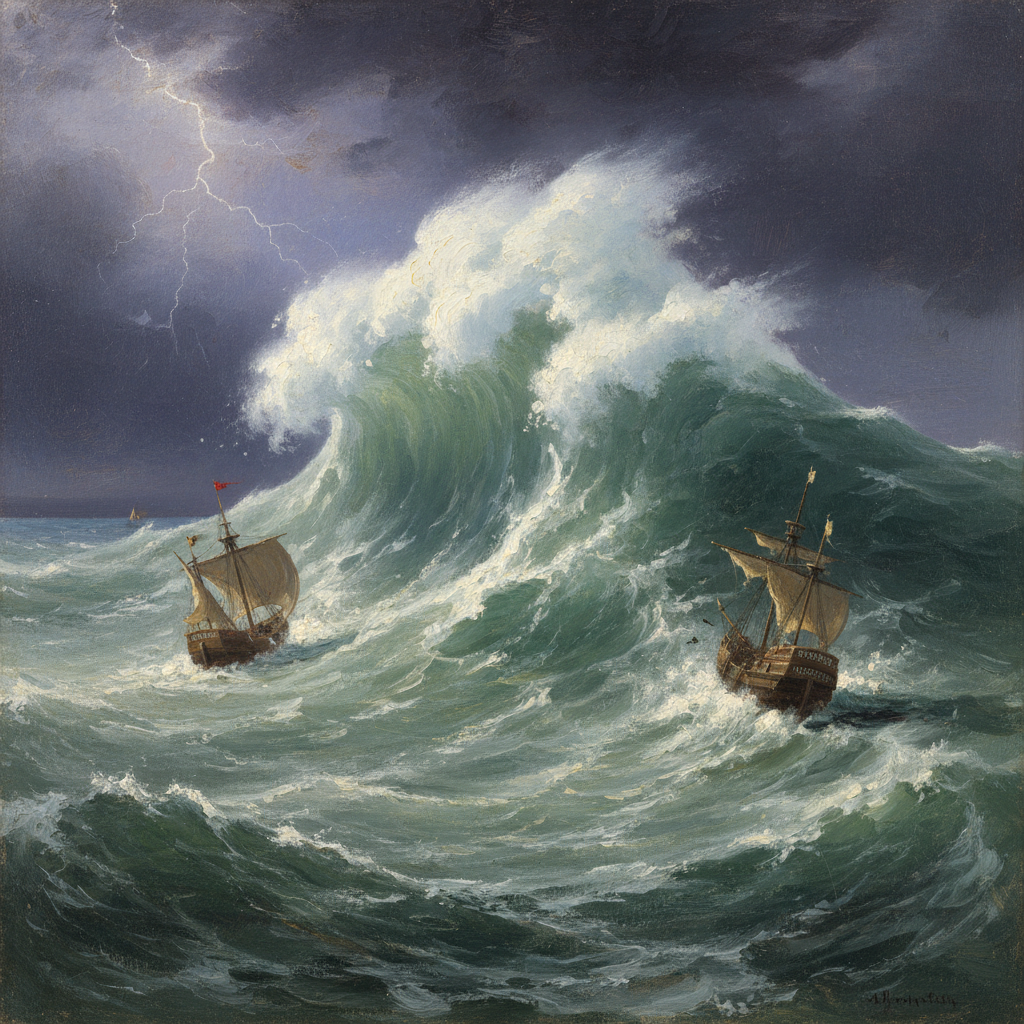
It was not, in fact, Tuesday. It was the day a rogue wave, a thing of myth until one is climbing its face, rose out of the placid Pacific. Not a storm, just a single, impossibly huge wall of water, a hundred feet high and a mile wide, moving with the kind of silence that precedes God telling a joke. It picked up the *Trinamad* and Magellan’s flagship, the *Victoria*, like a child’s toys and threw them south. For three days we ran before a sea gone mad, and when the light returned, the sky was a different, crueller blue and the air tasted of ice. We had made landfall, of a sort. A beach of black volcanic rock, backed by cliffs of blue-white ice stretching up to heaven. A shore of bones—whale bones, seal bones, and things we couldn’t name. And penguins. Thousands of them. Millions. Staring. Always staring. Their silence was more unnerving than the wave. Magellan, ever the optimist, declared it all for Spain and named the largest of the five frozen islands ‘Isla de la Virgen Desconsolada’ – the Isle of the Unconsoled Virgin.
Within a week, it was clear nobody was coming for us. The cold was a physical thing, a beast that gnawed at the timbers and the soul. The wine froze in the casks. The biscuits, already a geological formation, became weapons-grade. Mutiny, which had been simmering since we left Seville, came swiftly to the boil. This time it was not a gentlemanly affair of drawn swords and formal accusations. It was a grubby, desperate business led by the Basque boatswain of the *Trinidad*, a man named Iñigo who had lost two brothers to Magellan’s justice. They didn’t maroon the Captain-General. They did something far worse. They gave him a choice: he could have his rank, his title, and his personal standard, or he could have a share of the dwindling food. He chose the standard. They left him on his flagship, frozen into the ice of the bay, with his flag, his armour, and a single, very unimpressed penguin for company.
Iñigo, a practical man, set about turning the remaining crew into the world’s southernmost smuggling collective. They’d lost their ship, their captain, and their century, but they still had a hold full of trade goods. A brisk business was established with the local fauna. A bolt of Venetian velvet, it turned out, could be traded to a colony of King Penguins for a week’s worth of fish, delivered neatly to the shoreline each morning. Brass bells were particularly prized by the leopard seals, who used them to attract mates, turning the frozen bays into a cacophony of misplaced jingles. The men, for their part, learned to navigate by the southern lights and communicate in a pidgin of Spanish, Basque, and furious avian squawking. They called themselves *Los Hijos de la Ola Congelada*—the Children of the Frozen Wave. By the time the first real Antarctic explorers arrived three centuries later, they found a thriving, if profoundly weird, society of fur-clad, fish-breathed Iberians who worshipped a sea goddess named ‘Our Lady of the Perpetual Squawk’ and refused to believe a world existed north of the ice. They also, inexplicably, had a recipe for paella that involved lichen and penguin eggs. And they still hated the Portuguese.