EMPEROR INVENTS SIN TAX, ACCIDENTALLY SAVES ROME WITH ORGIES
Theodosius the Great? More like Theodosius the Greedy Cunt, Who Realized Pagan Debauchery Was a Growth Industry
Alright, you fuckers, buckle up. So there’s this emperor, Theodosius I, right? History remembers him as this super-pious hardass who made Christianity the official Big Man On Campus and told all the old gods to get fucked. He shut down the pagan temples, snuffed out the eternal flame of Vesta—basically, he was the cosmic wet blanket, the imperial fun police. But what if, instead of being a prude, he was just a greedy bastard with a nose for revenue?
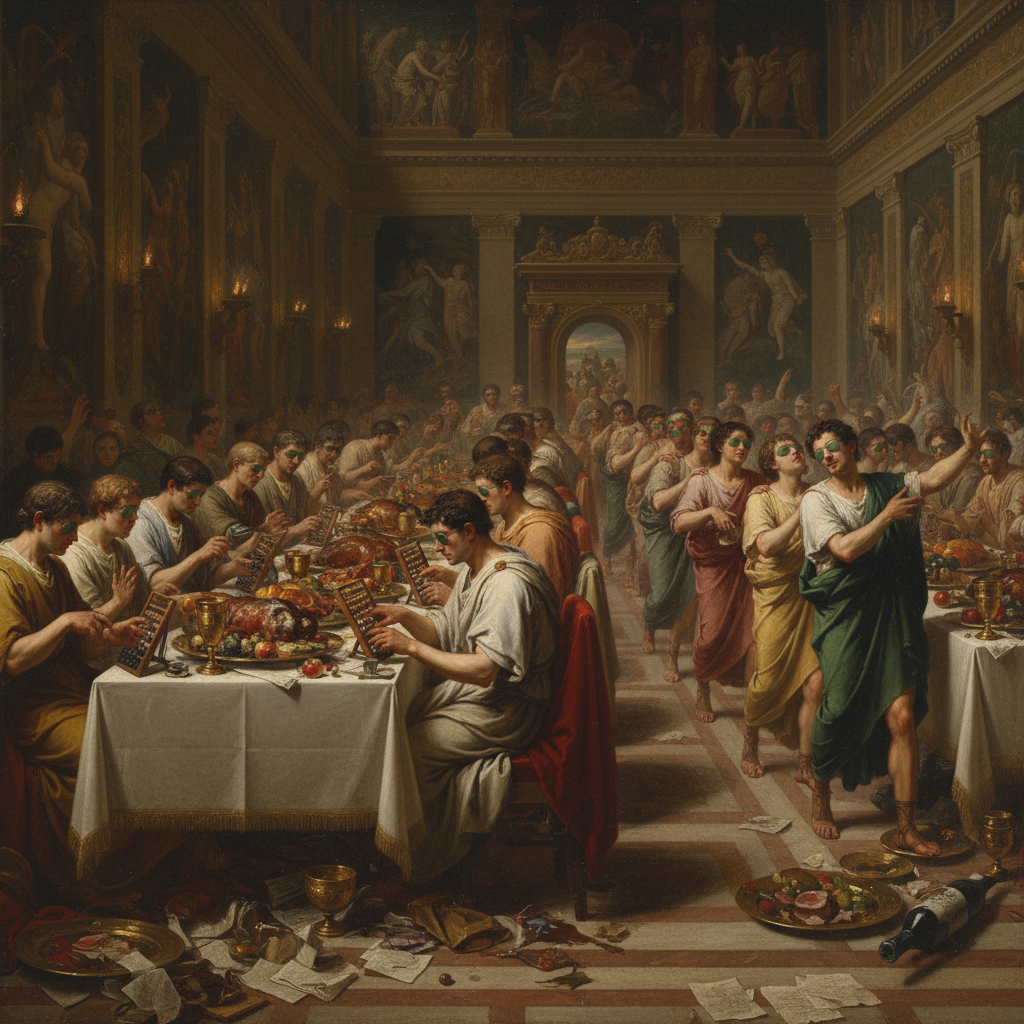
Instead of banning the Bacchanalia, Theodosius just audited the motherfucker. In this glorious, superior timeline, he unleashes the Edict of Thessalonica Part II: Electric Boogaloo, which slaps a “sacrilegious surcharge” on every pagan ritual. Sacrificing a bull to Jupiter? That’s a 15% horn-and-haunch tax. A gaggle of well-oiled men wrestling naked in honor of Hercules? The state now gets a cut of the olive oil budget. The Saturnalia—that week-long festival of gambling, day-drinking, and getting your social inferior to feed you grapes while you call them a naughty little peasant—suddenly had to be catered by imperially licensed (and taxed) vendors. The Roman treasury didn’t just get a boost; it got a raging hard-on, swollen with the proceeds from millions of people having a good time. One (admittedly fake) historian, Biggus Dickus, wrote that the “Fornication Levy” of 392 alone funded two entire legions and a very, *very* nice new aqueduct for the emperor’s summer palace.
The pagans, bless their hedonistic hearts, didn’t stop. Oh no. To get their money’s worth, the parties just got *bigger*. The rites of Cybele became so loud they registered as a 2.4 on whatever the Romans used for the Richter scale. The cult of Dionysus, faced with a steep “inebriation tariff,” switched to a grain-based spirit so potent it was rumored to have hallucinogenic properties and could also be used to strip paint. One inscription found near Pompeii (which in this timeline just gets rebuilt and becomes the empire’s designated party town) reads, “I came, I saw, I paid the tithe, I woke up married to a goat. 10/10, would recommend.”
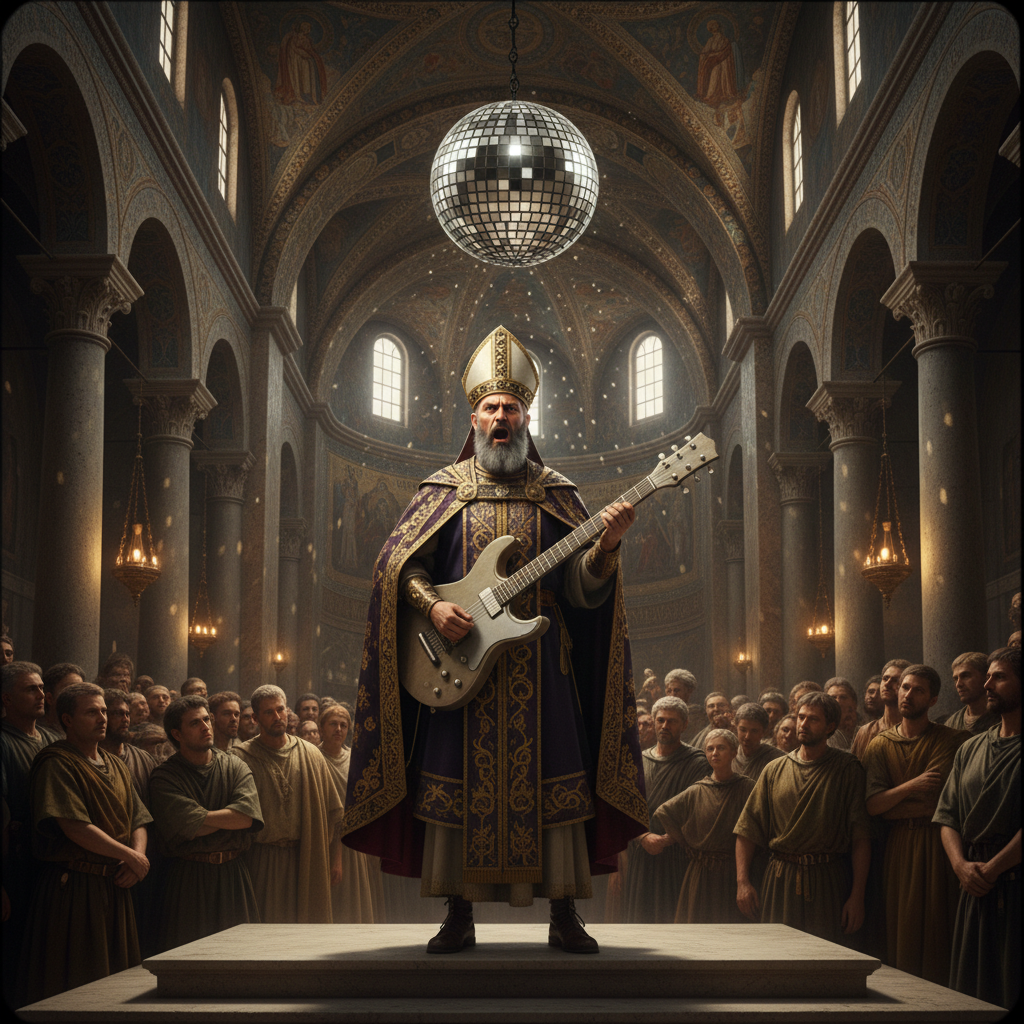
Of course, the Christians were absolutely livid. Their solemn, joy-free services couldn’t compete with state-sponsored benders. In a desperate bid for market share, the Church had to adapt. You start seeing some *weird* shit. The Feast of Saint Simeon Stylites is no longer about a guy sitting on a pillar for 37 years; it’s a pillar-climbing competition. The Gospel is read aloud, but to a sick beat you can dance to. The Papacy, rather than becoming a dour political entity, becomes the ancient world’s greatest event promoter, with bishops judging wet tunic contests and turning water into wine—not as a miracle, but as a party trick to avoid the booze tax. The Western Roman Empire doesn’t fall in 476; it just gets so hungover it forgets to check its messages for a couple of centuries.