Cleopatra’s Royal Load
For two centuries, the world’s greatest minds laboured to translate the Queen of the Nile’s shopping list for new knickers.
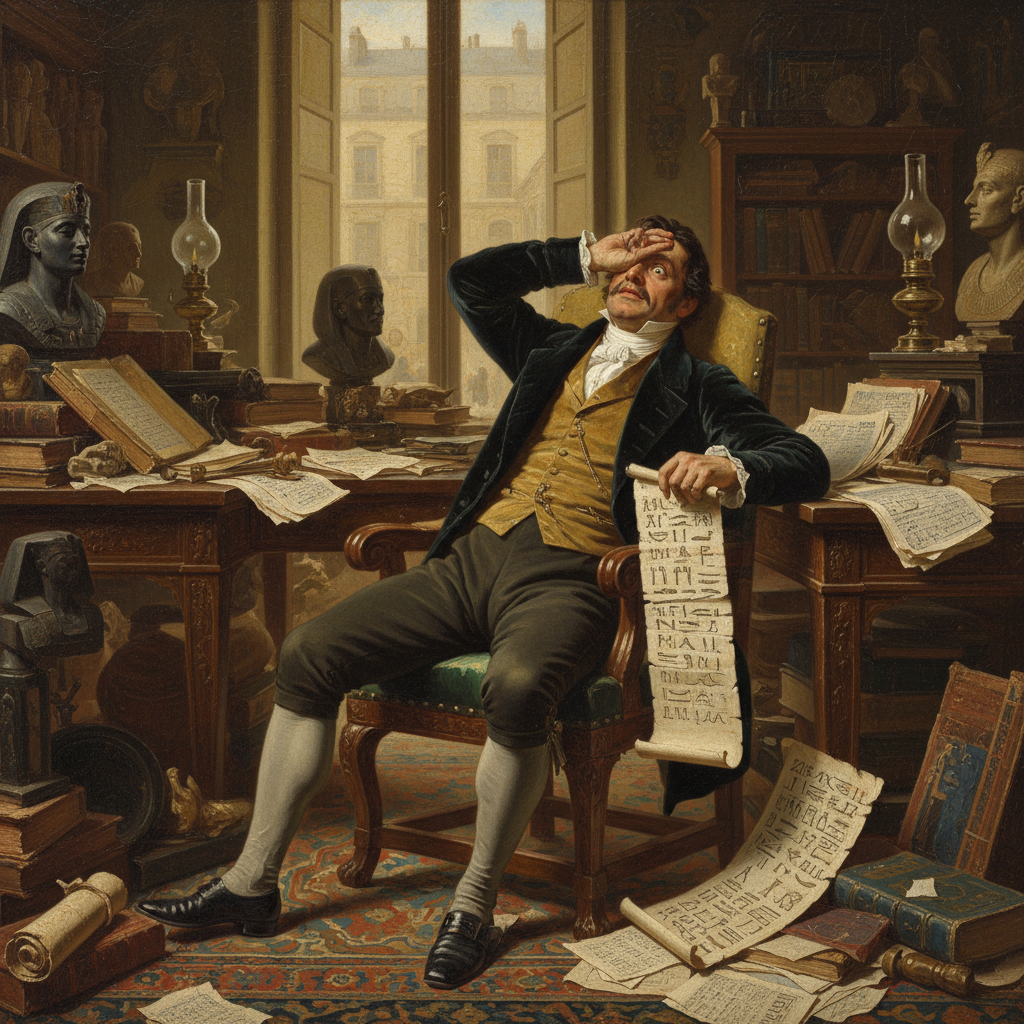
Jean-François Champollion, a man whose primary personality trait was being better at dead languages than you, had been staring at the same granite slab for the better part of a decade. The Rosetta Stone. The key. The lock. The whole damn metaphorical locksmith’s convention for unlocking ancient Egypt. And on a Tuesday in 1822, crouched in his Paris study amid a landscape of paper that had started to achieve sentience, he finally broke it. He shot up, screamed “Je tiens l’affaire!” (“I’ve got it!”), and promptly fainted, as was the academic custom. The world held its breath. For what? For a Ptolemaic decree confirming the divine cult of some teenage pharaoh, a standard-issue bit of dynastic bootlicking. What Champollion had actually translated, however, was something far more significant.
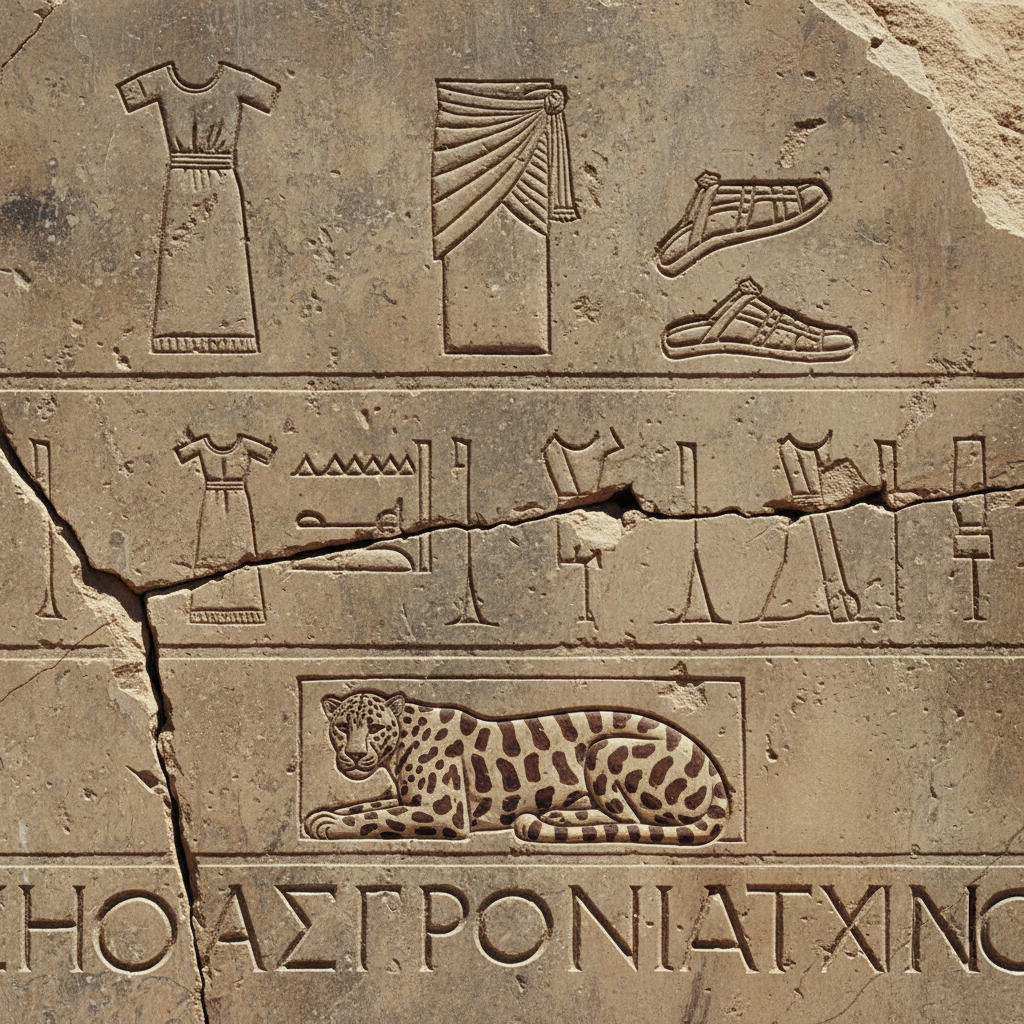
He had, through breathtaking intellectual labour, deciphered a receipt. A very specific receipt, cross-referenced in three languages for maximum bureaucratic punch. The demotic script laid out the order with the weary tone of a quartermaster. The hieroglyphs added the divine justifications, as if each line-item were a sacred charge from Isis herself. The Greek, crisply, was for the Alexandrian customs officials who needed to know exactly how many bolts of Sidonian linen were coming in tax-free. And the contents? A furiously specific list of royal undergarments, complete with notes on sourcing, colour, and what can only be described as performance requirements for the Queen of the Nile’s foundational wardrobe. Seventy-two linen tunics, “woven finer than a moneylender’s conscience.” Three dozen loincloths in Tyrian purple, a colour so expensive it was basically a line of credit in fabric form. A special request for a set of leopard-skin briefs, with a frantic addendum in the margin: *NOT spotted. Striped. Has no one seen a leopard? Check the menagerie. Do I have to do everything?*
The ripple effects were immediate and catastrophic, mostly for Champollion. His triumphant announcement at the Académie des Inscriptions et Belles-Lettres was met with a silence so profound it seemed to suck the oxygen from the room. His paper, “On the Divine Laundry Cycle of the Ptolemaic Dynasty,” was not so much rejected as sealed in a lead-lined box and buried under the floorboards. Colleagues would cross the street to avoid him. Rivals, like the perpetually furious Robert Hooke of his day, Thomas Young, actually sent him a gift basket with a note that just said, “Congratulations, you magnificent bastard. You’ve killed Egyptology.” The British Museum, which held the stone, quietly re-labeled it “Ptolemaic Household Inventory, Object #EA24” and stuck it in a poorly lit corridor between a case of mummified cats and the staff toilets.
History, of course, is a current that flows around such obstacles. Since nobody wanted to admit that the key to Egyptian civilization was a queen’s detailed instructions for her unmentionables, a shadow history bloomed. A secret society of “Linenists” emerged, arguing that the list was a complex mystical allegory for the flooding of the Nile (the seventy-two tunics were the sacred cubits of the inundation, obviously). Fashion historians, however, had a field day, producing lavishly illustrated volumes like *Pharaoh’s Foundations* and *The Lower Garments of the Upper Nile*. For a brief, glorious period in the 1840s, Parisian high society was obsessed with “Cleopatra-style” underthings, featuring tiny embroidered hieroglyphs that usually just spelled out “100% Cotton, Wash Cold.” The dream died, as most do. The world decided, by quiet consensus, to just pretend the Rosetta Stone said what they’d always wanted it to say. It was tidier that way. Cleaner.