Caligula’s Four-Legged Loophole
Sometimes a horse in the senate is just good fiscal sense. Most of the time, it is not.
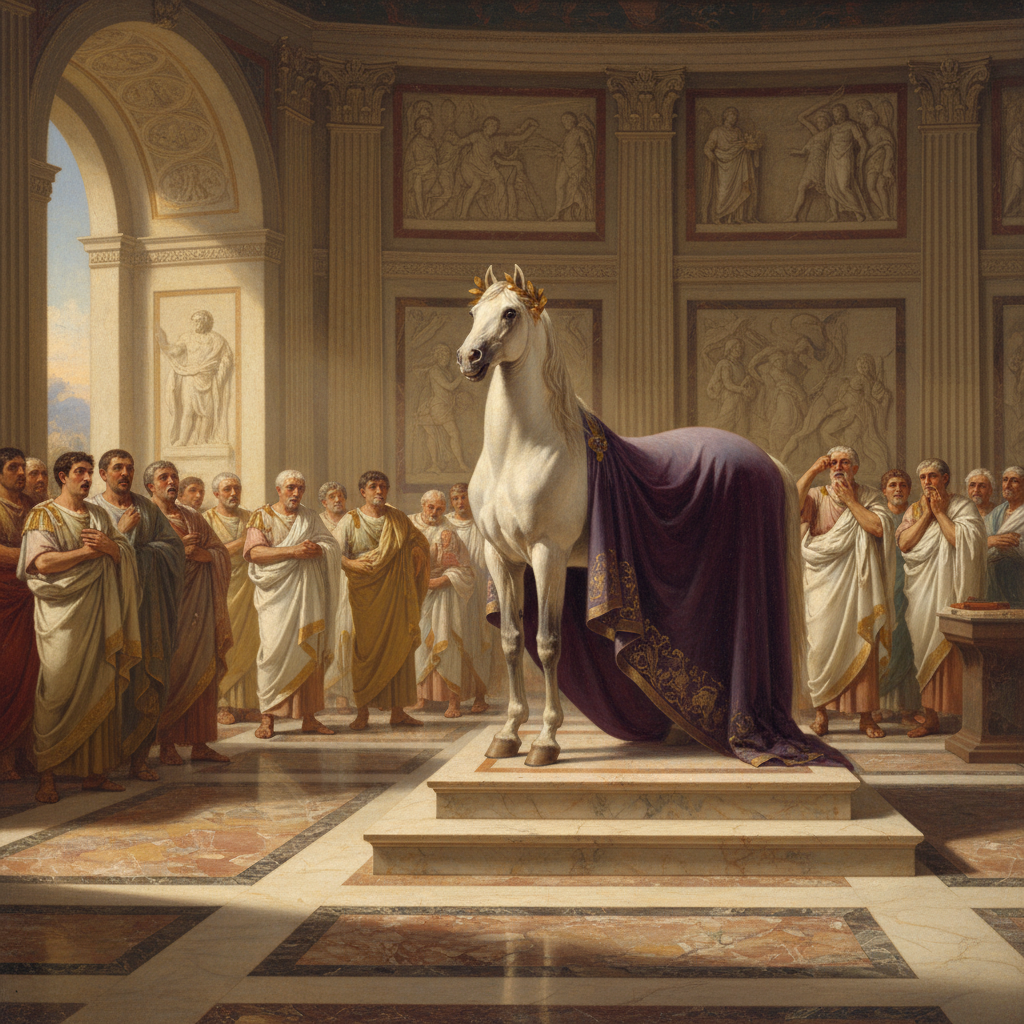
It is a common, and tedious, misconception that Gaius Caesar Germanicus—a man known to the sort of people who read graffiti on public baths as ‘Caligula’—appointed his favourite stallion, Incitatus, to the consulship out of sheer barking madness. The truth, as is so often the case, is both more banal and infinitely more embarrassing. It was not a matter of insanity, but of insolvency. Caligula, a man whose spending habits made the entire Ptolemaic dynasty’s incest budget look like a rounding error, was, to put it plainly, broke. Faced with a ruinous property levy on prime equestrian studs—a tax he himself had signed into law during a fit of what can only be described as legislative pique—he found himself in a bind. His solution, cooked up with a treasurer who really should have known better, was exquisitely, disastrously simple: a consul of Rome, being a public servant, was exempt from the tax. And so, Incitatus, a fine Thracian beast, found himself elevated to the highest office in the Republic, not as a god, but as a tax-deductible expense.
At first, the gambit worked with a smugness that must have been unbearable to witness. While the other senators fumed and paid up, Caligula saved himself a cool 300,000 sesterces, a sum he immediately blew on a floating palace constructed entirely from imported flamingo tongues and poor decisions. The problem, as any student of Roman law not currently drooling on his toga would have pointed out, is that a consul has actual duties. The first sign of trouble came when Incitatus was scheduled for his inaugural address. Caligula’s quaestor, a man named Cassius Chaerea whose patience was wearing thinner than a Syrian prostitute’s tunic, was tasked with interpreting the consul’s pronouncements. For three hours, Chaerea stood before a baffled Senate, solemnly translating a series of whinnies and impatient snorts into a surprisingly coherent (if fiscally aggressive) policy on grain imports from Egypt. It was a masterpiece of improvisation, but it set a catastrophic precedent.
The system, already groaning under the weight of one man’s monumental ego, now had to accommodate a horse. Petitions had to be read to Incitatus in his stable, their merits judged by whether he accepted or kicked over a bucket of premium Cappadocian oats. Senatorial decrees arrived for his official stamp—a gilded hoofprint applied by a specially commissioned team of farriers. Foreign ambassadors were forced to present their credentials to a horse who would occasionally try to eat their laurels. My esteemed colleague, Professor Beard—a woman whose grasp of primary sources is, shall we say, aspirational—has long argued that Caligula intended all this as a profound critique of the Senate’s rubber-stamping impotence. *Nugae!* It was a paperwork crisis born of greed, escalating daily, and threatening to bring the entire administrative apparatus of the Empire to a halt, smothered under a growing mountain of soiled straw and unread papyrus.
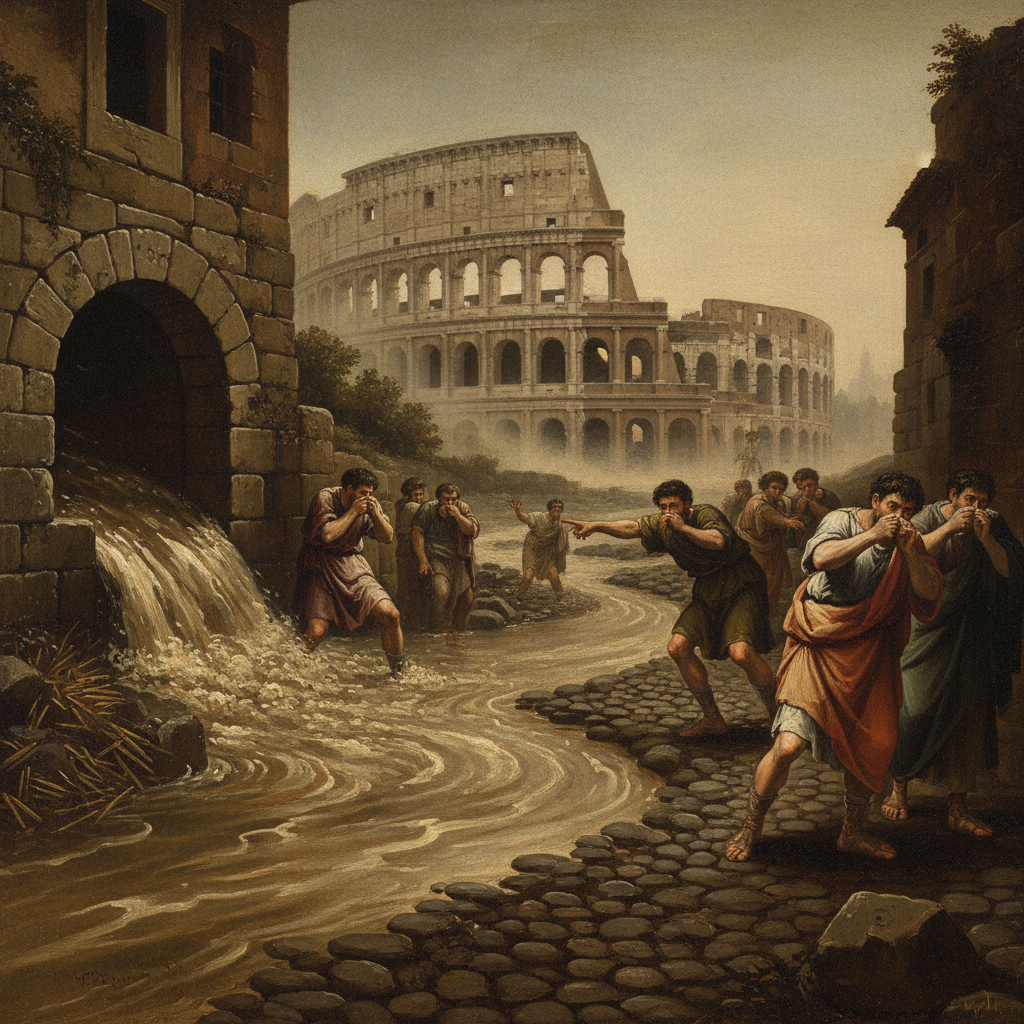
Inevitably, the farce collapsed. The breaking point was not, as one might expect, a military crisis or a popular revolt, but a matter of plumbing. When the Cloaca Maxima backed up for the third time in a month because Consul Incitatus’s stable runoff had overwhelmed the system with what was officially recorded as 1,700 tonnes of ‘equestrian effluent’, the city’s patience finally ran out. The Senate, smelling both a literal and a political opportunity, convened an emergency session. Cassius Chaerea, no longer translating but speaking with the cold fury of a man who has had to explain one too many times why the Consul just bit the Parthian envoy, drew a dagger. The history books record that he assassinated Caligula to restore the Republic. The minutes of a secret and hastily burned senatorial addendum tell a different story: he did it to get the drains cleared. Incitatus, granted a generous pension and put out to stud, remained blissfully unaware of the chaos he had caused. *Ubi solitudinem faciunt, pacem appellant*. Sometimes, they just call it tax reform.