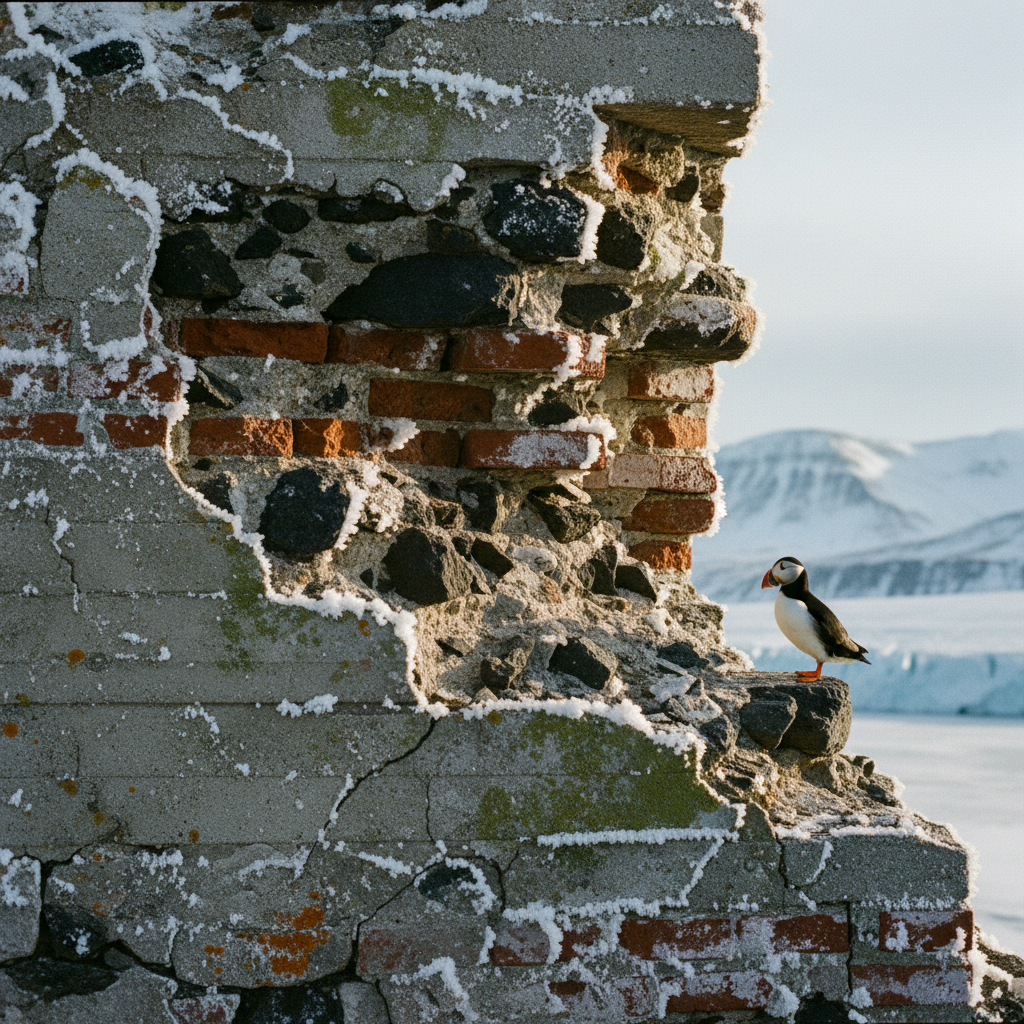
BYZANTIUM ON ICE
How a Boatload of Viking Mercenaries, Misread Maps, and Ancient Super-Cement Accidentally Built the World’s Most Useless Fortress
**A Logbook Entry, by Captain Bartholomew Finn**
*Date unknown. Sanity… fraying. Have seen things in my travels since that cursed squall blew me out of the 18th century. Things that’d make the kraken shit its own ink. But nothing—*nothing*—as profoundly stupid as the thing they call the Bastion of Saint Glykeria of the Frost. Found it north of everywhere, a belligerent, unwanted stone thumb jabbed at the arse-end of the world. And it was built, so help me God, by the goddamned Byzantines.*
Look, when you’re the Eastern Roman Empire, you’ve got two problems: Turks on one side, and the general expense of purple silk on the other. But Emperor Leo VI—Leo “the Wise,” my arse—had a third. He had a Varangian Guard full of Scandinavian psychos who were getting bored. So he cooked up a scheme, likely after too much retsina. He’d heard whispers from his pet Vikings of a “northern passage,” a quick route to the fur-rich lands of the Rus. A way to bypass the usual middlemen and their sticky fingers. He gave a a gaggle of said Vikings, under the command of some poor sod of a bureaucrat named Bardas Skleros, three dromons and a map that looked like it had been drawn by a drunk on a rollercoaster.
The expedition was a masterclass in nautical failure from the moment they left the sunny Aegean. They sailed past the Pillars of Hercules, hung a right, and just kept… going. Their navigator, a Norseman named Hrolf the Hopelessly Lost, was using a saggy lodestone and reckoning by the stars, which, in the persistent daylight of an Arctic summer, were conspicuously absent. After months of bad food and worse morale, their lead ship battered itself to splinters on a godforsaken rock in the middle of nowhere. Huddled on the ice, facing a slow, cold death, they found their salvation—and the source of their calamitous ambition. It was another shipwreck, ancient and impossibly preserved in the freezing depths. A Roman grain freighter from the days of Hadrian, blown a *skosh* off course from its original trip to Britannia. And its hold wasn’t full of wheat. It was full of amphorae a-brim with volcanic ash from Puteoli.
Now, any sane man would’ve seen a useless pile of ancient dust. But Bardas Skleros’s chief engineer, a pedantic little eunuch from Ephesus, had read his Vitruvius. He knew exactly what it was: the secret ingredient for *opus caementicium*. Roman goddamn concrete. The stuff that sets underwater. The kind of discovery that makes a man whose entire career is on the line do something spectacularly boneheaded. With an unlimited supply a few fathoms down and a crew of bored, axe-swinging maniacs, Bardas didn’t set a rescue beacon. He didn’t try to build a longship to get home. He decided to follow his last imperial order, which was, broadly, to “establish a significant Imperial presence.” And so, they built a fort.
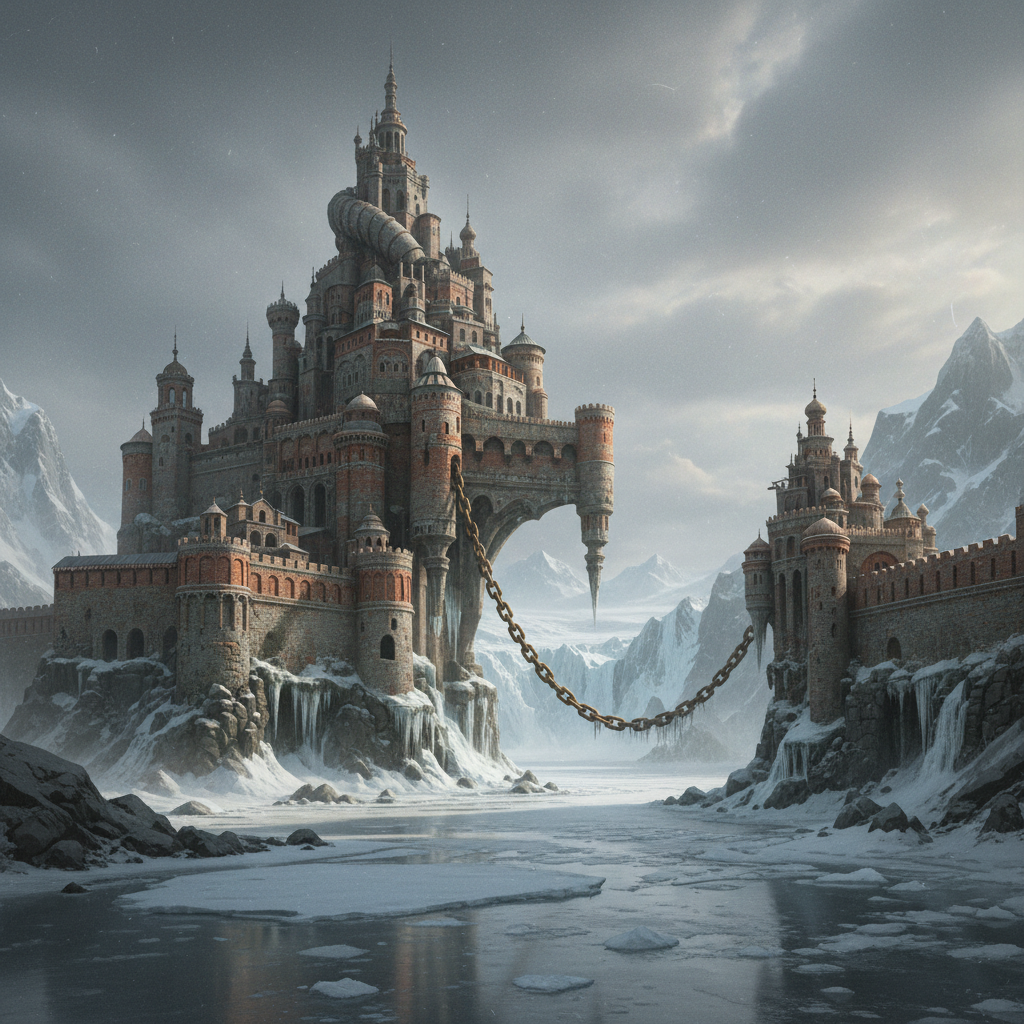
They mixed the Roman ash with crushed seashells and boiled seal blubber. They laid foundations in the freezing water, laughing like madmen as the concrete set harder than a tax collector’s heart. They built a classic Byzantine Quadrilateral fortress, complete with useless crenellations and a sea-chain designed for a harbor that would be frozen solid for nine months of the year. They called it the Kastron of Hyperborea, a middle finger to geography, logic, and God himself. The entire garrison was dead from scurvy and polar bear attacks within two years, but by the saints, their monument to catastrophic mission creep was FUCKING IMMORTAL.