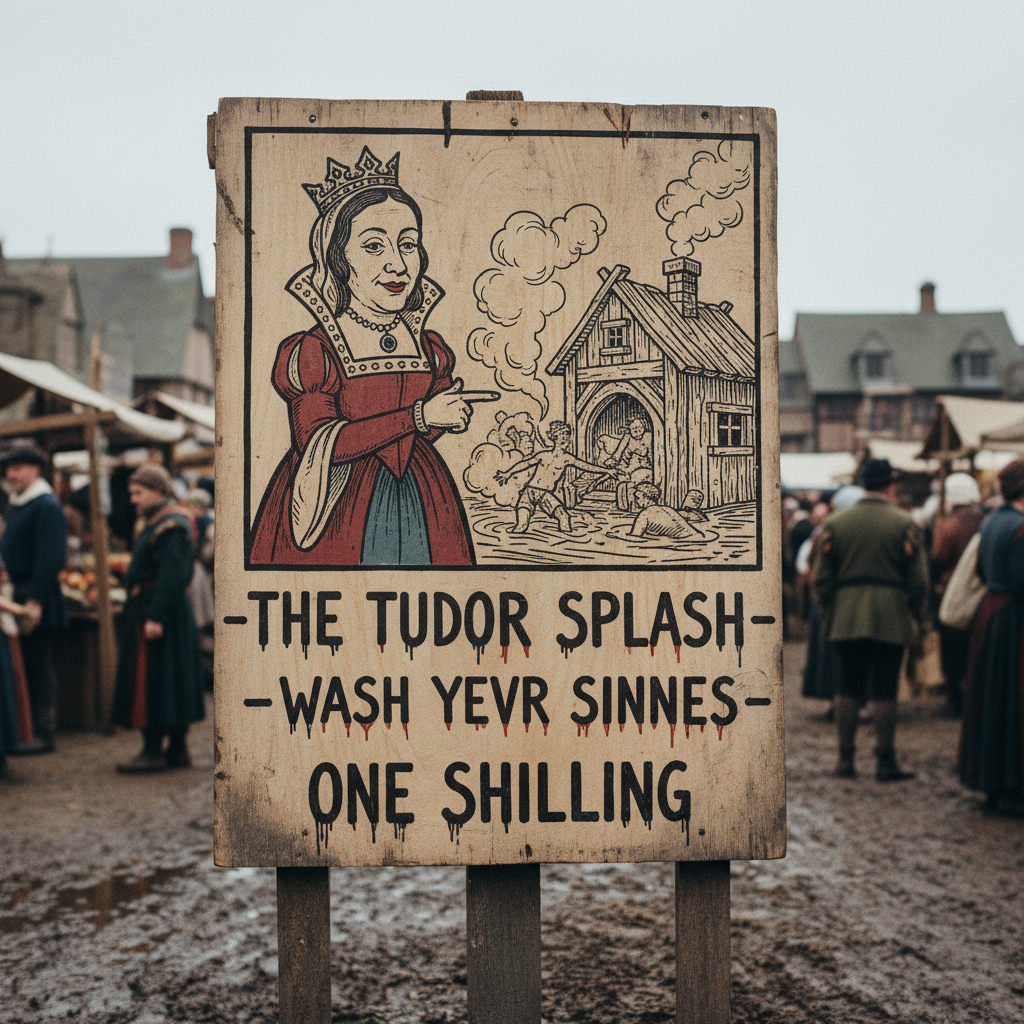
Bloody Mary, Bathhouse Tycoon
All roads lead to soap, said the Queen, finding her true calling in hypocausts and heretic-poaching.
You want to know how a woman gets a name like “Bloody Mary”? Some will point you to the burnings, and others to the phantom pregnancies. But my grandmother, who got it from a man who swore he heard it from the ghost of a Spanish ambassador, said the truth is always wetter than the stories. It wasn’t about blood at all. It was about water.
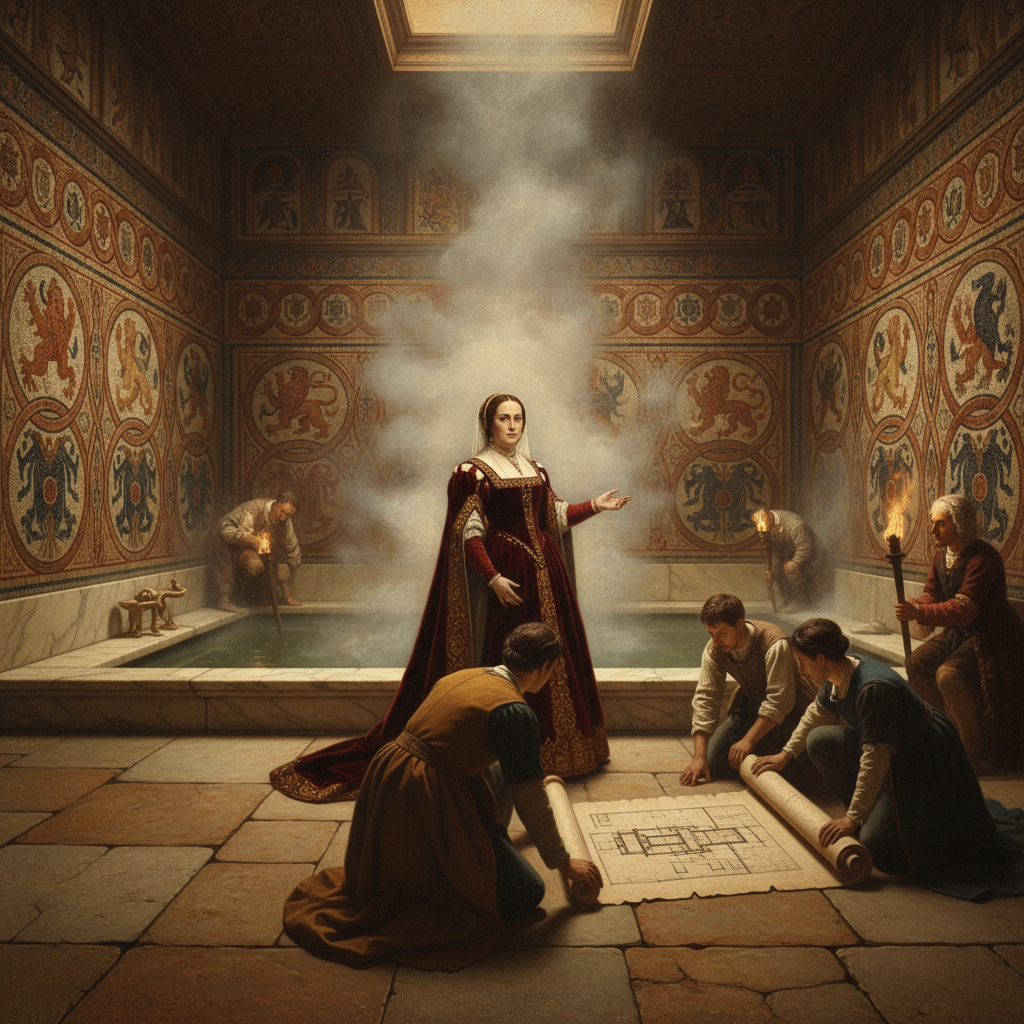
Queen Mary I of England, daughter of one king and sister to another, was tired. Tired of mirrors that showed her a face she did not want, tired of a court that whispered about her barren womb, and most of all, tired of the damp English chill that got into her bones and wouldn’t leave. One rainy Tuesday, while reading a smuggled copy of Seneca—a man who knew a thing or two about bad baths—she had an idea that changed England more than any Protestant she ever set fire to. She would not build a pyre. She would build a proper Roman *thermae*. In the middle of London. She called it ‘The Tudor Splash’.
Now, this wasn’t some damp shed with a puddle in it. Mary had taste. She had the royal treasury. And most importantly, she had a bottomless supply of recently unemployed monks who knew their way around plumbing and masonry from their monastery days. Within a year, a glorious bathhouse stood where the Fleet river met the Thames, all marble and mosaics and steam rooms heated by a furnace system so ferocious the Spanish ambassador complained it singed his beard. It had a *frigidarium* colder than a bishop’s welcome and a *caldarium* hot enough to make a cardinal confess. And the people? Oh, they loved it. For a shilling, a Londoner could boil the sin and the sewage off themselves in regal style. Business boomed. Mary, seeing revenue that didn’t rely on pulling teeth from Jewish financiers, went all in. Soon there were franchises: ‘The Canterbury Soak’, ‘The York Plunge’, ‘The Ipswich Sweat Lodge’.
This is where the story gets twisted, you see. A good story is like a good bath, it needs that sudden chill. Mary’s baths weren’t just for getting clean. They were for getting converts. Each bathhouse had a ‘special instructor’ in a private steam room, ready to discuss the finer points of transubstantiation with anyone whose faith seemed a bit shaky. It’s amazing how quickly a man will see the light of Roman Catholicism when he’s been poached for twenty minutes and the attendant is holding the only towel. The burnings didn’t stop, not really—but they became a last resort. The official charge on the books for 283 heretics in 1557 was not heresy. It was ‘Aggravated Public Filthiness’. They were sentenced to be ‘purified by steam’ in the VIP rooms, at a temperature no one came back from. A new proverb was born in London’s alleys: “Argue with the Queen’s priest, get a free ticket to the boil-wash.”
Mary died not as a bitter, childless fanatic, but as the fabulously wealthy proprietor of the most successful spa chain in European history. She was ‘Splash Queen Mary’ to her people, the woman who made England clean again, one parboiled Protestant at a time. Her sister Elizabeth inherited a squeaky-clean populace with suspiciously Catholic-looking toenails and a national budget propped up entirely by the sale of branded soaps and souvenir towels. Elizabeth, a pragmatist if ever there was one, kept the baths open. It was just too much money to turn off the taps. She just, shall we say, turned the temperature down.