Archimedes and the Terrible, Horrible, No Good, Very Bad Bath
Sometimes a great notion is delayed by a great quantity of effluent.
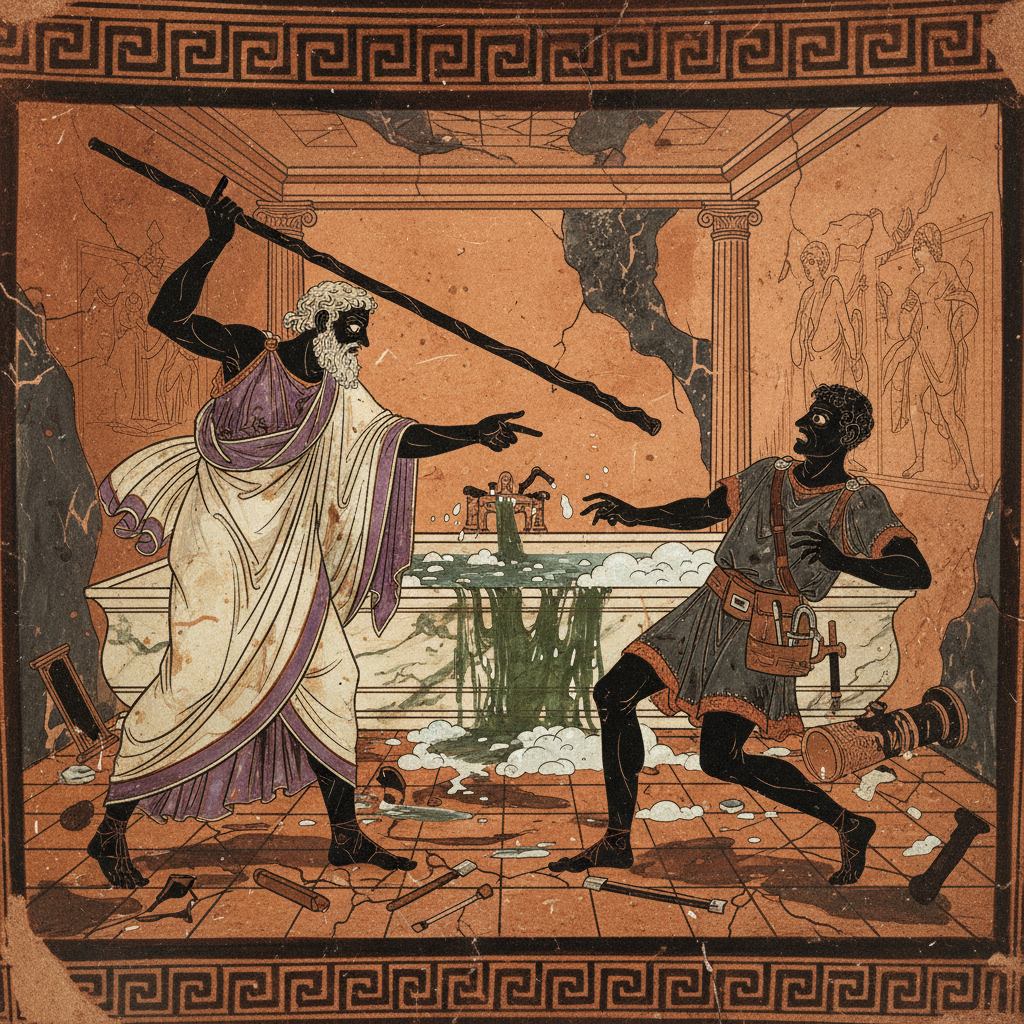
It is a common misapprehension, born of the sort of third-rate Hellenistic histories one finds in second-hand bookshops reeking of mould, that Archimedes of Syracuse leapt naked from his bath crying “Eureka!” and thereby secured his place in the scientific canon. The sequence of events, as even a cursory glance at the sanitation budget of Hiero II will confirm, was far less pristine. The great man’s bath, you see, was on the day in question ruined by a catastrophic sewage backup, a torrent of filth and the accumulated sins of Syracuse’s lesser inhabitants that sent him fleeing not in triumph, but in a desperate search for fresh air and a stiff drink. The most celebrated moment of scientific insight in the ancient world was, in fact, postponed by three days of furious plunging, cursing, and the deployment of several gallons of what the city’s accounts grimly list as “olfactory palliative.”
The immediate problem facing Archimedes was not, as is popularly supposed, how to determine the purity of the king’s new crown, but how to dislodge a truly heroic quantity of ordure from his primary bathing chamber. While the solution to the crown problem—the displacement of water as a measure of volume—was indeed beginning to percolate in his mind, it was thoroughly swamped by the more pressing matter of the house smelling like the wrong end of a sick mule. For seventy-two hours, the pride of Magna Graecia was reduced to a furious householder, armed with a long stick and a vocabulary that would have made a docker blush, bellowing at the city’s chief plumber, a certain Gnaeus Flavius Tremellius, a man whose professional incompetence was rivalled only by his staggering personal aroma. It was only after Tremellius and his unfortunate apprentices had cleared the blockage (for a fee of 27 drachmas, plus a “hazard bonus”) that Archimedes could draw a clean bath and finally, at long last, notice the water level rising as he lowered himself in.
This delay, however trivial it may appear to those of us accustomed to the instant gratification of the modern age, proved fatal. Had Archimedes made his discovery on schedule, he would have presented his findings to King Hiero that very afternoon. The king, delighted, would have immediately commissioned a fleet of new, lighter warships based on Archimedes’ principles of displacement, their design specifications finalised a full two weeks ahead of the historical schedule. These ships, being precisely 11% more buoyant and 17% faster than the vessels they replaced, would have given Syracuse a naval advantage that even the boorish and lamentably effective Romans could not overcome. Instead, by the time Archimedes had aired out his house and his thoughts, the window of opportunity had narrowed. The plans were approved, yes, but with the dawdling pace of a bureaucracy labouring under the Sicilian sun.
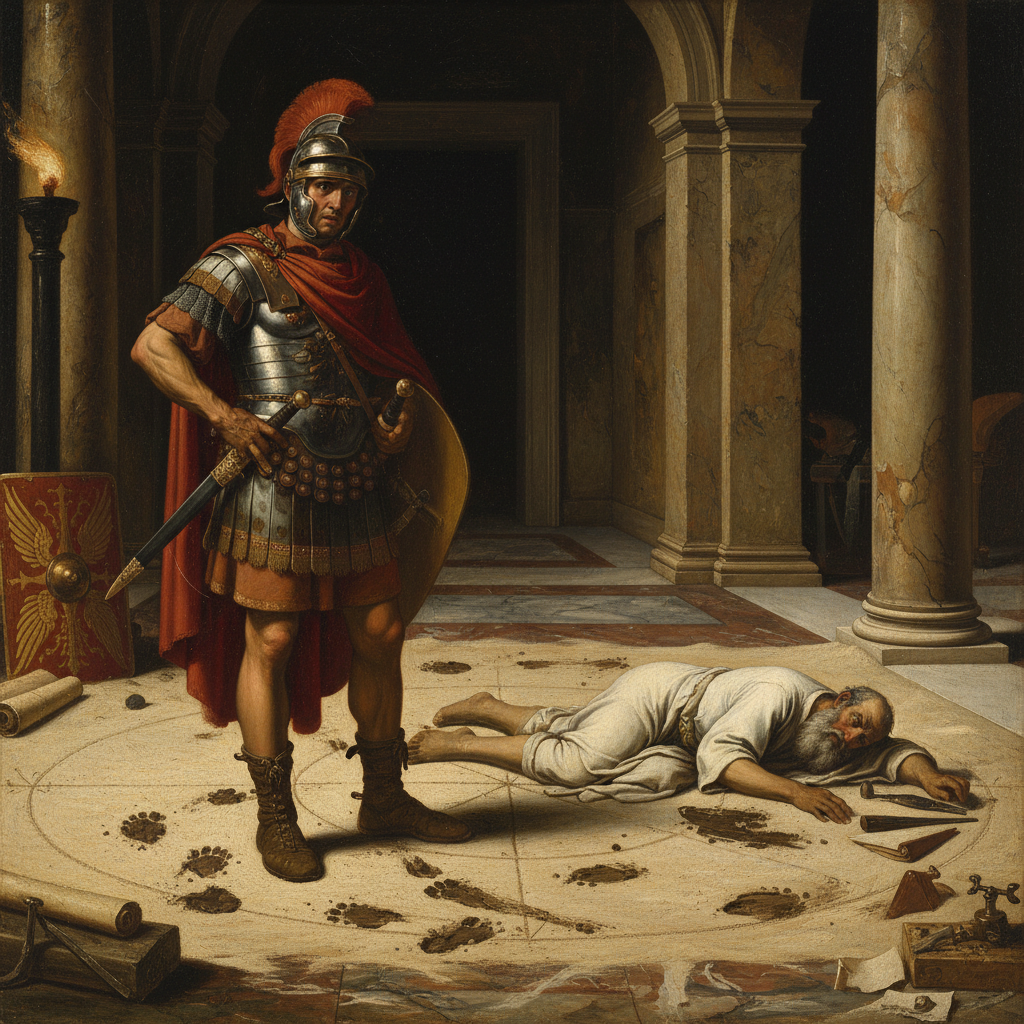
The consequences, as is so often the case when tradesmen fail to perform their duties, were catastrophic. During the subsequent Siege of Syracuse, the slightly-less-advanced navy, while formidable, was not quite formidable enough. The Roman general Marcus Claudius Marcellus, a brute but a persistent one, found a weak point in the harbour defences that the faster ships would have plugged. The city fell. And in the ensuing chaos, a Roman legionary, finding an old man engrossed in drawing circles in the now famously clean sand of his bathing courtyard, dispatched him with a casual thrust of his gladius. Archimedes’ last words were not, as is often reported, *Noli turbare circulos meos*, but a far more practical, and tragically ironic, plea: “For Jupiter’s sake, watch where you’re walking, I just had the floor swept.” A tidy end. A shame about the city.