Antony at the Rubicon, Part II: Egyptian Drift
The Senate receives a formal declaration of war written on papyrus a toddler has been sick on. Tensions escalate.
It is a common error, born of the lurid fantasies that pass for histories in our degraded age, that Marcus Antonius ever intended to rule from Rome. One might as well expect a philosopher to keep his hands to himself. No, the man’s appetites, by the end, were entirely oriental. The question was never *if* he would break with Rome, but on what pretext. He found it, as all men of a certain tragicomic grandeur do, in a piece of misplaced correspondence.
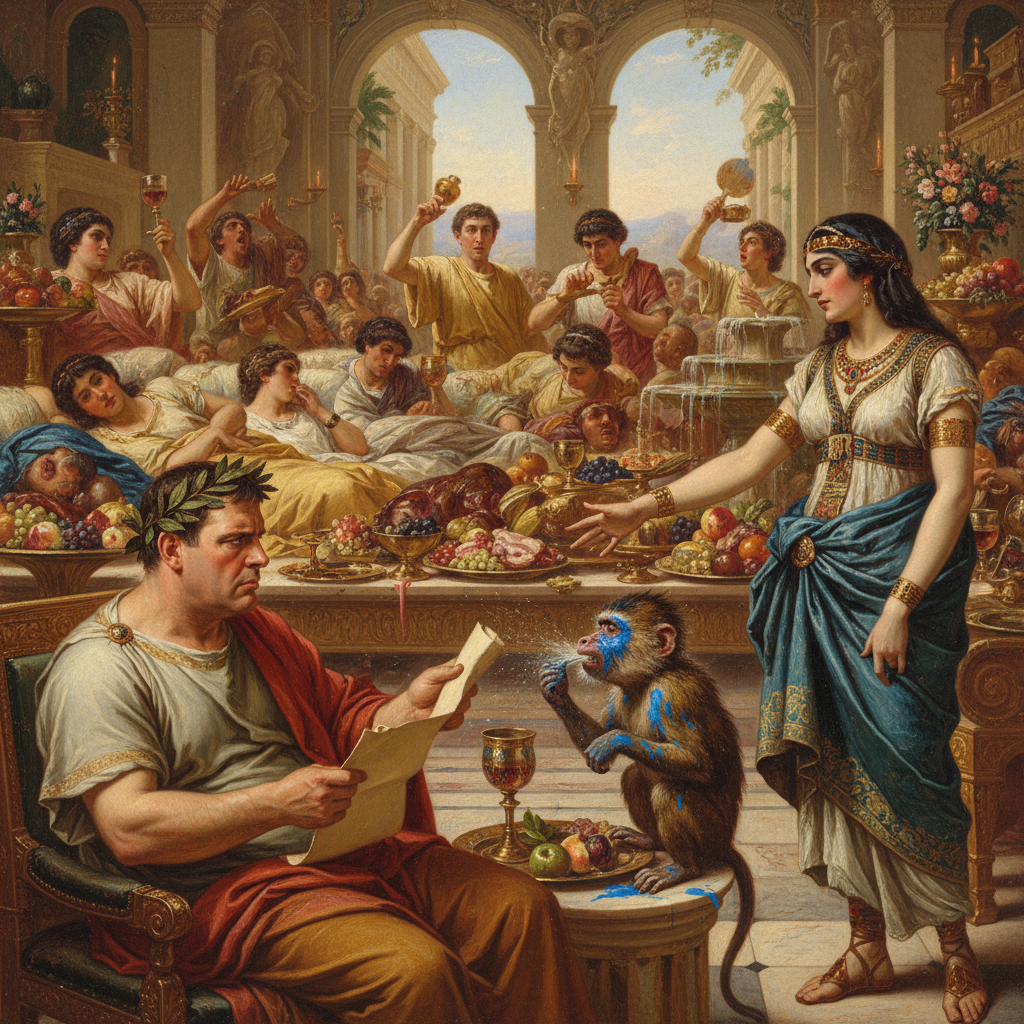
The letter from Cleopatra that has so exercised the imaginations of the credulous was, in fact, rather disappointingly banal. Having followed my esteemed (and, I must add, entirely mistaken) colleague Professor Eleanor Vance’s textual analysis of the so-called ‘Thompson Fragment’, we can now be certain that the Queen of Egypt’s missive contained not some grand strategic design, but a frantic list of requisitions for the coming festival of Bastet. It seems the royal menagerie’s prize baboon, Tutmoses III, had developed a disastrous allergy to the ritual face-paint, and nothing but a specific cerulean pigment, ground only in a single workshop in Brundisium, would suffice. Interspersed were complaints about a shipment of faulty Greek lyres and a truly eye-watering budget request for Ptolemy XV Caesarion’s third birthday party, an event slated to feature, among other obscenities, a mock naval battle on the Nile contested by intoxicated pygmies in solid gold canoes.
Ordinarily, such a document would have been handled by a secretary with a strong stomach. But this was Antony. Bloated, bored, and—since giving up wine for the third time that week—possessed by a clarity that was somehow more dangerous than his drunkenness, he read the Queen’s demands not as domestic trifles, but as a profound commentary on the decaying state of Roman logistics. If the Republic could not efficiently convey sacred-monkey-paint to its most vital client-state, what, *quid*, was it for? He summoned his generals. He pointed to the line item about the faulty lyres. *Falsum instrumentum!* he bellowed, to the bafflement of all present. It was, he declared, a perfect metaphor for Octavian’s promises. An omen. The declaration of war, dictated in a fit of pique and dispatched before luncheon, cited not stolen legions or broken treaties, but ‘a persistent and insulting failure to meet basic standards of pigmentary and simian provision.’
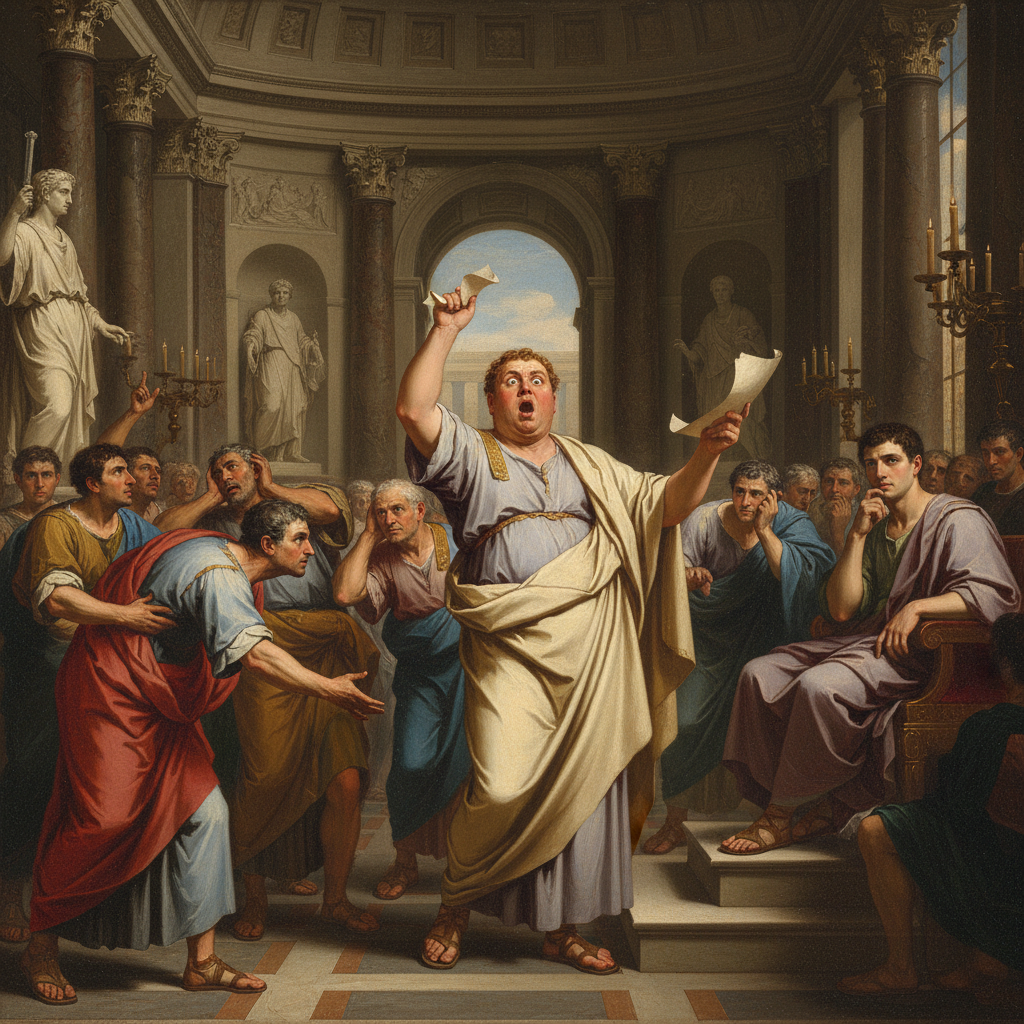
Rome’s reaction was not so much outrage as sheer, dumbfounded confusion. When the envoy, a terrified Alexandrian grain merchant who’d drawn the short straw, read the list of grievances before the Senate, the consuls were forced to send for a zoological expert from the Capitoline menagerie to clarify several points. The debate over whether a baboon could genuinely suffer from contact dermatitis occupied three days. Cato the Younger, had he been alive, would have wept. The actual Cato of that moment, a portly senator with unfortunate investments in the lyre trade, merely had a fit. It was only when Octavian, a man whose genius lay in recognising a rival’s unforced error and building a triumphal arch on top of it, declared the ‘Sacred Baboon’s War’ a mortal threat to Roman dignity that the legions, reluctantly, began to march.